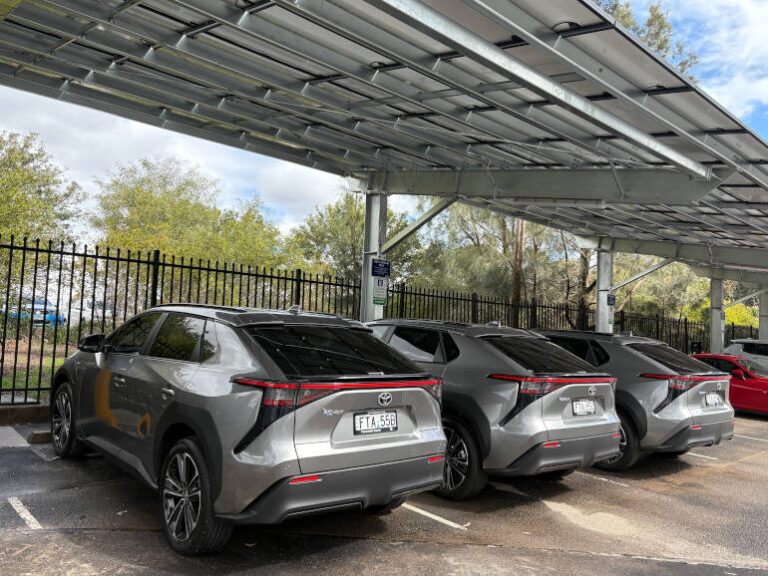
The City of Parramatta has demonstrated that reducing fleet emissions does not have to come at the expense of financial discipline or operational reliability. Through a structured Fleet Emissions Reduction Program, the council has taken a whole-of-system approach to fleet electrification—combining governance reform, data-driven decision-making and renewable energy infrastructure to create a practical pathway to lower emissions.
Rather than simply replacing internal combustion engine (ICE) vehicles with electric alternatives, the council focused on redesigning how fleet decisions are made. By embedding emissions reduction into procurement processes, operational planning and long-term fleet strategy, the program ensures that every fleet decision supports the organisation’s broader Net Zero commitment.
Moving beyond simple vehicle replacement
Many fleet electrification programs begin with vehicle procurement. Parramatta’s strategy started somewhere different: policy and governance.
A comprehensive fleet policy review was undertaken to integrate emissions reduction into vehicle selection criteria, infrastructure planning and lifecycle management. This governance framework created the foundation for a structured transition rather than a series of ad-hoc vehicle purchases.
The council then used fleet utilisation data to identify which vehicles were genuinely suitable for electrification. Vehicles with predictable daily travel patterns and extended depot dwell times were prioritised, allowing EVs to be introduced where they could perform reliably within operational requirements.
This approach addressed one of the most common barriers to EV adoption in operational fleets—concerns about vehicle range and operational suitability.
Infrastructure designed for long-term growth
A key component of the program was the installation of a solar-integrated EV charging facility at the Rydalmere Depot.
The facility includes nine 22kW AC chargers and six 7kW chargers, with infrastructure capacity designed to support up to 20 charging points as the fleet expands. By designing the electrical infrastructure for future growth, the council avoided the need for costly retrofits as more EVs are introduced.
Solar integration allows vehicles to be charged using renewable energy during peak generation periods, significantly reducing electricity costs while supporting the council’s broader emissions reduction targets.
This type of infrastructure planning is becoming increasingly important for fleets transitioning to EVs. Installing chargers is one step, but ensuring the site has the electrical capacity and operational layout to support future growth is what ultimately determines whether electrification programs scale successfully.
Delivering change without increasing capital budgets
One of the most notable aspects of the program is that it was delivered within existing capital allocations.
Electric vehicles often carry a higher upfront purchase cost compared with conventional vehicles. To address this challenge, the council secured government grants and negotiated supplier discounts to offset procurement and infrastructure expenses.
In total, the program achieved $323,000 in procurement and infrastructure savings, including $215,000 in grants. These initiatives reduced the capital gap between EVs and ICE vehicles by as much as $16,000 per vehicle.
This financial strategy helped ensure the transition remained budget-neutral while still delivering operational and environmental benefits.
Operational results already visible
The first phase of the program began in March 2024 and has already delivered measurable outcomes.
During FY2026, the council introduced 22 electric light vehicles into the fleet. Despite the transition, operational performance has remained stable, with no reported service disruptions linked to EV deployment.
Fuel cost reductions are also becoming evident. Early results indicate ongoing fuel savings of approximately $4,000 to $6,000 per month, alongside reduced refuelling downtime as vehicles charge overnight at depot locations.
From an environmental perspective, the program is expected to avoid approximately 220 tonnes of CO₂ emissions each year while reducing reliance on fossil fuels.
Tackling the cultural barriers
Technology and infrastructure were only part of the transition. The council also recognised that workforce acceptance would be critical to success.
Range anxiety and charging concerns were identified as key barriers among frontline staff. To address this, the fleet team organised EV Drive Days and engagement sessions to familiarise employees with the vehicles and charging systems.
Early adopters within the workforce played an important role by sharing their experiences with colleagues, helping build confidence and gradually normalising EV use across operational teams.
As a result, staff willingness to use EVs has increased and concerns around range have declined.
Lessons for other fleets
The Parramatta program highlights several lessons that may resonate with other fleet managers planning electrification strategies.
First, governance and policy frameworks should be established before vehicles are purchased. Embedding emissions targets and operational requirements into fleet policy creates consistency and reduces implementation risk.
Second, data plays a critical role in overcoming resistance. Fleet utilisation analysis provides objective evidence about which vehicles are suitable for electrification.
Third, infrastructure should be designed for scalability from the outset. Building additional capacity during initial installation is far more cost-effective than upgrading electrical infrastructure later.
Finally, financial creativity is essential. Grants, supplier negotiations and lifecycle planning can significantly reduce the upfront cost barrier associated with EV adoption.
A scalable model for local government fleets
The City of Parramatta’s program is now moving from an initial rollout phase into long-term fleet lifecycle planning. Suitable vehicles will continue to be replaced with electric alternatives as they reach the end of their operational life, while charging infrastructure will expand alongside fleet growth.
By combining policy reform, infrastructure planning, financial management and workforce engagement, the council has created a scalable model for fleet decarbonisation.
For local government fleets balancing emissions targets with tight budgets and operational demands, Parramatta’s experience demonstrates that meaningful progress is possible when electrification is approached as a strategic transformation rather than simply a vehicle replacement exercise.
The case study was an entry in the 2026 IPWEA Fleet Innovation Award.
- Origin partners with EVDealer Group to accelerate fleet transition
 Origin and EVDealer Group have partnered to give Australian businesses a single, end-to-end path to electric vehicles (EVs) – from planning and charging through to vehicle delivery and driver handover – so fleet managers no longer have to coordinate it all themselves. Origin’s Group Manager Sales, E-mobility, David Helmy, said, “Businesses tell us the hardest
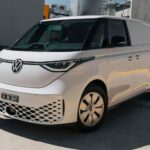
 - Volkswagen ID. Buzz Cargo wins 2026 Fleet EV of the YearThe Volkswagen ID. Buzz Cargo has been named the 2026 Fleet EV of the Year in the Fleet News Group Awards, finishing ahead of two very different electric fleet propositions after assessment by fleet industry judges using Best Value Analysis. The Volkswagen ID. Buzz Cargo BEV 550 competed against the Toyota HiLux SR BEV 4×4 Double Cab Pickup and Kia EV5 Air
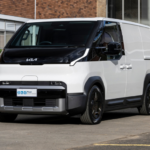
- Kia PV5 wins 2026 Fleet LCV of the YearThe Kia PV5 Cargo has been named the 2026 Fleet LCV of the Year in the Fleet News Group Awards, giving Kia an important win as electric commercial vehicles move further into mainstream fleet consideration. The Kia PV5 Cargo S 4D LR finished ahead of the Hyundai STARIA Load Hybrid and Isuzu D-MAX SX 2WD Single Cab, giving judges three very different
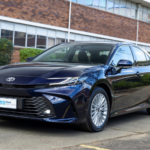
- Toyota Camry wins 2026 Fleet Car of the YearThe Toyota Camry Ascent Sport has been named the 2026 Fleet Car of the Year in the Fleet News Group Awards, reinforcing the continuing role hybrid vehicles can play in helping fleets reduce fuel use and emissions. The Camry finished ahead of the MG ZS Vibe CVT and Subaru Forester Hybrid AWD after assessment by fleet industry judges and Fleet News
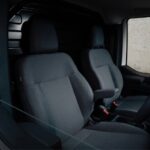
- Can an electric van really be better to drive all day? Kia thinks soFor Fleet Managers considering electric vans, range, payload and charging usually dominate the discussion. But there is another factor that can have just as much influence on whether a new vehicle succeeds in a fleet: what drivers think of it after spending an entire working day behind the wheel. That was one of Kia’s priorities