


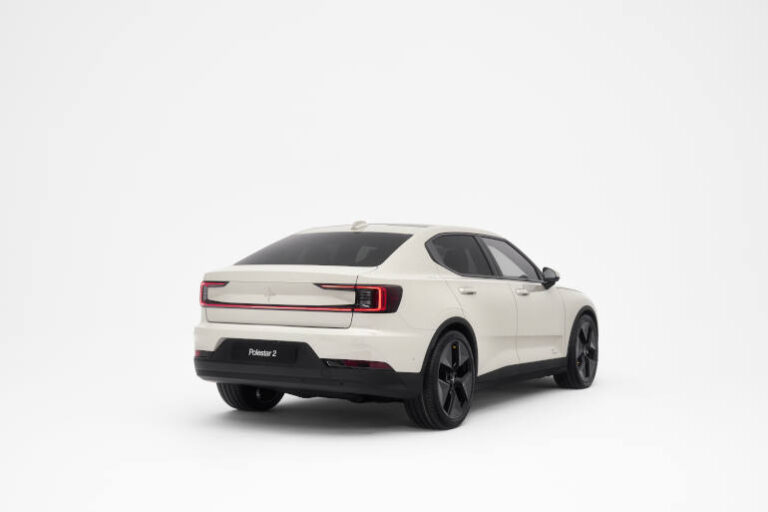
Polestar says it has reduced greenhouse gas emissions per sold vehicle by 31% since 2020, while simultaneously growing annual sales to more than 60,000 vehicles and expanding operations across 28 global markets.
The results were published in the company’s 2025 Sustainability Report and position the Swedish EV brand as one of the few manufacturers publicly demonstrating measurable reductions in lifecycle emissions while scaling production and sales.
At a time when parts of the automotive industry are slowing EV investment, revisiting emissions targets, or increasing hybrid and combustion engine development, Polestar is continuing to focus exclusively on battery electric vehicles.
Michael Lohscheller, CEO at Polestar, said the company believes electrification remains the clearest pathway for both emissions reduction and energy security.
“If you are not reducing emissions while growing, you are choosing not to,” said Lohscheller.
“Electrification delivers clear value for customers: lower running costs, lower emissions and greater peace of mind, as volatile oil prices and fuel scarcity mean pump anxiety is increasingly replacing range anxiety.
“As clean electricity scales, electric vehicles are becoming not just the sustainable choice, but the smarter, more reliable one.”
According to Polestar, the emissions reductions have been achieved through greater use of renewable energy in battery production and manufacturing, increased use of low-carbon materials, and the growing sales mix of the Polestar 4, currently the company’s lowest carbon footprint vehicle.
Europe remains the brand’s largest market, accounting for more than 75% of total sales. The company also noted that the increased availability of renewable electricity in European markets is helping reduce emissions generated during vehicle operation.
For fleet buyers, the report highlights the growing importance of looking beyond tailpipe emissions when evaluating vehicle sustainability. Manufacturing processes, battery sourcing, material selection and electricity generation all contribute to whole-of-life emissions performance.
The sustainability report also provided an update on the Polestar 0 project — the company’s ambition to create a truly climate-neutral vehicle without relying on carbon offsets.
While the original target was set for 2030, Polestar has revised the timeline to 2035, acknowledging the technical complexity of removing emissions from steel, aluminium, batteries, textiles and other high-impact materials.
Rather than scaling back the ambition, Polestar says it is increasing investment and collaboration through its Mission 0 House research centre in Gothenburg.
Fredrika Klarén, Head of Sustainability at Polestar, said the project continues to focus on eliminating emissions entirely rather than reducing them incrementally.
“The Polestar 0 project pushes us into new territory,” said Klarén.
“While much of the industry invests in hybrids and combustion engines, we focus on solutions that eliminate emissions entirely.
“The innovation emerging from this project shows the power of collaboration and material science, and importantly, how well positioned we are to move the industry forward.”
Current research projects at Mission 0 House include ultra-low-emission steel production, new battery materials, bio-based textile alternatives, and technologies that convert captured CO₂ into usable materials.
Mission 0 House was formally established in 2025 and has secured close to SEK 100 million in funding over five years. The research consortium currently includes five Swedish universities and six industry partners.
For Australian fleet operators managing ESG reporting requirements and emissions reduction targets, Polestar’s latest sustainability report reinforces a trend that is becoming increasingly relevant in procurement discussions: not all EVs deliver the same lifecycle emissions outcome, and greater transparency from manufacturers is becoming an important part of fleet decision-making.




