


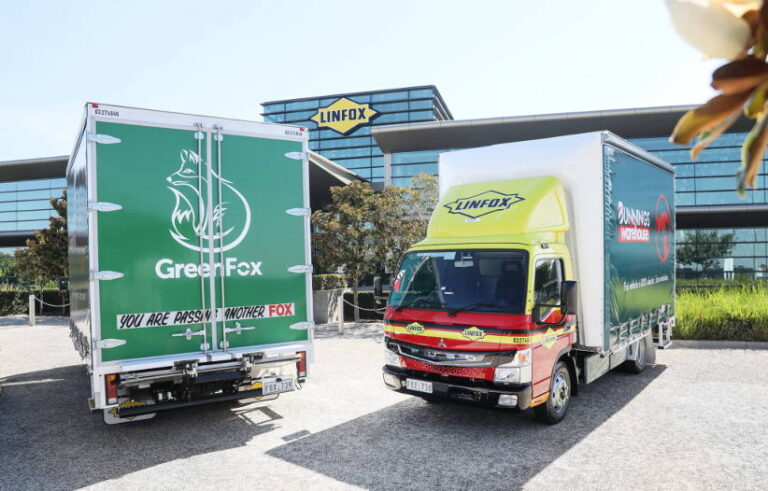
When three of Australia’s largest truck operators began the transition to electric heavy vehicles, they quickly faced a challenge that could not be solved by the vehicle manufacturers alone.
For Bunnings, BevChain and Coles, the question was not simply whether electric trucks could perform the task. It was whether the right charging infrastructure could be installed at busy depots without disrupting operations, overbuilding the electrical system, or locking the business into an expensive solution that could not scale.
EVSE Australia partnered with Linfox across depots supporting all three operators to design and deploy charging infrastructure based on actual fleet behaviour, operational windows and existing electrical capacity.
The result was a scalable charging rollout across sites in Sydney and Melbourne that supported electric truck deployment without operational disruption.
“The biggest barrier to heavy vehicle electrification isn’t the vehicle. It’s the infrastructure,” Sam Korkees, CoFounder at EVSE.
Why truck charging is different
Electrifying heavy vehicles is a very different task to introducing passenger EVs into a fleet.
The operational risk is higher, the vehicles consume more energy, and there is less room for trial and error. For heavy vehicle operators, a failed charging plan can mean missed delivery windows, underutilised vehicles, stranded assets or costly grid upgrades.
Bunnings, BevChain and Coles each faced similar barriers as they moved towards electric trucks. Their routes were dictated by customer demand rather than fixed schedules, making charging windows harder to predict. Heavy payloads could reduce vehicle range by 20 to 35 per cent compared with unladen performance, while refrigeration units could add another 15 to 25 per cent energy draw per shift.
At the same time, existing depot electrical infrastructure often had limited spare capacity, with utility upgrades potentially taking 12 to 24 months. In some cases, vehicles had as little as four hours between shifts to recharge.
Unlike a passenger EV pilot, heavy vehicle electrification cannot always be tested meaningfully with one vehicle. Operators need enough vehicles in service to understand real-world charging demand, energy use and scheduling constraints. That makes the first infrastructure decision critical.
Designing around the operation
Many fleet electrification projects begin with the assumption that higher-powered chargers are the safest option. EVSE Australia took a different approach.
Instead of deploying the fastest chargers available and asking operators to adjust, EVSE started with an operational audit. This included reviewing shift patterns, dwell times, vehicle energy requirements and the available electrical capacity at each depot.
This allowed the charging infrastructure to be right-sized for each location.
In practical terms, the goal was not to install the most powerful charger. It was to answer a more important operational question: can the vehicles receive the energy they need during the time they are parked?
For Fleet Managers and Procurement Managers, this distinction matters. Overbuilding charging infrastructure can add unnecessary capital cost and trigger avoidable grid upgrades. Underbuilding can compromise vehicle availability and undermine confidence in the transition.
By matching charger specification to real fleet behaviour, EVSE was able to support a more cost-effective and practical rollout.
Load management helped avoid delays
One of the key outcomes from the project was the use of intelligent load management across charging bays.
Rather than assuming each charger needed full power at the same time, the system shared available capacity dynamically based on real-time demand. This helped operators charge vehicles within available depot capacity, reducing reliance on major grid upgrades.
For heavy vehicle fleets, this can be the difference between starting an electric truck rollout within months or waiting more than a year for utility infrastructure changes.
The approach also helped reduce infrastructure spend by more than 40 per cent compared with initial vendor quotes based on maximum-power charger configurations.
Pilots reduced risk before full rollout
Across the Bunnings, BevChain and Coles relationships, pilot programmes were used to validate operational fit before larger commitments were made.
This gave the operators practical evidence that the charging infrastructure could support day-to-day fleet requirements before expanding the number of electric vehicles or charging bays.
The rollout then expanded across multiple depots in Sydney and Melbourne without disruption to ongoing fleet operations.
All three operators are now expanding their electric fleets, supported by charging architecture designed to grow with additional vehicles rather than requiring a full redesign.
Lessons for fleet operators
The case study highlights an important lesson for heavy vehicle fleets considering electrification: the infrastructure plan needs to be based on the operation, not just the vehicle specification.
Range, charger speed and purchase price are all important, but depot charging success depends on a more practical set of questions. How long are vehicles parked? How much energy do they need per shift? What is the existing site capacity? Can charging be managed across multiple bays? What future growth needs to be built into the design from day one?
For Fleet Managers, Fleet Coordinators and Procurement Managers, the project shows that heavy vehicle electrification is not just an asset replacement exercise. It requires a coordinated approach across operations, infrastructure, energy and capital planning.
The experience across Bunnings, BevChain and Coles suggests that electric trucks can be integrated into demanding depot-based operations when charging infrastructure is designed around real fleet behaviour. The vehicle may attract the attention, but the depot is where the transition succeeds or fails.