


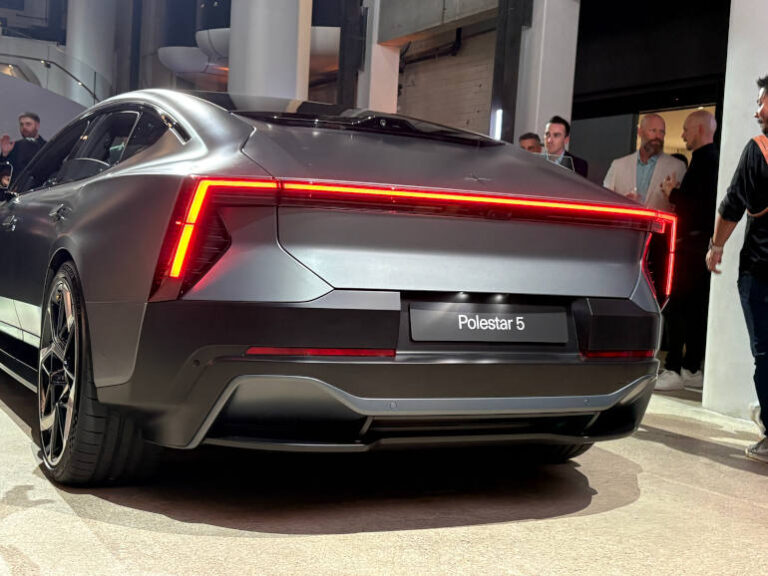
At the centre of Polestar’s growing vehicle portfolio sits the Polestar 5, a high-performance electric grand tourer that showcases the brand’s approach to modern electric mobility.
Designed to combine performance, luxury and sustainability, the Polestar 5 represents the next step in the evolution of premium electric vehicles.
A modern electric grand tourer
Visually, the Polestar 5 reflects the brand’s Scandinavian design philosophy. Clean lines, a low roofline and wide stance give it the presence of a performance sedan while maintaining the proportions of a long-distance grand tourer.
Inside, the focus is on modern luxury and advanced technology. Sustainable materials, high-quality finishes and digital integration create a cabin that feels contemporary and refined.
Strong electric performance
The Polestar 5 is powered by a dual-motor all-wheel-drive electric powertrain producing 550 kW (748 hp).
This enables acceleration from 0–100 km/h in around 3.9 seconds, placing the vehicle firmly in the high-performance EV category.
Energy comes from a 112 kWh battery pack, delivering a WLTP driving range of approximately 678 kilometres, making it suitable for both daily driving and longer journeys.
Sustainability at the centre
Beyond performance, the Polestar 5 also highlights the company’s broader sustainability philosophy.
Polestar measures the carbon footprint of its vehicles across the entire lifecycle and publishes this data to provide transparency for customers.
The 23.8 tCO₂e cradle-to-gate footprint of the Polestar 5 highlights where emissions occur during production and where improvements can be made.
By reducing emissions in materials, battery production and manufacturing, the company is working to lower the environmental impact of future vehicles.
A glimpse of the future
For fleet buyers and novated lease customers alike, the Polestar 5 demonstrates how performance, design and sustainability can work together in a single vehicle.
It reflects a broader shift in the automotive industry — where electric vehicles are no longer simply about eliminating tailpipe emissions, but about rethinking how vehicles are designed and built for a more sustainable future.