

The Ford Ranger has been Australia’s top-selling ute for years, and now it’s taking a new step into electrification with the plug-in hybrid (PHEV) version. On paper, it promises diesel-like towing and payload with the added benefit of electric driving and reduced fuel bills. But does it stack up in real-world conditions for fleets and novated lease buyers? Let’s break it down.
Whole of Life Costs (WOLC)
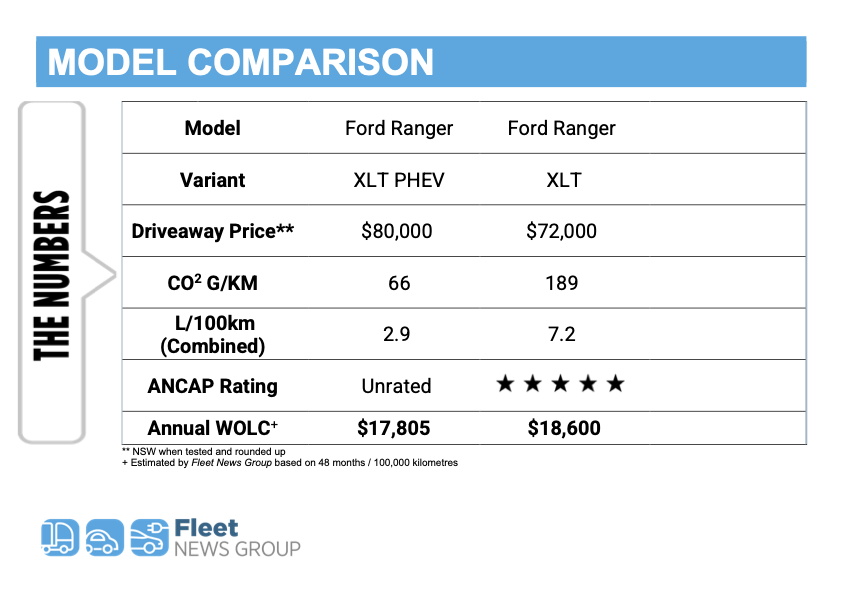
When you run the numbers, the Ranger PHEV comes in slightly cheaper on WOLC compared to its diesel siblings – but only if you achieve something close to the published 2.9L/100km fuel consumption figure.
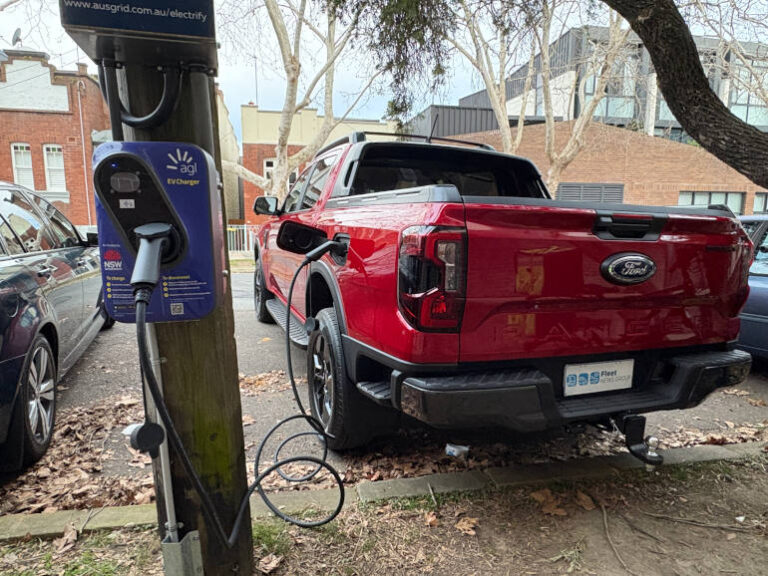
- EV Mode: With an 11.8kWh battery delivering about 30–40km of pure EV range, many urban trips can be covered without burning a drop of fuel. At typical electricity prices, that’s around $12 per 100km compared to $16 per 100km on diesel.
- Hybrid Mode: Once the battery is depleted, the story changes. In our mixed testing, we saw 9–15L/100km depending on driving style and conditions, averaging about 11L/100km without charging. That’s well above the claimed figure of 2.9L/100km and higher than the diesel Ranger.
- Sport Mode: Fun, yes – but thirsty. Push the Ranger PHEV hard and fuel use can skyrocket to 20L/100km.
For fleets, this means charging discipline is everything. If vehicles are plugged in daily, the cost advantage is clear. Without that, WOLC could blow out quickly.
Driving Dynamics
When fully charged and driving in EV mode, the Ranger PHEV delivers a driving experience that feels almost surreal. There’s smooth acceleration and absolute silence, all wrapped in the familiar handling and ride quality of a standard Ford Ranger. For anyone used to years of diesel Rangers, the lack of engine noise and the calmness on the road takes a moment to adjust to. It’s weird, but in a good way. After a day or two, it becomes the driving experience you wish every 4×4 dual cab ute could deliver – refined, relaxed, and capable.
Fit for Purpose – Who Should Consider It?
The Ranger PHEV doesn’t compromise on the essentials. It retains the dual cab practicality, towing capacity, and off-road ability that make the diesel Ranger such a fleet favourite.
- Urban users: If your drivers cover short daily distances and can plug in every night, the PHEV will shine. You’ll get quiet, smooth EV driving for most trips, with petrol backup for longer journeys.
- Remote or heavy-duty operators: If towing, heavy payloads, or long distances are the norm, the diesel remains a safer bet. Fuel consumption quickly climbs once the battery is flat.
- Private/Novated lease buyers: For city dwellers with home charging, it offers a unique blend of Ranger toughness with guilt-free short EV trips.
Emissions
On paper, the Ranger PHEV’s CO₂ output is just 66g/km, a massive improvement over the diesel. But that’s only achievable if the vehicle is charged and driven in EV mode most of the time. In reality, without charging, emissions can be closer to a standard diesel – or worse – due to the higher petrol burn.
This makes charging discipline a critical fleet policy issue. If drivers don’t plug in, the sustainability benefits evaporate, and fleet managers will face tough questions when emissions reporting comes due.
Verdict
The Ford Ranger PHEV is a bold step and will suit fleets and buyers who can commit to charging daily. It offers lower WOLC, quieter EV operation, and lower emissions – but only if used properly. For operators who can’t guarantee plug-in discipline, the trusty diesel still makes more sense.
For novated lease buyers who want the Ranger lifestyle with an eco edge, it’s an exciting new option. For fleets, it’s more of a transition technology – a stepping stone on the way to full battery-electric utes.