

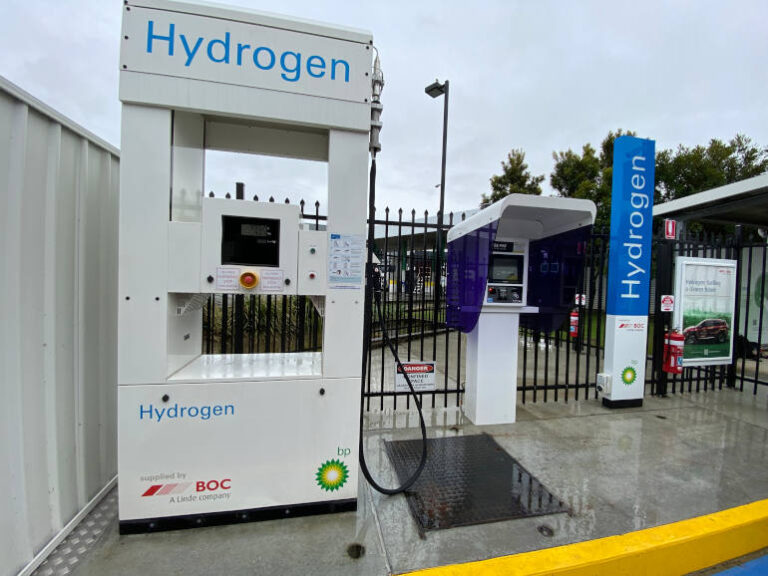
As decarbonisation efforts intensify across the global transport sector, hydrogen is emerging as a serious contender in the race to reduce emissions—particularly for demanding medium- and heavy-duty applications. In the United States, where the State of Sustainable Fleets 2025 Market Brief provides the most comprehensive data on alternative fuels, hydrogen is still in its early stages but showing signs of momentum.
The report, prepared by TRC Companies, outlines recent deployments, market headwinds, and the potential trajectory for hydrogen adoption among U.S. fleet operators.
Hydrogen Technology in U.S. Transport
Most of today’s hydrogen-powered commercial vehicles are fuel cell electric vehicles (FCEVs). These systems use hydrogen gas stored onboard and convert it into electricity using a fuel cell stack. The result is a zero-emission vehicle with diesel-like range and refuelling times—advantages particularly well-suited to high-utilisation fleets.
In 2024, the U.S. saw:
- 75 new hydrogen fuel cell electric buses (FCEBs) enter transit service, more than doubling the 2023 total.
- 200 Class 8 hydrogen fuel cell electric trucks (FCETs) delivered by Nikola, prior to the company’s bankruptcy filing in early 2025.
- The first hydrogen-powered refuse truck deployed by Hyzon, another early-stage manufacturer facing financial pressure.
Major global OEMs are now stepping in. Hyundai, Toyota (in partnership with Kenworth), and a Daimler–Volvo joint venture have announced plans to launch hydrogen-powered trucks in North America over the next several years.
What’s Driving Fleet Interest?
Despite infrastructure and policy hurdles, fleet operators are intrigued by hydrogen’s operational profile. The report notes that:
- 56% of fleets using hydrogen trucks cite “excellent range and driver satisfaction” as key benefits compared to diesel.
- Fast refuelling and compact station footprint make hydrogen appealing for transit and drayage operations with fixed routes and limited depot space.
- Hydrogen is particularly suited to applications where electric trucks may struggle—such as long-haul freight, high payloads, or multi-shift duty cycles.
Challenges to Widespread Adoption
The State of Sustainable Fleets report is clear: the U.S. hydrogen transport sector is still early-stage and facing considerable challenges.
1. Infrastructure Gaps
The pace of hydrogen refuelling infrastructure deployment remains slow. While the U.S. Department of Energy has announced funding for regional Hydrogen Hubs (H2Hubs), most of these projects are still in preliminary phases. Mobile fueling stations are emerging as an interim solution, but long-term scalability remains uncertain.
2. Financial Uncertainty
Two high-profile hydrogen truck manufacturers—Nikola and Hyzon—encountered financial difficulties in 2024–2025, highlighting risks for early adopters. Additionally, federal funding support is in question under the new U.S. administration, which has signalled a shift away from zero-emission vehicle incentives in favour of domestic liquid and gaseous fuels.
3. Cost and Scale
Hydrogen fuel costs remain higher than diesel or electricity. The report also notes that building and maintaining hydrogen stations requires significant capital outlay, with cost parity unlikely without strong policy support for the remainder of the decade.
Outlook for Adoption
While adoption is currently modest, the long-term outlook for hydrogen in the U.S. commercial vehicle sector is cautiously optimistic:
- Transit fleets are expected to continue adopting FCEBs, especially with supportive funding in states like California and New York.
- Drayage and regional-haul operators may find hydrogen an attractive option as more OEMs bring trucks to market.
- Infrastructure buildout via public-private partnerships and the H2Hubs program will be key to unlocking further growth.
- Fleet investment decisions are expected to hinge on total cost of ownership, incentives, and local infrastructure readiness.
As the report summarises:
“The nascent hydrogen market continues to evolve, with OEMs advancing fuel cell vehicle development despite financial and policy uncertainties.”
Hydrogen is unlikely to dominate the U.S. transport landscape in the short term—but for fleets with demanding operational needs, it remains one of the few viable low-emission options. The key to broader adoption will be sustained infrastructure investment, policy stability, and commercial availability of trucks from established OEMs.
For Asia-Pacific fleet operators monitoring global trends, the U.S. offers a valuable case study in the practicalities—and growing pains—of hydrogen adoption. While still a niche fuel, hydrogen may play a vital role in decarbonising segments of the transport sector that battery-electric solutions struggle to reach.