

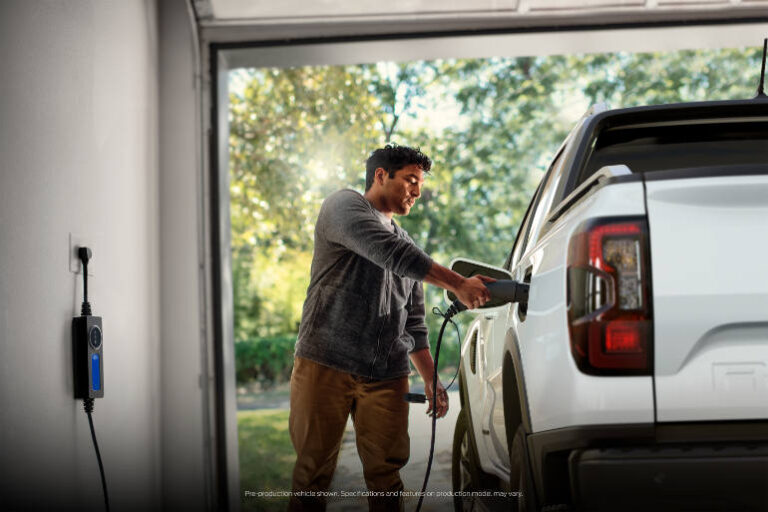
As organisations across Australia move to decarbonise their fleets, workplace and depot charging has been the starting point for most electric vehicle (EV) rollouts. But with more fleet drivers taking vehicles home — especially in sales, service, or executive roles — attention is now turning to home charging as a critical enabler of long-term EV success.
According to Austin Devaney, National Sales Manager at EVSE, workplace charging has largely been “solved.” The process of installing depot infrastructure, managing load, and integrating smart software is now well understood.
“The confusion or the weariness around how to electrify your depot fleet — that’s been solved,” Devaney said in a recent interview. “But there’s still a little confusion around what you do with a fleet driver that needs to take their vehicle home.”
This is a growing challenge for Fleet Managers, Sustainability Managers and Finance Managers tasked with planning for zero-emission vehicles. Without home charging, many EV transitions remain limited to office-based pool vehicles or site-based operations. Expanding EV use to field-based roles requires a flexible, scalable solution that doesn’t rely on depot infrastructure alone,
Why Home Charging Matters
For many fleets, the ability to charge overnight at home is key to maintaining productivity, reducing operational risk, and ensuring vehicle uptime. Charging at home ensures that the vehicle starts every day with a full battery — eliminating the need for drivers to find public chargers before or during their shift.
From a sustainability perspective, home charging also offers access to lower-emissions grid power, particularly during off-peak hours when renewable energy sources are more prevalent. And from a cost perspective, it reduces reliance on public charging, which can be more expensive and harder to control at scale.
But until recently, implementing home charging at scale has been difficult. Property types, tenancy arrangements, body corporate rules, and reimbursement complexities have all acted as barriers.
Breaking Down the Barriers
To address these issues, EVSE has developed a new product called the IQ Portable, a smart, plug-in charger designed specifically for fleets.
“It’s a smart OCPP portable charger that can connect to explore, just like your depot chargers,” explained Devaney. “It allows drivers to plug in, track electricity use, and be reimbursed by their fleet manager or organisation — without needing to install anything.”
The benefits are significant:
- No installation required – Drivers simply plug into a standard wall outlet.
- Landlord-friendly – Ideal for renters who can’t get approval for permanent installs.
- Body corporate compatible – Works in apartments if an outlet is available in the parking bay.
- Easily transferable – The charger can move with the driver or be reissued to another employee.
- Accurate tracking – All charging sessions are tracked for reimbursement and ESG reporting.
“It works for PHEVs and fully electric vehicles,” said Devaney. “It’s a way to lower significant barriers to adoption.”
Managing Reimbursements
One of the key concerns for Finance Managers is how to fairly and accurately reimburse employees for electricity used at home. The IQ Portable charger solves this by tracking the energy delivered in each charging session and feeding that data into the explore software platform.
Fleet Managers can export reports, calculate reimbursement rates, and process payments as part of payroll or accounts payable workflows. It eliminates the need for manual meter readings, spreadsheets, or driver-submitted claims.
For Sustainability Managers, the data also feeds directly into emissions tracking and ESG reporting — helping to quantify energy use, vehicle emissions reductions, and renewable energy contributions.
Planning for the Realities of Fleet Electrification
As more businesses move beyond trials and look to electrify larger portions of their fleet, home charging will become essential — particularly for mixed-use and field-based roles. Even the most well-planned depot infrastructure can’t support every vehicle in a dispersed fleet.
Devaney described it as a “multi-step solution” that reflects how fleet operations are evolving.
“Depot is traditionally the first step. But as the fleet grows, and drivers have different requirements around how they use their vehicles, we’re finding that charging needs to be flexible — depot, public, and home,” he said.
For organisations aiming to meet Scope 2 and Scope 3 emissions requirements, integrating home charging into fleet operations also improves overall reporting accuracy. Smart home charging data can be combined with depot and public charging data in a single platform to generate organisation-wide insights and decarbonisation metrics.
The Next Step for Fleets
The move to home charging is no longer a ‘nice to have’ — it’s becoming a critical part of the EV transition. The availability of smart, portable chargers like EVSE’s IQ Portable removes many of the logistical and financial hurdles that previously made home charging difficult.
For Fleet Managers, it offers a scalable, flexible solution that supports a wider range of roles and driving behaviours.
For Finance Managers, it provides a way to control costs and reimburse drivers fairly.
And for Sustainability Managers, it enables accurate tracking and reporting to meet ESG targets.
In short, home charging unlocks the next wave of electrification — helping businesses go beyond the depot and build an EV strategy that works everywhere their drivers do.