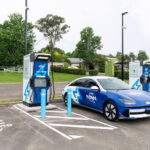
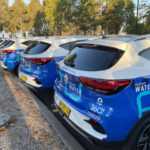
Origin has announced a collaboration with BYD and StarCharge to deliver Australia’s first Vehicle-to-Grid (V2G) enabled electric vehicle subscription. The trial, set to commence in 2026, will combine an EV subscription with a bi-directional charger and access to free home charging.
The bundle includes a BYD Atto 3, a StarCharge V2G Halo charger, and access to an Origin smart tariff that provides free charging at home for up to an estimated 24,000 kilometres per year. The offer will be limited to 50 customers, with expressions of interest now open.
Unlocking new value for drivers
Chau Le, General Manager, E-mobility at Origin, said the trial could transform how EV drivers interact with the energy grid.
“Vehicle-to-grid charging is a real game-changer that could turbocharge the EV market in Australia by allowing EV drivers to send electricity back to the grid from their car and get rewarded for that,” Le said.
The system will operate through Origin’s Virtual Power Plant, automating the charging and discharging process once the EV is plugged in. Eligible participants will receive free charging at home for every kilometre driven during their subscription.
According to the Electric Vehicle Council, an Australian driving 12,000km annually would typically spend around $500 charging an EV or $2,500 fuelling a petrol car. With Origin’s model, those costs could be eliminated.
Partnership driving innovation
The partnership between energy, automotive, and charging infrastructure providers highlights the wider role of EVs in the energy transition.
Sajid Hasan, Chief Product Officer at BYD Australia, said the project reflects the company’s broader mission:
“BYD is excited to partner with Origin to pioneer this technology in Australia to redefine what Electric Vehicle ownership means and to shed light that there is much more to an Electric Vehicle than just mobility.”
Kouki Xiang, CEO of StarCharge APAC, emphasised the shift in perspective for EVs:
“Vehicles are no longer just part of the transport network – with EVs and bi-directional charging technology, they’re becoming an active part of the energy network. Through V2G, every car becomes a mobile energy asset.”
Flexible and accessible option
Pricing for the subscription is expected to be under $800 per month after tax savings, with flexibility built in through Origin’s month-by-month structure. This means eligible drivers can take advantage of salary packaging and Fringe Benefits Tax exemptions without committing to long-term lease agreements.
For fleets and individuals, the potential cost savings and energy flexibility could reshape the economics of running electric vehicles in Australia.

- The Real Barrier to Fleet Electrification Isn’t Trucks — It’s Charging
 For years, the conversation around fleet electrification has centred on vehicle range, payload, purchase price and charging technology. Speaking to the founders of Country Fleet, one of Australia’s fastest-growing electric delivery operators, at Sustainability Business Live, the biggest challenge isn’t the trucks themselves. It’s charging. After building a fleet of almost 30 electric vehicles across
 - Hyundai Advances Australia’s V2G FutureHyundai Motor Company Australia says it has completed Australia’s first Vehicle-to-Grid (V2G) discharge using the ISO 15118-20 communication protocol. The demonstration paired a Hyundai IONIQ 9 with a StarCharge Halo 7.4kW bidirectional DC charger, with Hyundai positioning the achievement as an important step towards standards-compliant V2G deployment in Australia. ISO 15118-20 is the newer international
- Charging reliability is becoming a critical fleet infrastructure issueAs electric vehicles become part of daily fleet operations, charging reliability is becoming just as important as charger speed. Speaking with Fleet EV News at the Autel EV Innovation Seminar 2026, Peter Burke, EV Infrastructure Delivery at the NRMA, said the organisation relies on multiple charging infrastructure partners and places strong emphasis on technology support,
- AEMO Puts EVs at the Heart of Australia’s Energy FutureElectric vehicles are no longer being treated simply as transport technology, with AEMO’s latest long-term energy roadmap placing EVs and charging infrastructure within Australia’s future electricity system. The Australian Energy Market Operator’s 2026 Integrated System Plan forecasts that around 80 per cent of vehicles on Australian roads could be electric by 2050, driving a major
- Planning Fleet Charging Starts With Understanding the FleetFor many organisations, the first question about fleet electrification is: what chargers do we need? The better question is: how much energy will the fleet need, when will it need it, and how long will the vehicles be parked? Charging infrastructure should not be planned in isolation from the fleet. The right mix of AC