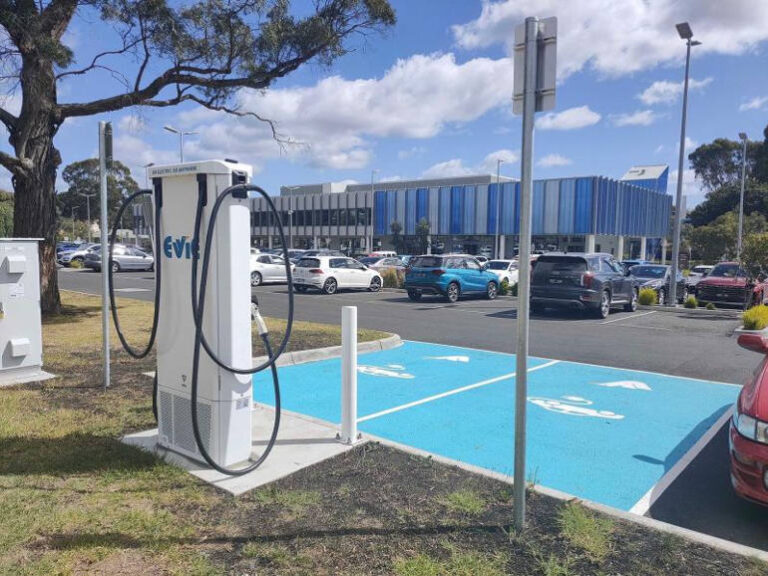
Australia’s electric vehicle (EV) ecosystem just passed a milestone that industry watchers cannot ignore. Evie Networks has secured a $50 million senior debt facility with Infradebt, backed by Australian institutional funds.
This is the first time commercial infrastructure debt has flowed into public EV charging in Australia. It represents more than just capital – it signals that EV charging is now recognised as an investable, long-term asset class.
Why It Matters
EV charging has long been funded through venture capital, government grants, and strategic investors. That model was sufficient to get the industry started, but unsustainable at scale. As Evie Networks’ Chief Strategy Officer Paul Fox put it: “You can’t possibly just keep throwing equity at infrastructure. The nature of infrastructure is that it funds assets that last a long time, generate a reasonable return, but not a massive return. You need debt to leverage it up to deliver the sorts of returns institutional investors want.”
Crossing into infrastructure-grade debt financing puts EV charging alongside traditional assets like roads, bridges, telecom towers, and power grids. For industry observers, this marks the point where EV charging becomes mainstream national infrastructure.
Super Funds Enter the Frame
The participation of superannuation-backed funds is a breakthrough. These conservative investors manage retirement savings and demand stable, reliable returns. Their involvement tells the market that:
- EV charging is no longer a speculative play – it has matured into a bankable sector.
- Capital inflows are likely to accelerate, supporting rapid network growth.
- Charging networks are now viewed as essential infrastructure, not just a technology experiment.
Fox described it as “breaking the dam” for capital flows into EV charging. Once one fund manager demonstrates it can work, others will follow.
A Confidence Signal Across the Sector
The significance of this facility stretches well beyond Evie Networks. For fleets, automakers, policymakers, and investors, it is a confidence signal:
- Fleets can plan long-term knowing public charging networks are financially stable.
- Automakers can increase EV allocations to Australia with greater confidence that charging capacity will scale.
- Policymakers can point to private-sector investment as proof of momentum in the net zero transition.
- Investors now have evidence that charging can produce infrastructure-grade returns.
Fox noted that fleets, in particular, benefit from the assurance: “This isn’t a fly-by-night industry. The infrastructure is going to grow. It’s funded by super funds.”
Beyond Cars: The Next Growth Frontier
While consumer EV adoption continues to climb, Fox pointed to growth in vans, small trucks, and last-mile delivery fleets already using Evie’s network. Interestingly, some of the highest uptake has been outside the big capitals – including strong use in Darwin.
For analysts, this suggests the next wave of EV charging demand will be in commercial logistics hubs, where partnerships between networks and fleet operators can accelerate adoption.
The Bigger Picture for Industry Watchers
This funding facility positions Australia alongside global peers where infrastructure debt is financing public charging networks. The deal underscores three major themes:
- EV charging has graduated from start-up capital to infrastructure finance.
- Institutional money is flowing, setting the stage for large-scale network buildouts.
- Public charging is now a recognised asset class, comparable to data centres or telecom towers.
For those tracking the EV industry, this is a clear inflection point: the move from speculative growth to infrastructure-grade certainty.
Evie Networks’ $50 million debt facility does more than strengthen one company’s balance sheet. It legitimises EV charging as a sector ready for long-term investment. For analysts, consultants, and policy leaders, it’s a signal that Australia’s charging infrastructure is entering its next phase – financed not just by optimism, but by the same capital that underpins the nation’s roads, utilities, and energy networks.
- How to Install EV Charging Without Shutting Down the Depot
 Buying electric vehicles may be the visible part of fleet electrification, but much of the hard work can happen underground. Trenching, conduits, electrical upgrades, switchboards, charger foundations, communications, traffic management and electrical shutdowns all need to be completed while the depot continues doing its normal job. Experience from the Local Council EV Integration Project involving
 - Design the Depot Once: Future-Proofing EV Charging for the Fleet You’ll Have LaterFleet electrification rarely happens in one hit. Passenger vehicles may move first, followed by light commercial vehicles and, as suitable products become available, trucks and other specialised equipment. That creates a challenge for depot charging: how much infrastructure should a fleet build today for vehicles it may not purchase for several years? The Local Council EV
- Kinetic Turns Heatherton Into an Electric Bus HubKinetic has completed a major charging infrastructure upgrade at its Heatherton bus depot in Melbourne’s south-east, paving the way for every urban route bus operating from the site to become zero-emission by the end of 2026. The project increases the depot’s electric bus charging capacity from 12 vehicles to 30, allowing the site to support
- Duratec Accelerates Fleet ElectrificationAustralian engineering, construction and remediation contractor Duratec has started electrifying its vehicle fleet as part of a broader strategy to reduce diesel use across its operations. The company has acquired an initial eight fully electric BYD vehicles, along with an electric van, as it begins replacing diesel-powered utility vehicles. One of the new EVs will
- City of Parramatta named finalist in 2026 Fleet Sustainability AwardThe City of Parramatta has been named a finalist in the 2026 Fleet News Group Fleet Sustainability Award, with judges recognising its structured and practical approach to fleet electrification and the strong commercial outcomes being delivered alongside emissions reduction. The Fleet Sustainability Award recognises organisations demonstrating that environmental improvement can be integrated into effective fleet