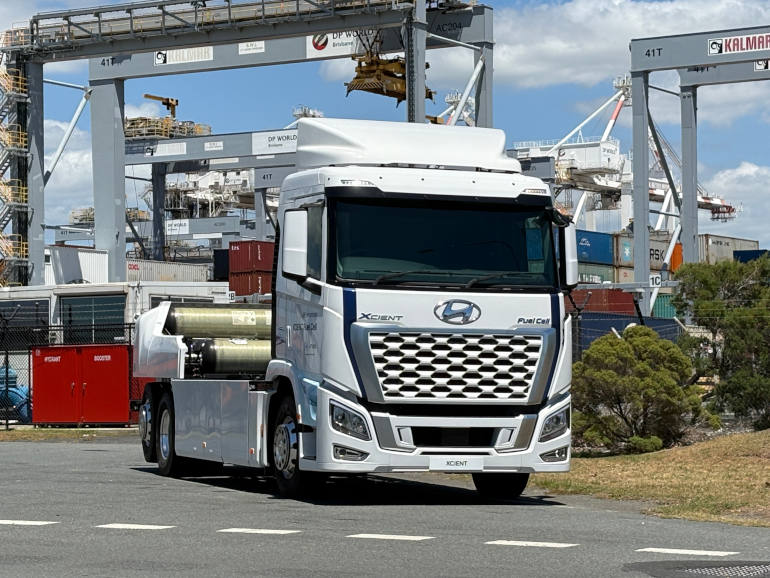

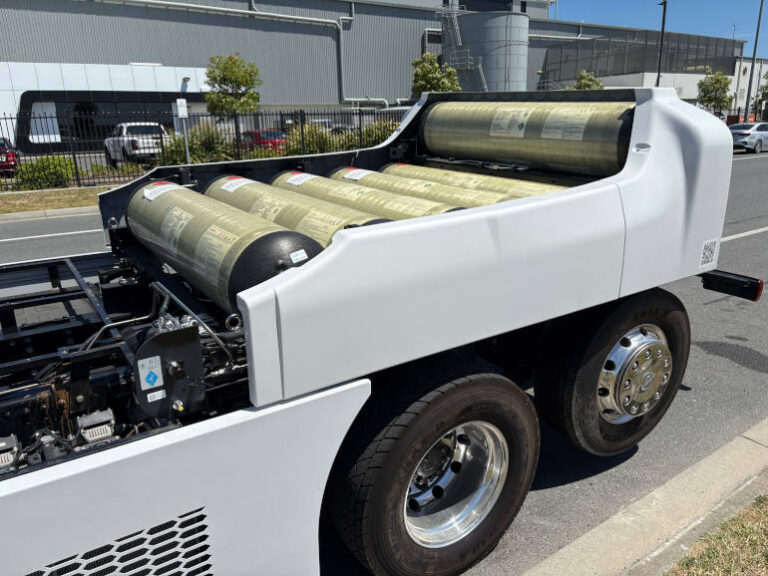
As hydrogen begins to appear in discussions about zero-emission transport—particularly in heavy vehicles such as fuel cell trucks—it is important for Fleet Managers to understand the terminology used to describe how hydrogen is produced.
Unlike petrol or diesel, hydrogen is not a primary energy source. It must be produced by separating hydrogen atoms from other molecules such as water, natural gas, or coal. The “colour system” has emerged as a simple way to describe the different production methods and their environmental impact.
For organisations evaluating hydrogen as part of a long-term decarbonisation strategy, the colour of hydrogen matters because it determines the lifecycle emissions of the fuel.

Green Hydrogen
Green hydrogen is generally considered the most sustainable form of hydrogen.
It is produced by electrolysis, where electricity splits water into hydrogen and oxygen. When the electricity used comes from renewable sources such as solar, wind or hydro power, the entire process can be effectively carbon-neutral.
The term “green hydrogen” can also include other renewable pathways such as producing hydrogen from biomass or biomethane. Some of these bio-based pathways may even be climate-positive, meaning they remove carbon from the atmosphere rather than adding to it.
For fleet operators looking at hydrogen fuel cell trucks or heavy equipment, green hydrogen is typically the target fuel source because it aligns with net-zero and sustainability commitments.
Blue Hydrogen
Blue hydrogen is produced using the same method as grey hydrogen—steam methane reforming (SMR)—but with an additional step to capture the carbon emissions.
In this process, methane from natural gas is converted into hydrogen and carbon dioxide. Carbon capture and storage (CCS) technology is used to prevent most of the CO₂ from entering the atmosphere.
Although it is often described as carbon-neutral, in reality CCS systems are not perfectly efficient. For this reason, blue hydrogen is more accurately described as low-carbon hydrogen.
Blue hydrogen can reduce emissions significantly—cutting carbon output by around 95% compared with traditional grey hydrogen production—and many analysts expect it to play a major role in scaling hydrogen supply in the coming decades.
For fleets, blue hydrogen could act as a transitional fuel while renewable hydrogen production scales up.
Blue Hydrogen
Blue hydrogen is produced using the same method as grey hydrogen—steam methane reforming (SMR)—but with an additional step to capture the carbon emissions.
In this process, methane from natural gas is converted into hydrogen and carbon dioxide. Carbon capture and storage (CCS) technology is used to prevent most of the CO₂ from entering the atmosphere.
Although it is often described as carbon-neutral, in reality CCS systems are not perfectly efficient. For this reason, blue hydrogen is more accurately described as low-carbon hydrogen.
Blue hydrogen can reduce emissions significantly—cutting carbon output by around 95% compared with traditional grey hydrogen production—and many analysts expect it to play a major role in scaling hydrogen supply in the coming decades.
For fleets, blue hydrogen could act as a transitional fuel while renewable hydrogen production scales up.
Grey Hydrogen
Grey hydrogen is currently the most common type produced globally.
It is made using steam methane reforming, where methane from natural gas is heated with steam to produce hydrogen and carbon monoxide. This process releases significant carbon dioxide emissions.
Grey hydrogen typically produces 9–12 kg of CO₂ for every kilogram of hydrogen produced, making it a high-emissions fuel unless carbon capture is applied.
While grey hydrogen is widely used today in industries such as refining and fertiliser production, it does not support decarbonisation goals for transport.
Brown and Black Hydrogen
Brown hydrogen and black hydrogen are produced from coal through a process known as gasification.
Coal is heated with controlled oxygen and steam to produce hydrogen along with carbon monoxide and carbon dioxide.
The colour designation depends on the type of coal used:
- Brown hydrogen – produced from lignite coal
- Black hydrogen – produced from bituminous coal
This production method is highly polluting and dates back to the 19th century when similar processes were used to create “town gas” for lighting and heating.
From a sustainability perspective, brown and black hydrogen are considered the least desirable options.
Turquoise Hydrogen
Turquoise hydrogen is a newer production method based on methane pyrolysis.
Instead of producing carbon dioxide, methane is split using heat generated by electricity. The result is hydrogen and solid carbon, often referred to as carbon black.
Because the carbon is produced as a solid rather than CO₂ gas, it does not require carbon capture systems and can be used in industrial applications such as tyres or rubber products.
If powered by renewable electricity and combined with bio-methane feedstock, turquoise hydrogen has the potential to become very low-carbon or even carbon-negative.
Pink and Yellow Hydrogen
Two additional colours are used to describe hydrogen produced through electrolysis powered by different energy sources.
Pink hydrogen refers to hydrogen produced using electricity from nuclear power. This pathway produces clean hydrogen but depends on nuclear energy availability.
Yellow hydrogen is less consistently defined. It may refer to hydrogen produced using solar electricity, or more broadly hydrogen produced through electrolysis powered by the general electricity grid mix.
Because electricity grids often include fossil fuel generation, hydrogen produced this way may still carry some carbon emissions.
White Hydrogen
White hydrogen, also known as natural hydrogen, refers to hydrogen that occurs naturally in underground deposits.
Exploration drilling is underway in several parts of the world to determine whether these deposits can be economically extracted.
At present, however, there is no established large-scale method for extracting and using natural hydrogen.
Why the Colour System Matters for Fleets
For Fleet Managers exploring hydrogen vehicles—particularly heavy trucks, buses, or plant equipment—the colour of hydrogen directly influences the environmental outcome.
A hydrogen fuel cell vehicle itself produces zero tailpipe emissions, but the overall carbon footprint depends on how the hydrogen was produced.
- Green hydrogen offers the lowest lifecycle emissions
- Blue hydrogen may support early scaling of supply
- Grey, brown and black hydrogen carry significant carbon impacts
As hydrogen infrastructure develops, understanding these production pathways will become increasingly important for organisations planning their long-term fleet decarbonisation strategy.