

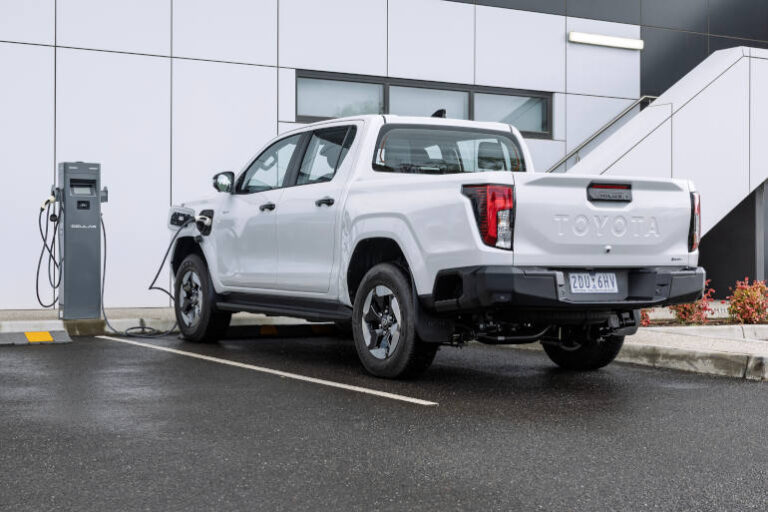
The arrival of the battery-electric Toyota HiLux BEV marks one of the most significant milestones in the history of Australia’s best-selling ute. For fleet operators, this is more than just a new model—it represents a practical pathway to reduce emissions while maintaining the productivity and durability that has made the HiLux a staple across construction, utilities, mining and government fleets.
Toyota has confirmed the first all-electric HiLux will arrive in Australian showrooms in May 2026, with pricing starting from $74,990 plus on-road costs. The vehicle has been developed specifically with fleet applications in mind, targeting organisations looking to reduce tailpipe emissions without compromising capability or reliability.

A Historic Step in the Evolution of the HiLux
For decades, the HiLux has been synonymous with reliability in demanding environments. Moving this platform to a fully electric drivetrain signals that electrification is no longer limited to passenger cars or urban delivery vans.
Toyota undertook extensive testing of the HiLux BEV with mining fleets in harsh Australian conditions—including remote operations and extreme temperatures—to ensure the vehicle meets the same durability expectations as its diesel counterpart.
That testing program matters for fleet buyers. It demonstrates that electrification is moving beyond pilot projects into mainstream operational readiness.
Key Specifications for Fleet Buyers
The HiLux BEV launches in Australia with a focused configuration designed to meet typical fleet requirements.
Powertrain and Performance
- Battery: 59.2kWh lithium-ion
- Drive: Dual-motor all-wheel drive
- Output: 144kW and 468Nm
- DC Fast Charging: 150kW (10–80% in ~30 minutes)
- AC Charging: 10kW three-phase (10–100% in ~6.5 hours)
- Range:
- 315km (pick-up variants)
- 245km (cab-chassis variant)
Capability
- Towing capacity: 2,000kg braked
- Multi-Terrain Select: Six drive modes for off-road conditions
- All-wheel drive: Full-time traction management
- 1500W inverter: Power tools or equipment on site
For many urban and regional fleets—particularly local government, utilities and service trades—these specifications align closely with typical daily duty cycles.
Pricing and Variants
| Variant | Body Style | Price (excl. on-roads) |
|---|---|---|
| HiLux BEV SR | Double-cab cab-chassis | $74,990 |
| HiLux BEV SR | Double-cab pick-up | $76,490 |
| HiLux BEV SR5 | Double-cab pick-up | $82,990 |
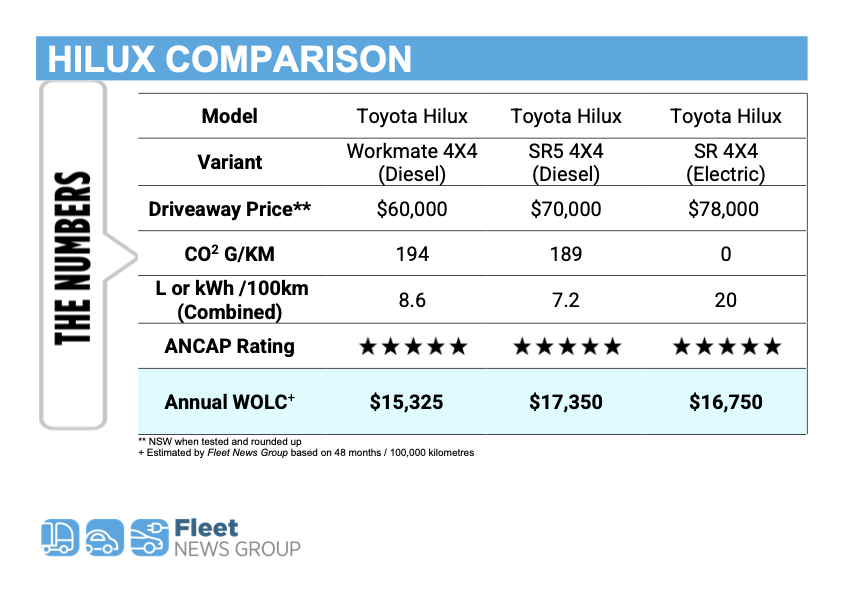
These prices position the HiLux BEV at the premium end of the light commercial segment, but within the range many fleets are already evaluating when considering whole-of-life cost reductions through lower fuel and maintenance expenses.
What This Means for Fleet Decarbonisation
The launch of an electric HiLux removes one of the biggest barriers to fleet electrification: the lack of a trusted, fit-for-purpose work vehicle.
For organisations developing emissions reduction strategies, the opportunities are immediate:
1. A Practical Pathway to Reduce Scope 1 Emissions
Replacing diesel utes with battery-electric models directly reduces tailpipe emissions, helping organisations meet sustainability targets and reporting obligations.
2. Lower Operating Costs Over Time
Electric vehicles typically deliver:
- Lower fuel costs
- Reduced maintenance requirements
- Predictable energy pricing
These factors support whole-of-life cost planning and long-term fleet budgeting.
3. Improved Driver and Community Outcomes
Electric utes provide:
- Quieter operation in residential areas
- Reduced vibration and fatigue
- Lower local air pollution
For councils and service providers, these benefits can improve both workplace safety and community acceptance.
Why This Launch Matters Now
Fleet managers have been cautious about electrifying light commercial vehicles because the available options did not always match operational requirements. The arrival of the HiLux BEV changes that conversation.
It demonstrates that:
- Electrification has reached mainstream fleet applications
- OEM support and servicing networks are critical to adoption
- Transition planning can move from theory to implementation
Toyota’s extensive dealer and service network is likely to give fleet buyers additional confidence as they begin replacing diesel vehicles with electric alternatives.
The Bottom Line for Australian Fleets
The introduction of the Toyota HiLux BEV is not just another vehicle launch—it is a turning point in the transition to low-emission fleet operations.
For many organisations, this model will become:
- The first practical electric replacement for a traditional diesel ute
- A key enabler of fleet decarbonisation strategies
- A signal that the market is ready for large-scale electrification of work vehicles
In fleet terms, the question is no longer if utes will go electric. The focus now shifts to how quickly fleets can transition while maintaining productivity and reliability.
WOLC on Hilux BEV