


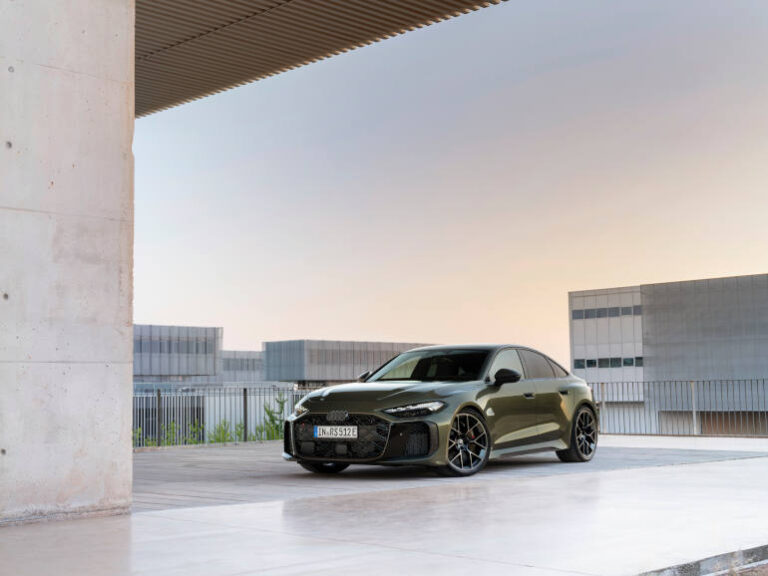
Audi has confirmed pricing and specification for the all-new Audi RS 5, marking a significant shift for the brand as it introduces plug-in hybrid technology to one of its most recognisable performance nameplates.
The next-generation RS 5 will arrive in Australia in the second half of 2026 in both Sedan and Avant body styles, with pricing starting from $179,900 plus on-road costs. It becomes Audi’s first high-performance plug-in hybrid, delivering a combined system output of 470kW and 825Nm.
For fleets and novated lease buyers, this announcement is less about emissions compliance and more about how electrification is reshaping performance vehicles. The RS badge has always been about speed and driving engagement — now it also includes the ability to run quietly on electricity for everyday commuting.
Hybrid Performance Meets Everyday Electric Driving
At the heart of the new RS 5 is a plug-in hybrid system pairing a 2.9-litre twin-turbo V6 petrol engine with a powerful electric motor. The petrol engine produces 375kW, while the electric motor adds 130kW and 460Nm, delivering the headline combined output figures.
That power translates into serious performance credentials.
- 0–100 km/h: 3.6 seconds
- Electric driving range: up to 78 km (WLTP)
- Battery capacity: 25.9 kWh
- Charging: 11 kW AC (around 2.5 hours for a full charge)
The electric motor also plays a role in vehicle dynamics, delivering instant torque and supporting advanced torque vectoring to improve handling and responsiveness.
From a practical perspective, the electric range is enough to cover typical metropolitan commuting distances. That means many drivers could complete daily travel using electricity alone, while still having the performance and range of a petrol engine when required.
A New Direction for Performance Vehicles
The introduction of plug-in hybrid technology into the RS range reflects a broader trend across the automotive industry — performance is no longer defined purely by engine size.
Electrification is being used to deliver:
- Faster acceleration through instant torque
- Improved fuel efficiency and reduced emissions
- Greater flexibility for urban driving
- Compliance with tightening emissions standards
For organisations managing executive fleets or offering novated lease options, vehicles like the RS 5 demonstrate how performance and sustainability are converging. They provide a pathway for drivers who want high performance without committing to a fully electric vehicle.
Sedan and Avant: Two Body Styles, Same Performance
For the first time, the RS 5 will be offered in both Sedan and Avant body styles in Australia, expanding its appeal beyond traditional sports sedan buyers.
Both variants share the same drivetrain, performance outputs, and core technology.
Key Specifications
| Item | RS 5 Sedan | RS 5 Avant |
|---|---|---|
| Power | 470 kW | 470 kW |
| Torque | 825 Nm | 825 Nm |
| Electric Range | 78 km | 76 km |
| Charging | 11 kW AC | 11 kW AC |
| Starting Price | $179,900 | $182,900 |
Manufacturer list pricing excludes statutory and dealer delivery charges.
The Avant variant is likely to attract buyers who value practicality alongside performance, offering additional cargo capacity without sacrificing speed or handling.
Technology and Safety Remain a Core Focus
Beyond performance, the new RS 5 introduces a comprehensive suite of driver assistance and safety technologies, including:
- Autonomous emergency braking
- Adaptive cruise control
- Lane change assist and rear cross-traffic alert
- 360-degree camera system
- Integrated dashcam
These features reflect the increasing expectation that high-performance vehicles must also deliver everyday usability and safety.
For fleet decision-makers, particularly those responsible for executive or specialist vehicles, this combination of performance and safety technology is becoming a baseline requirement rather than a differentiator.
What This Means for Fleet and Novated Lease Buyers
While the RS 5 sits firmly in the premium performance segment, its significance extends beyond the vehicle itself.
It signals three clear trends in the market:
1. Performance vehicles are becoming electrified
Plug-in hybrid systems are now being used to enhance performance, not just reduce emissions.
2. Hybrid technology is bridging the transition to full electrification
For many drivers, PHEVs provide a practical stepping stone between petrol and fully electric vehicles.
3. Expect more electrified performance models
As emissions standards tighten and technology evolves, high-output hybrid vehicles will become more common across premium and mainstream segments.
For fleet managers and salary packaging providers, this shift reinforces the importance of evaluating vehicles through a Whole-of-Life Cost lens — balancing performance, emissions, and operating costs rather than focusing solely on purchase price.




