


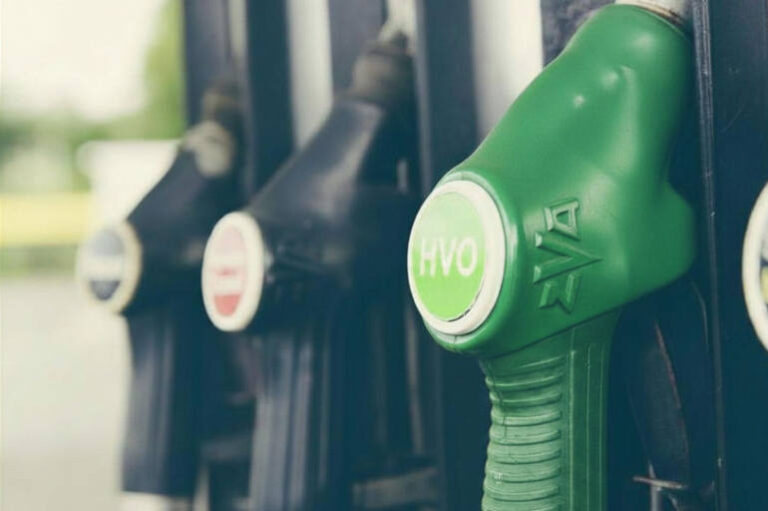
Ford Australia is highlighting renewable diesel as a practical lower-emission option for fleets that cannot yet move fully to electric vehicles.
In a statement from Michael Elias, General Manager of Ford Pro Australia, the company said fluctuating fuel costs and environmental targets are increasing pressure on Australian businesses, particularly Fleet Managers responsible for reducing emissions while keeping vehicles operational.
While Ford is expanding electrified options, including plug-in hybrid versions of the Ranger and Transit Custom, battery electric E-Transit Custom and E-Transit models, the company says many fleets still need lower-emission solutions for existing diesel vehicles.
Ford says key diesel workhorses in its current and recent model range are compatible with Hydrotreated Vegetable Oil, commonly known as HVO or renewable diesel. This includes the Next-Gen Ranger and Everest from Model Year 2022, Transit and Transit Custom from Model Year 19.75 with Euro 6.2 emissions, and the newly launched Ranger Super Duty.
HVO is not yet available at local retail fuel pumps in Australia, but Ford says it can be suitable for organisations with onsite bowsers or bulk fuel depots.
A lower-emission option without changing vehicles
HVO is a second-generation renewable diesel made from waste products such as used cooking oils, animal fats and agricultural waste. Unlike conventional fossil diesel, it is a paraffinic synthetic fuel designed to burn cleaner.
For Fleet Managers, the attraction is that HVO can be used as a direct substitute for diesel in compatible vehicles. Ford says it can be used on its own or blended with conventional diesel without requiring changes to engines, fuel tanks or filters.
That makes it relevant for fleets where operational requirements, payload, range, remote-area use or infrastructure constraints make battery electric vehicles difficult to deploy at scale today.
For Sustainability Managers, HVO offers a pathway to reduce emissions from existing assets rather than waiting for replacement cycles. For Finance Managers, the benefit is that it may reduce emissions without the capital cost of a full fleet replacement or a large charging infrastructure rollout.
HVO is not the same as biodiesel
Ford also used the announcement to distinguish HVO from traditional biodiesel, also known as FAME.
According to Ford, first-generation biodiesel has strict blend limits, often capped at 20%, and may require engine modifications in some applications. HVO, by contrast, is a pure hydrocarbon that meets the EN15940 standard. Ford says it is more stable, has a longer shelf life, and offers benefits for engine health and fuel storage in modern diesel engines.
The storage issue is important for organisations that operate industrial equipment, emergency vehicles, remote-site assets or backup equipment that can sit unused for extended periods. Ford says HVO has a shelf life of up to 10 years, compared with conventional diesel that can degrade over time.
Melbourne Airport switches Ford diesel fleet to HVO
Melbourne Airport has already tested the fuel in Rangers, Everests and Transits, working with Ford engineers to monitor performance during the trial.
Following the successful test, Melbourne Airport has transitioned its entire Ford diesel fleet to HVO. Ford says a 30,000-litre HVO tank and bowser is expected to be installed onsite.
Chris White, who oversees the fuelling needs for Melbourne Airport’s fleet, said the airport considered electrification but found it was not straightforward for its mixed fleet.
“We run a mixed fleet. Initially, everyone wanted to get on the EV and hybrid bandwagon, but it isn’t that simple for us,” said Chris White, who oversees the fuelling needs for Melbourne Airport’s fleet. “To electrify our whole fleet would have required a massive investment in charging infrastructure, even 8 superchargers for 50 units isn’t enough based on usage patterns. Using renewable diesel is so much easier; there’s no new infrastructure required, just swapping diesel for HVO in the onsite tank. We now run all our Fords and industrial equipment with HVO – it’s brilliant.”
White said HVO has also helped with industrial equipment that can remain unused for long periods.
“Conventional diesel fuel in a running vehicle in a semi-enclosed space is smelly, but with HVO it just smells a bit like a fish and chips shop,” said White.
Higher fuel cost, lower infrastructure barrier
Ford acknowledged that HVO currently costs more than traditional diesel delivered to site, with Melbourne Airport estimating the premium at around $0.50 to $0.70 per litre.
White said the operational and emissions benefits still made sense for the airport.
“We don’t need to replace our existing equipment and vehicles to lower our emissions, and we no longer need the additives we used to add to diesel to improve fuel combustion,” said White.
For fleet operators, the message is not that HVO replaces electrification. Instead, it may provide another option in the transition plan, particularly for organisations with mature fuel management, onsite tanks and vehicle applications that are difficult to electrify immediately.
The practical challenge remains supply. HVO is not yet widely available through retail fuel networks in Australia, which limits its use to organisations able to arrange bulk supply. But for fleets with compatible vehicles and onsite fuelling, Ford is positioning HVO as a ready-now emissions reduction step that can sit alongside hybrids, plug-in hybrids and battery electric vehicles.