As more organisations start planning the transition to electric vehicles, one of the first questions is usually: how many chargers do we need?
It sounds simple, but the answer depends on how the fleet operates. There is no single EV charging model that works for every organisation. A fleet with vehicles returning to a depot every night will have a very different charging requirement to a fleet where employees take vehicles home, or where assets travel long distances and rely on public charging networks.
This is where the EV charging pyramid becomes a useful planning model.
The EV charging pyramid looks at three main charging options: depot charging, home charging and public charging. The right mix will depend on the kilometres travelled each day, where vehicles are parked overnight, how long they are parked for, and the operational requirements of the fleet.

Start with the fleet, not the charger
One of the most common mistakes in EV transition planning is starting with the charging infrastructure. The better starting point is the fleet data.
Before an organisation can decide how many chargers it needs, it needs to understand how each vehicle is being used. This includes the average kilometres travelled each day, the maximum daily kilometres, the vehicle type, the parking location, and the dwell time when the vehicle is not being used.
For example, if a vehicle travels 80 kilometres per day and is parked at a depot from 5pm to 7am, the charging solution may be very different to a vehicle travelling 250 kilometres per day and parked at an employee’s home overnight.
This analysis should be completed during the planning stages and linked to the organisation’s fleet replacement plan. As more vehicles are replaced with EVs, the charging demand will increase. Understanding that future demand is important for budgeting, infrastructure planning and operational continuity.
Depot charging: high control, high capital cost
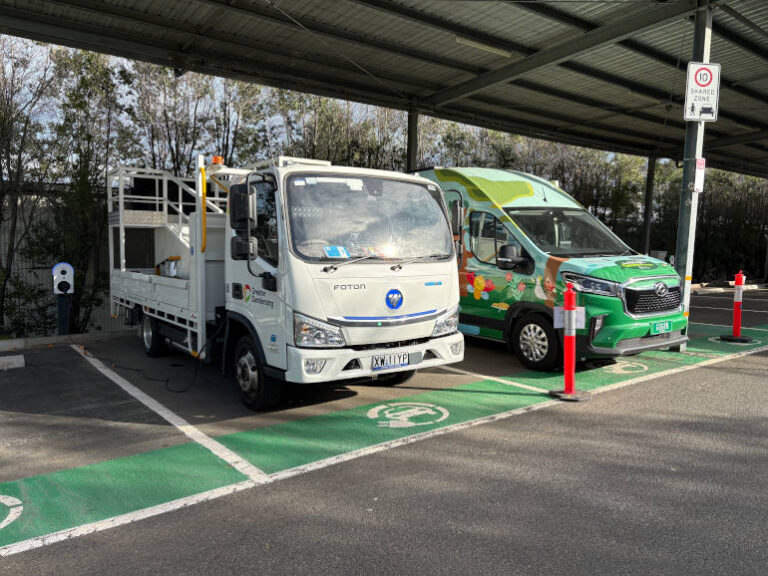
Depot charging is often considered the foundation of the EV charging pyramid for many fleets.
It gives the organisation the highest level of control over charging, energy management, access, safety and reporting. Vehicles can return to base at the end of the day, charge overnight, and be ready for the next shift. For fleets with predictable routes and centralised parking, depot charging can be the most efficient option.
However, depot charging also comes with the highest capital cost. It may require electrical upgrades, switchboard capacity reviews, civil works, charger installation, load management systems, signage, parking changes and ongoing maintenance.
It also introduces a new asset class into the fleet environment. Chargers need to be maintained, monitored, repaired and eventually replaced. This means depot charging should not be treated as a one-off project cost. It should be included in asset management planning, lifecycle costing and long-term budgets.
For Finance Managers, this is a key consideration. The cost of depot charging is not just the charger. It includes the enabling infrastructure and the ongoing management of the charging assets.
Home charging: convenient but complicated
Home charging can be an important part of the EV charging pyramid, particularly for passenger vehicles and light commercial vehicles that are taken home by employees.
It can reduce the need for depot charging and make better use of overnight dwell time. In many cases, it may also be convenient for the employee and support business continuity by allowing the vehicle to start each day fully charged.
However, home charging is more complicated than it first appears.
Every employee’s residential situation is different. Some employees may own a house with off-street parking. Others may rent, live in an apartment, park on the street, or have limited access to electrical infrastructure. This makes it difficult to create a single home charging policy that works for everyone.
Organisations also need to consider how electricity costs will be reimbursed, who pays for the installation, what happens when an employee leaves, how charging data is captured, and whether the arrangement is suitable under the organisation’s employment, tax and safety policies.
For Fleet Managers and Sustainability Managers, home charging can be a practical part of the solution, but it needs clear policy settings before vehicles are deployed.
Public charging: flexible but less predictable
Public charging networks are another layer of the EV charging pyramid. They can support vehicles that travel longer distances, operate away from base, or need flexibility during the day.
The advantage of public charging is that it generally requires no capital outlay from the organisation. The infrastructure is owned and operated by a third party, which can make it attractive during the early stages of EV adoption.
However, public charging may come with operational trade-offs. Drivers may need to divert from their normal route, wait for a charger to become available, or spend time charging during the working day. This can affect productivity, scheduling and service delivery.
Public charging costs can also vary. While it may avoid upfront capital expenditure, the cost per kilowatt-hour may be higher than depot or home charging. It can also be harder to manage reporting, cost allocation and charging behaviour without the right systems in place.
For organisations with low fleet management maturity, public charging may appear simple because it avoids infrastructure decisions. But it still requires policy, driver guidance, payment processes and monitoring.
The right mix depends on operations
The EV charging pyramid is not a fixed formula. It is a planning model.
Some organisations may have a high percentage of depot charging because vehicles return to base every night. Others may rely heavily on home charging because vehicles are assigned to employees and rarely visit a depot. Some fleets will need public charging as a regular part of operations, while others will only use it as a backup.
The right mix will depend on questions such as:
- How many kilometres does each vehicle travel each day?
- Where is the vehicle parked overnight?
- How long is the vehicle parked before it is needed again?
- Is the vehicle shared or assigned to one employee?
- Does the vehicle return to a depot?
- Is the vehicle used for emergency, operational or scheduled work?
- What level of charging reliability is required?
- What is the budget for capital works and ongoing operating costs?
These questions should be answered before chargers are installed or EVs are ordered. Without this planning, organisations risk under-investing in charging infrastructure, over-investing in chargers that are not used, or relying too heavily on public charging in a way that affects productivity.
Why the charging policy matters
The percentage mix between depot, home and public charging should be determined through policy.
A charging policy provides the rules for how employees charge vehicles, where they charge, who pays, how costs are reimbursed, and what data needs to be captured. It also helps manage risk by setting expectations before EVs are introduced into the fleet.
For example, the policy may state that depot charging is the preferred option for pooled vehicles, home charging is approved for assigned vehicles where suitable infrastructure exists, and public charging is only used when operationally required.
This type of policy gives Fleet Managers, Sustainability Managers and Finance Managers a shared framework for decision-making. It also helps the organisation budget more accurately because each charging type has a different cost profile.
Budgeting for the charging pyramid
Understanding the charging mix is essential for budgeting.
Depot charging usually has the highest capital cost but may provide lower operating costs and better control. Home charging may reduce depot infrastructure needs but requires policy, reimbursement processes and employee-specific assessments. Public charging avoids capital expenditure but can increase operating costs and reduce driver productivity.
This means the lowest-cost solution is not always the one with the lowest upfront cost.
A mature EV transition plan should model the expected charging demand across all three layers of the pyramid. It should also consider future fleet growth, replacement timing, energy demand, charger utilisation, maintenance costs and the likely impact on operations.
For many organisations, this level of planning will be new. It requires better fleet data, clearer policies and stronger links between fleet, finance, sustainability, facilities and operations teams.
Building fleet management maturity before electrification
The EV charging pyramid highlights why fleet management maturity matters.
Organisations that understand their fleet utilisation, parking locations, operating patterns and replacement plans will be in a much stronger position to electrify. They will be able to make informed decisions about infrastructure, avoid unnecessary costs and reduce operational disruption.
Organisations without this information may struggle. They may install chargers in the wrong locations, underestimate energy demand, overlook employee charging challenges, or fail to budget for the full lifecycle cost of charging infrastructure.
The transition to EVs is not just a vehicle replacement exercise. It is a change in how the fleet is planned, funded, operated and managed.
A practical model for EV transition planning
The EV charging pyramid gives organisations a practical way to think about charging.
Depot charging provides control and reliability, but requires capital investment and ongoing asset management.
Home charging can be convenient and cost-effective, but needs clear policy and employee-specific assessment.
Public charging provides flexibility, but may affect productivity and operating costs.
The right answer will be different for every fleet. What matters is that the organisation understands its operations before making infrastructure decisions.
For Fleet Managers, Sustainability Managers and Finance Managers, the charging pyramid is a useful model because it connects vehicle use, charging behaviour, capital planning and operational risk. It helps move EV planning away from guesswork and towards a structured, data-led approach.
That is the level of planning required if organisations want to reduce fleet emissions without creating new cost, productivity or service delivery problems.
- BMW Confirms Electric iX5 for Australia
 BMW has confirmed the all-electric iX5 will join the new fifth-generation X5 range in Australia from the first quarter of 2027, extending one of the brand’s most established premium SUVs into battery-electric territory for the first time. The announcement comes as BMW Australia confirms pricing and specifications for the first versions of the new X5,
 - BYD ATTO 1 Brings Right-Sized EVs into FocusBYD is strengthening the case for compact electric vehicles in Australian fleets, with a new offer on the ATTO 1 Essential highlighting the potential role of smaller EVs in urban and metropolitan applications. The ATTO 1 is BYD’s compact electric hatch, offering up to 220km of driving range under the WLTP test cycle and targeting
- MGU9 EV Gives Fleets Another Electric Ute to ConsiderAustralia will be the first market in the world to receive MG’s new all-electric MGU9 EV, giving fleet operators another option as manufacturers begin pushing battery-electric vehicles into the ute segment. MG Motor Australia says the MGU9 EV has been designed and tested for Australian conditions, combining dual-motor all-wheel drive with a 102.2kWh LFP battery,
- Subaru Showcases Expanded Electric SUV RangeSubaru Australia showcased its largest electrified vehicle line-up at Everything Electric Sydney, highlighting how quickly the brand had expanded its battery-electric range. The display brought together the new Subaru Uncharted, Solterra and Trailseeker battery-electric SUVs alongside the Forester Strong Hybrid. Together, the four models gave fleet buyers a clearer view of Subaru’s multi-powertrain approach to
- Kia PV7 Brings More Van to the EV MarketKia is expanding its electric commercial vehicle strategy with the new PV7, a larger electric van designed to sit above the PV5 and target fleets requiring more payload, cargo capacity and operating range. Unveiled at IAA Transportation 2026 in Hannover, the PV7 is the second model in Kia’s dedicated Platform Beyond Vehicle (PBV) range and