


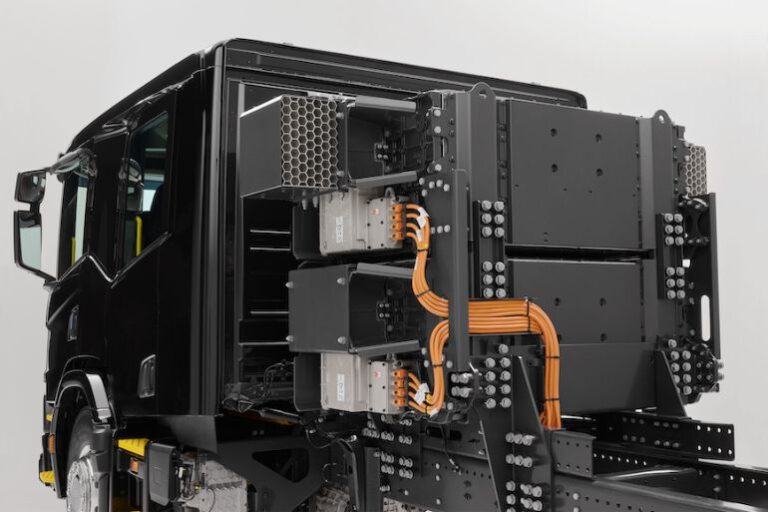
Scania is preparing to bring battery-electric propulsion into the Australian fire and emergency services market, with its newly revealed Battery Electric CrewCab providing a potential pathway to zero-tailpipe-emission firefighting vehicles.
The electric CrewCab has recently been released in Europe and was a key talking point for Scania Australia at AFAC 2026 in Melbourne, where the company’s Special Vehicles Team discussed its prospective implementation in Australia.
While no Australian delivery timing or detailed local specification has yet been announced, Scania says the new electric platform will give fire and emergency services another option as they consider how to reduce emissions from future fleet replacement programs.
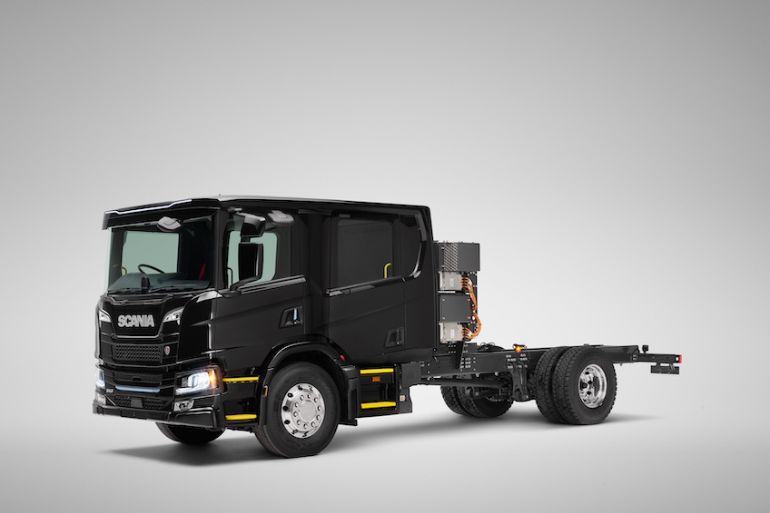
Zero tailpipe emissions for emergency response
Benjamin Nye, Director of Truck Sales for Scania Australia, said the arrival of the battery-electric CrewCab in Europe opens the door for Australian emergency services to consider a Scania electric solution.
“The release in Europe of the new Battery Electric CrewCab means that Australian firefighting and emergency services will soon have the ability to specify a Scania solution with zero tailpipe emissions,” Nye said.
For emergency service fleets, the environmental benefits extend beyond vehicles travelling to and from incidents.
Fire trucks can spend significant periods stationary at an incident while auxiliary equipment is operating. Scania says electric propulsion could provide an advantage in these situations by reducing noise as well as eliminating tailpipe emissions.
Nye said the electric CrewCab could “operate far more quietly, even when employing PTOs on site, reducing noise pollution in built-up areas”.
That quieter operation could be particularly valuable during prolonged incidents in residential and urban environments, where fire appliances may remain operating for extended periods.
More choices for lower-emission fire fleets
The electric CrewCab forms part of a broader Scania strategy to provide fire and emergency services with different pathways to lower emissions.
At AFAC, Scania also showcased its new Super 11 five-cylinder engine in a chassis destined for a firefighting application. The Super 11 range can operate on Hydrotreated Vegetable Oil, while selected variants can also run on B100 renewable diesel.
That gives emergency services the opportunity to consider renewable liquid fuels as well as battery-electric vehicles when planning future fleet transitions.
“The options of renewable diesel or Battery Electric Vehicle propulsion means that Scania has a full range of low or zero tailpipe emissions solutions available for the fire and emergency services,” Nye said.
“We’re ready when you are to plan for a more sustainable emergency vehicle future.”
Emergency vehicles present a different electrification challenge
Fire trucks have demanding operating requirements that can make the transition to electric propulsion different from passenger cars or conventional fleet vehicles.
Vehicles need to remain ready for emergency response, carry crews and specialised equipment, and support operational systems once they reach an incident.
Scania’s decision to develop a dedicated Battery Electric CrewCab is therefore an important development for fleet managers and emergency service organisations assessing how electrification could fit within future appliance replacement strategies.
The company has not yet confirmed detailed Australian specifications, pricing or an introduction timetable for the electric CrewCab, but its presence in discussions at AFAC signals that battery-electric firefighting vehicles are now firmly part of Scania Australia’s future emergency services offering.
For Australian fire and emergency fleets, the next step will be understanding where electric appliances can meet operational requirements while delivering benefits in emissions, noise and whole-of-fleet sustainability.