


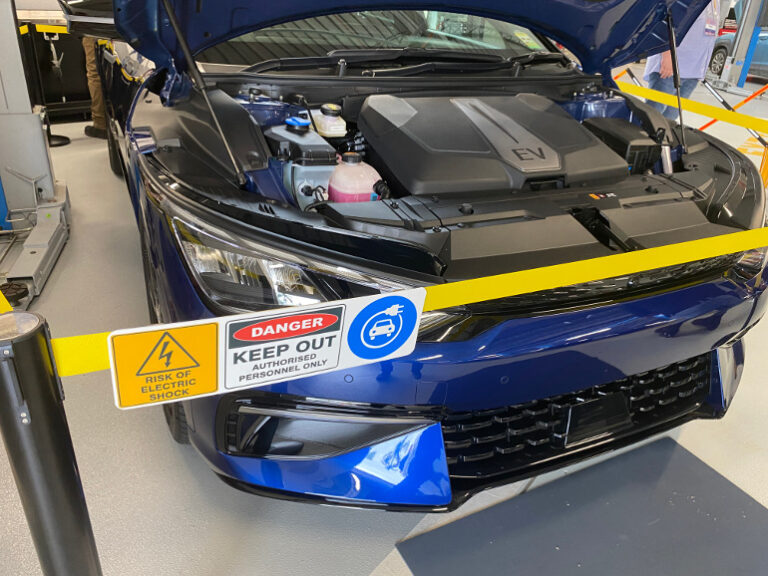
Lower maintenance costs have long been part of the business case for electric vehicles, but fleets shouldn’t interpret fewer moving parts as meaning less attention needs to be paid to maintenance.
That’s the warning from Eden Shirley, CEO and Co-founder of FleetGuru, who told fleet managers at Everything Electric Sydney that EVs introduce a different maintenance challenge.
FleetGuru was participating in a panel of supplier sponsors supporting the Fleet News Group Awards program.
Shirley said the financial benefits of EV maintenance were becoming clearer as larger international fleets generated meaningful operating data.
But he also highlighted the importance of inspections and downtime management as fleets move away from traditional servicing patterns.

Maintenance costs are falling
Electric vehicles remove many of the components associated with servicing an internal combustion engine, and Shirley said international experience was beginning to demonstrate the impact.
Looking to markets with greater EV adoption, he said data was showing “a reduction of about 45% in maintenance costs by year three on an EV”.
However, the same data showed dealership visitation falling by only around 11%. That distinction matters.
Commercial vehicles still need tyres, brakes, suspension and other components inspected, while manufacturers continue to specify scheduled checks and maintenance requirements.
“There are still fluids in the vehicle, and there are checks and balances that need to occur,” Shirley said. “But fundamentally, the maintenance cost is lower.”
The oil change was doing more than changing the oil
One unexpected challenge created by EVs is the disappearance of a familiar fleet maintenance trigger.
“The old humble oil change is a bit of a Trojan horse, isn’t it?” Shirley said.
Regular servicing brings a vehicle into a dealership or workshop where technicians have an opportunity to identify other problems.
“They’re looking at the tyres, they’re looking at the brake pads, they’re looking at the condition of the vehicle,” Shirley said.
As service intervals change, fleet managers need to ensure those inspections aren’t unintentionally disappearing with the oil change.
That becomes particularly important for high-utilisation commercial fleets where drivers may not recognise developing tyre, brake or mechanical issues.
Less maintenance doesn’t eliminate downtime
Shirley also highlighted downtime as an operational consideration that can be overlooked when building an EV business case.
While EVs may require less maintenance, parts availability and the size of the repair network can affect how quickly a vehicle returns to service when something does go wrong.
“The downtime can sometimes be a little bit longer because the parts can sometimes take a little longer to source,” he said.
“There is certainly a tighter network of repairers.”
The issue should improve as new manufacturers establish larger vehicle populations and support networks in Australia, but fleets introducing EVs today need to consider the support available around each vehicle.
Don’t lose the maintenance discipline
For fleet managers, the opportunity is to capture the lower maintenance costs offered by EVs without losing the discipline created by traditional servicing.
Shirley said technology could increasingly help fleets maintain that discipline through automated reminders and triggers.
The important point is that reduced maintenance shouldn’t become reduced vehicle oversight.
EVs may remove the oil change from the fleet maintenance schedule. Fleet managers still need to make sure somebody is looking at the tyres.