

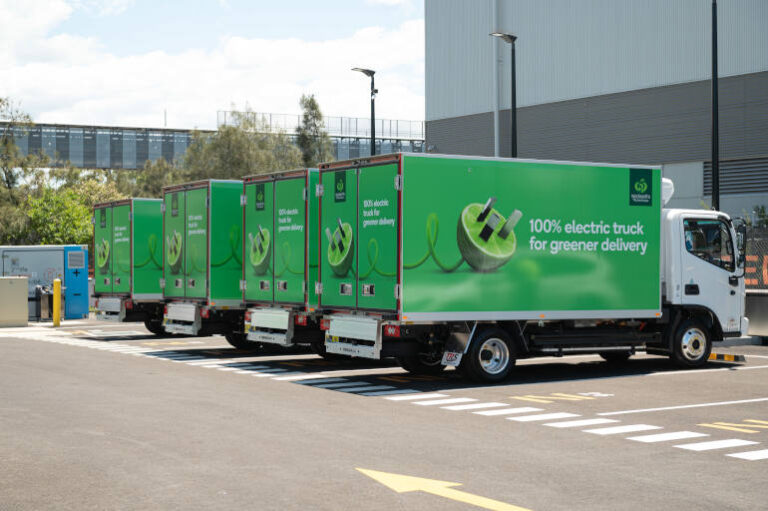
When Woolworths began using Zenobē’s electric truck charging hub in Mascot, Sydney, drivers had a new stop at both ends of their shift. They collect their trucks from the hub and return them there to charge for the next delivery run. For fleets with limited space or power at their own depots, it’s a model worth examining. Zenobē’s first six months of operating the site show what it takes to make it work.
The Australian Renewable Energy Agency (ARENA) supported the project through its Driving the Nation program. As part of the project’s knowledge-sharing commitments, Zenobē documented what it learnt from planning, building and operating the hub. The three reports are available through ARENA for other fleets planning their own electric truck rollouts.
Finding a site that fits the delivery routes
Zenobē assessed more than 10 properties in and around Mascot. It looked for a site within five kilometres of Woolworths’ customer distribution centre, with enough room for trucks to park and manoeuvre and a viable grid connection. The trucks were expected to travel up to 100 kilometres a day, so a nearby site with overnight charging could limit the distance they travelled between the hub and the distribution centre.
The hub opened in December 2025. Zenobē’s infrastructure report records 18 dual-connector 120 kW DC chargers and a 1,000 kVA grid connection. The site supports 20 Foton T5 electric trucks from the broader fleet of 60 leased to Woolworths under the project. Zenobē operates the hub, supplies electricity and maintains the chargers under its Electric Vehicle as a Service model.
Keeping trucks ready for the next shift
Moving charging offsite changed how Woolworths organised vehicle collection, parking and returns. Drivers received hands-on training in charger operation and site manoeuvring and practised the new collection and return procedures.
Zenobē identified charger availability as the most important operational measure for Woolworths’ delivery schedule. Even a single unavailable bay can affect which trucks are ready for the next shift. The report highlights remote fault monitoring, rapid maintenance response and access to spare parts as priorities for future hubs. For Fleet Managers, those are practical questions to settle in a service agreement, alongside who checks that trucks have charged and what happens when one is due out with too little charge.
When trucks charge affects what fleets pay
Zenobē found that capacity charges had a greater effect on energy costs than expected. It trialled software that could schedule charging by circuit and reviewed the charging schedule against the site’s electricity tariff.
For Finance Managers comparing an offsite service with an installation of their own, the Mascot experience shows why annual electricity consumption is only part of the calculation. Daily kilometres help estimate how much energy the fleet will need. Return times and next departures show how much flexibility there is to schedule charging around the tariff while keeping trucks ready for work.
Making room for other fleets
The hub was designed to serve multiple operators, but its original development approval named the Woolworths Foton T5 as the designated vehicle. As operators with other makes and models expressed interest, that wording limited which vehicles the hub could accommodate. Zenobē submitted an amendment seeking broader wording, a lesson for fleets that expect their vehicle mix to change over time.
Read the Zenobē reports on ARENA
- Site selection and early planning — Lessons Learnt Report 1
- Site layout, grid connection and charger design — Infrastructure Design Report
- Driver training, charger reliability and the first six months of operation — Change Management and Lessons Learnt Report