


Ford will add another form of electrification to its Australian line-up when the Bronco Basecamp arrives in the second half of 2027, combining electric drive with a petrol-powered range extender designed to support long-distance travel.
Rather than using a conventional hybrid system where both the petrol engine and electric motors can drive the wheels, the Bronco Basecamp uses a 49kWh usable battery and dual electric motors for propulsion.
A 1.5-litre turbocharged petrol engine operates solely as an onboard range extender, generating additional electricity once the battery charge falls.
Ford is quoting a preliminary combined driving range of between 800km and 900km, subject to final testing.
For Australian buyers, that technology could offer another answer to one of the biggest questions surrounding electrification outside metropolitan areas: how to retain electric driving while reducing reliance on public charging infrastructure during long-distance trips.
A different approach to electrification
The Bronco Basecamp gives Ford another electrified architecture alongside battery electric vehicles and plug-in hybrids.
The key difference is that the vehicle remains electrically driven, while the petrol engine provides additional energy when required rather than mechanically driving the wheels.
Ford Motor Company Director of Marketing Ambrose Henderson said the Australian and New Zealand market was particularly suited to the vehicle because of the distances people travel for outdoor activities.
“Outdoor life here isn’t a trend, it’s just life. Bronco Basecamp was almost purpose-built for these customers.”
For fleet operators, the technology is significant even if the Bronco Basecamp itself is primarily positioned as an adventure SUV.
Range-extender EVs potentially offer a different compromise between zero-emission electric operation and the flexibility required for regional or remote travel. However, the operating case will depend on final efficiency, charging capability, local specifications and how frequently the petrol range extender is needed in real-world use.
Designed around life away from the grid
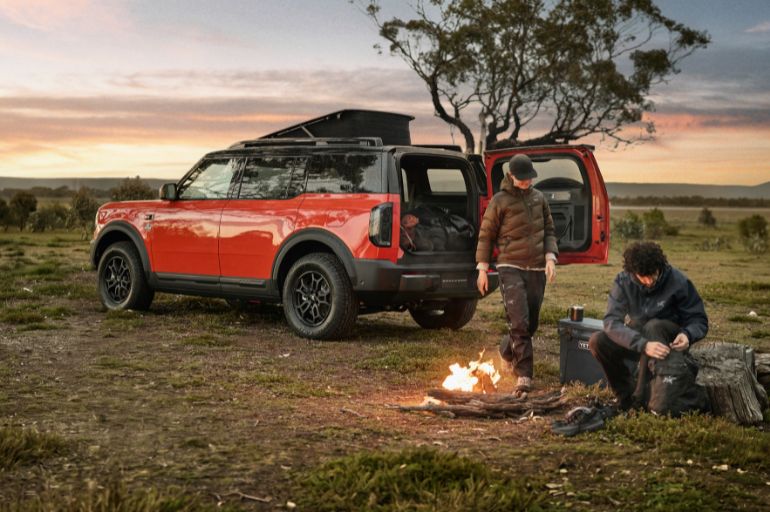
Ford has also designed the Bronco Basecamp to function as more than transport once it reaches its destination.
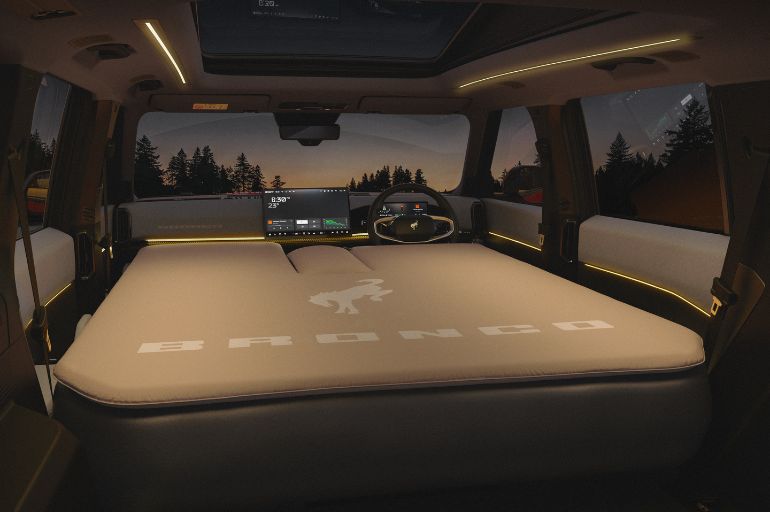
The Outer Banks model will feature an electric pop-up lift roof, while the cabin can be converted into sleeping accommodation.
Other equipment includes warm and cool centre-console storage and a fold-down “Wild Kitchen” incorporated into the rear swing gate.
Up to 6.6kW of Pro Power Onboard is also planned, allowing electrical equipment to operate from the vehicle battery while parked.
Ford says the system could be used for appliances, camp lighting, laptops and photography equipment.
While aimed primarily at recreational users, onboard power could also demonstrate the broader usefulness of electrified vehicles for fleets operating away from fixed infrastructure.
Vehicles capable of supplying useful amounts of electricity at a worksite could potentially reduce the need for separate generators or other portable power sources in some applications.
More details needed before the fleet case is clear
Australian pricing, final model variants and complete specifications have not yet been announced.
Ford has also described the 800-900km combined range figure as preliminary, with further information to be released closer to the vehicle’s Australian arrival.
That means it is too early to make a detailed whole-of-life cost or novated lease comparison.
The significance of the Bronco Basecamp for the broader market is the powertrain itself.
Rather than treating electrification as a choice between conventional hybrids, plug-in hybrids and battery electric vehicles, Ford is adding a range-extender solution designed around customers who want electric propulsion but still need the flexibility to travel significant distances.
For fleets watching the development of electrified vehicles for regional and remote operations, the Bronco Basecamp will be another technology worth watching as Ford expands its Australian multi-energy line-up towards 2030.