


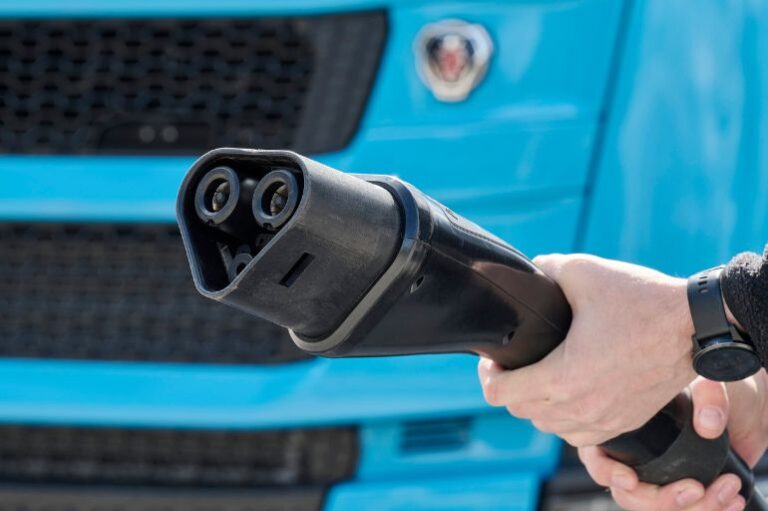
Most Fleet Managers finish the year with a to-do list that looks a bit like Santa’s nice-list scroll — endless, rolling and never quite complete. So as you enjoy a slower summer break, here’s an easy read to help you get ahead of one of the biggest changes coming to the fleet world in 2026: megawatt charging for electric trucks.
It’s not hype anymore. Delta Electronic confirmed at All Energy Australia that one-megawatt charging will land here within 12 months. If you operate heavy vehicles, this technology will shape how your depots run, how your drivers move, and what your next round of procurement looks like.
This isn’t a technical manual — just a calm walk through what you’ll need to think about while you’re sitting by the beach, the barbecue or the cricket.
Why Megawatt Charging Matters (and Why You Should Care Now)
A megawatt charger can take a big battery truck from “nearly empty” to “back on the road” in roughly the time it takes to enjoy a lunch break. For logistics fleets, linehaul operators and councils running heavy rigs, the knock-on effect is huge.
In short: Megawatt charging turns electric trucks from “interesting” into “operational”.
2026 will be the year many fleets run their first serious EV truck pilots — and the infrastructure decisions start early.
1. Think About Power… but Don’t Panic About the Grid
If you’re imagining your depot melting the nearest substation, relax.
Yes — megawatt charging is big power. But the industry is no longer relying purely on the grid.
Battery-buffered sites will do much of the heavy lifting. These are container-sized energy storage units that charge slowly from the grid (or solar) and discharge quickly into vehicles. Delta and others already have them in-market.
So if your depot doesn’t have the world’s most muscular grid connection, don’t worry — you’re not ruled out of electrification.
2. Map Out Your Space (The Most Underrated Step)
Megawatt chargers are larger than car chargers, but not outrageous. The real space comes from:
- charging bays for long rigid trucks and prime movers
- safe turning circles
- cable routing
- driver access zones
- firefighting pathways
- energy storage placement
A rough summer checklist:
- Where do my trucks naturally dwell now?
- Which bays could become “fast-turnover” bays?
- Can I separate charging from maintenance and loading areas?
- Is there room for a future battery storage unit?
If you can answer those while the test cricket is on, you’re ahead of most fleets.
3. Start Light: Mix High-Power with Mid-Power Charging
Not every truck needs a megawatt charger every day.
Expect depots to run:
- a few 1 MW bays for fast turnaround
- several 200–350 kW bays for regular top-ups
- overnight AC or low-speed DC for predictable vehicles
It’s about matching power to use-case. Think of it like taps in a house: most are normal, one fills the bathtub fast.
4. Get Used to Energy Management Software
In 2026, managing a fleet depot will feel a bit like running a tiny power station. Good software will help you:
- schedule charging around energy prices
- avoid peak demand charges
- load-share between chargers
- prioritise vehicles based on dispatch needs
- integrate solar or battery storage
If you learn one “new thing” this summer, let it be this: charging software will matter just as much as hardware.
5. Have the Megawatt Conversation Early
OEMs are designing trucks today that will use your charging depot tomorrow. When you’re back at work in January, start asking suppliers:
- Which models will support megawatt charging?
- What are their connector and cooling requirements?
- What turnarounds are possible with 350 kW vs 1 MW?
- What battery sizes do they recommend for your routes?
Knowing the answers changes everything about your depot plan.
A Calm, Summer Takeaway
You don’t need to become an electrical engineer before 2026. But you do need a basic understanding of how megawatt charging will change the way your fleet operates.
So grab a cold drink, read this again at half pace, and think about where your first charging bay might go. That alone will put you ahead of the curve.