

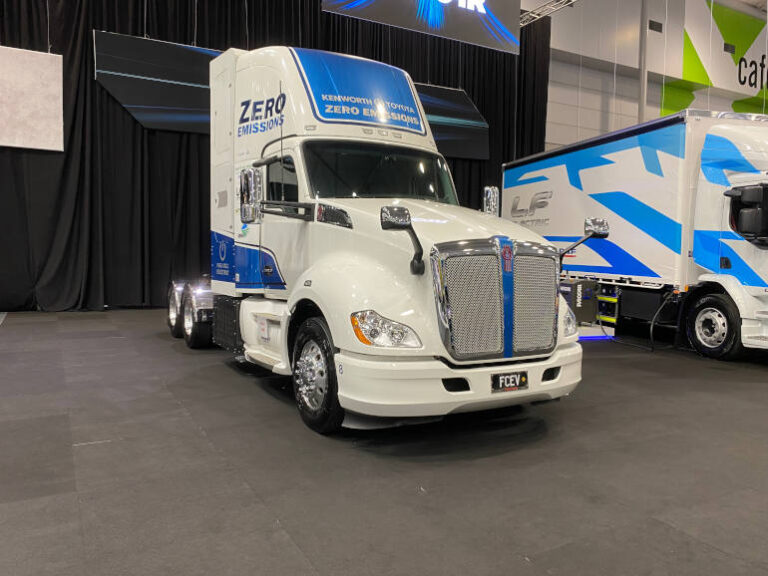
PACCAR Australia is backing hydrogen combustion engines as a practical zero-emission pathway for heavy transport, with pilot projects expected before the end of the decade. Director of Product Planning at PACCAR Australia, Ross Cureton, told Fleet News Group at the 2025 Brisbane Truck Show that hydrogen has often been overlooked in favour of battery-electric, but its potential is becoming clear.
Hydrogen Combustion Recognised As Zero Emission
Hydrogen combustion engines burn hydrogen in a conventional internal combustion engine, producing only trace greenhouse gas emissions. Importantly, European regulators have already recognised hydrogen combustion as a zero-emission technology.
“Between 2022 and 2024 the EU recognised hydrogen combustion as zero emission,” Mr Cureton said. “That means a hydrogen combustion vehicle can go anywhere a battery-electric vehicle can in Europe.”
For operators, this recognition removes barriers to adoption in low-emission zones and makes hydrogen combustion a credible technology on par with BEVs in regulatory terms.
Early Opportunities In Back-To-Base Fleets
While large-scale infrastructure is still years away, Ross believes Australia has clear entry points for hydrogen.
“The best way to crack this chicken-and-egg scenario with infrastructure is in back-to-base situations,” he said. “Concrete agitators, refuse trucks and even short-haul articulated vehicles could all be fuelled from a central depot.”
Local hydrogen projects, such as the Viva Energy refuelling station in Geelong, could provide early fuel supply. Tube trailers could extend hydrogen availability within a 100-kilometre radius, supporting agriculture, ports and regional freight.
Pilot Projects Before 2030
Mr Cureton expects to see viable hydrogen fleets on Australian roads within the next five years.
“In that 2028–29 timeframe I can see modest infrastructure and pilot-scale numbers of vehicles joining up,” he said.
Scaling beyond pilots will be harder, with Ross pointing to the cost of liquefaction plants – around $200 million – as a key challenge. But Australia’s advantage lies in its ability to produce green hydrogen competitively.
“Australia has the potential to generate very economic green hydrogen compared to most places in the world, so we should at least be moving,” he said.
A Portfolio Of Solutions
Hydrogen is not the only technology in PACCAR’s sights. Battery-electric trucks are already being trialled in Australia, while advanced Euro 6 diesel engines continue to push efficiency gains.
“Customers want solutions that work in their operation today,” Mr Cureton said. “That’s why we’re developing a range of technologies—diesel, hydrogen and electric—so that when the infrastructure and economics align, operators can choose what’s right for their business.”
- First e VITARA Delivery Launches Suzuki’s Electric Era
 Suzuki Australia has delivered its first battery electric vehicle to an Australian customer, marking the start of local customer deliveries for the e VITARA and adding another option for fleets considering electric SUVs. The first vehicle, an e VITARA Motion, was collected by existing Vitara owner Nel Mary Davis from Pennant Hills Suzuki in early
 - Tesla Model Y wins 2026 Novated Lease Car of the YearThe Tesla Model Y has been named the 2026 Fleet News Group Novated Lease Car of the Year, after recording the highest number of novated leases among NALSPA members. Unlike the other vehicle categories in the Fleet News Group Awards program, the Novated Lease Car of the Year was not decided by a judging panel or
- Volkswagen ID. Buzz Cargo wins 2026 Fleet EV of the YearThe Volkswagen ID. Buzz Cargo has been named the 2026 Fleet EV of the Year in the Fleet News Group Awards, finishing ahead of two very different electric fleet propositions after assessment by fleet industry judges using Best Value Analysis. The Volkswagen ID. Buzz Cargo BEV 550 competed against the Toyota HiLux SR BEV 4×4 Double Cab Pickup and Kia EV5 Air
- Toyota Plugs More Choice into RAV4 RangeToyota will expand its RAV4 plug-in hybrid range with a new GXL two-wheel-drive variant in the first quarter of 2027, giving fleet buyers another option for combining electric daily driving with petrol-powered longer journeys. The new mid-range model will offer a claimed electric-only range of 121km on the WLTP test cycle and support both AC
- SANY electric trucks hit the road with Prancer in NSWPrancer Australia has entered the electric truck market with SANY, taking on sales of the manufacturer’s light trucks and prime movers across New South Wales and Canberra. Speaking with Fleet News Group at Everything Electric in Sydney, Brenton Sweeney, Sales Executive Commercial Vehicles and Equipment at Prancer Australia, said the business had only recently taken