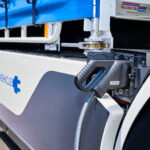

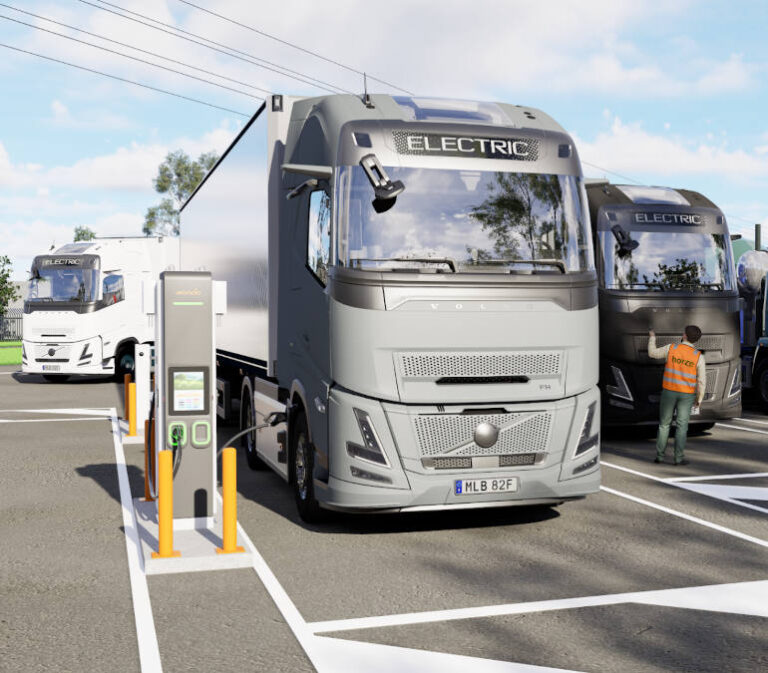
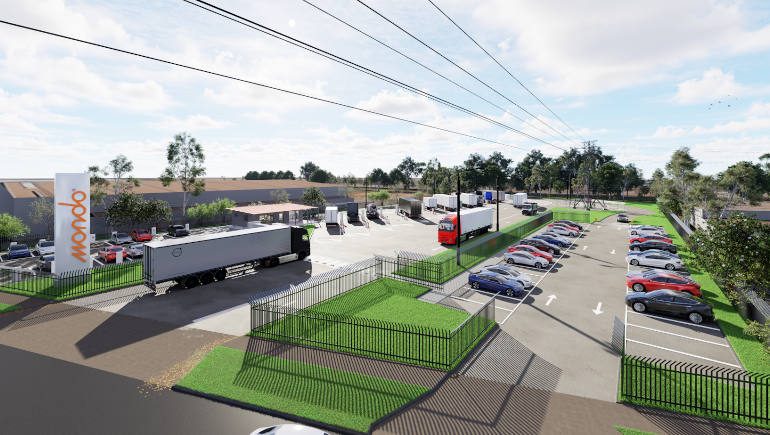
Australia’s transition to cleaner road freight has taken a major step with confirmation that Melbourne’s west will soon host the nation’s first dedicated electric truck charging hub. Supported by a $12.3 million grant from the Australian Renewable Energy Agency (ARENA), the project will be led by Mondo Power, delivering infrastructure designed specifically for heavy battery electric vehicles (BEVs).
Located in Laverton North, the hub will feature 14 dual-plug chargers, purpose-built to support the increasing demand for zero-emission heavy transport. For Fleet Managers exploring the feasibility of electrification, this site is positioned to serve as a real-world case study.
“Through Mondo’s project, we’ll be able to highlight to the heavy transport sector how electrification can be integrated into their existing business models and drive down the high emissions from transporting goods on our roads.”
ARENA CEO Darren Miller
The hub will not only provide charging services but also incorporate membership agreements, giving operators access to high-speed charging, set pricing, and driver amenities. Importantly, the funding package also offsets the total cost of ownership for 20 heavy BEV trucks, helping early adopters overcome initial barriers.
For fleet operators, this announcement demonstrates how industry and government are working together to reduce the 22% of Australia’s emissions that come from transport. The hub will allow companies to test operational models, understand charging patterns, and prepare for wider electrification.
- The Real Barrier to Fleet Electrification Isn’t Trucks — It’s Charging
 For years, the conversation around fleet electrification has centred on vehicle range, payload, purchase price and charging technology. Speaking to the founders of Country Fleet, one of Australia’s fastest-growing electric delivery operators, at Sustainability Business Live, the biggest challenge isn’t the trucks themselves. It’s charging. After building a fleet of almost 30 electric vehicles across
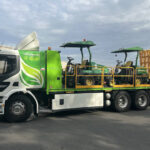
 - Blacktown City Council pioneers Australia’s first electric beavertail truckBlacktown City Council has introduced what is believed to be Australia’s first fully electric beavertail truck, delivering a practical example of how electrification can be applied to specialised heavy fleet operations. The vehicle, nicknamed “Cleopatra”, has been developed to improve the transport of heavy mowing and agricultural equipment across the council’s extensive network of parks, sporting
- From the Warehouse to a National EV Fleet: The Country Fleet StoryWhen most people talk about fleet electrification, the conversation usually starts with corporate sustainability targets, government policy, or vehicle technology. Talking to Fleet News Group at Sustainability Business Live, Jaskirat Singh Ghuman and Lakshay Ahuja, Co-Founders of Country Fleet, explained how they started on the warehouse floor. Just over two years ago, the pair were
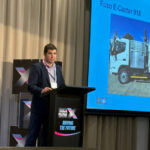
- Quiet Electric Truck Delivers Big Benefits for Port Stephens CouncilPort Stephens Council is demonstrating that electric trucks are not just for large freight operators, with a customised Fuso eCanter proving its value in everyday local government operations. Speaking at TruckShowX in the Hunter Valley, Sean Carter, Fleet Supervisor at Port Stephens Council, shared the council’s experience deploying a Fuso eCanter 918 as part of
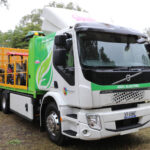
- Blacktown’s ‘Cleopatra’ Shows How Custom Electric Trucks Can Transform Council FleetsBlacktown City Council’s custom-built electric heavy truck, affectionately named Cleopatra, is proving that fleet electrification can deliver more than emissions reductions. The innovative vehicle is helping the council improve operational efficiency, reduce maintenance requirements and streamline community services. Built on a Volvo FE electric chassis and developed in partnership with Volvo Group Australia and Austec Fabrications,