

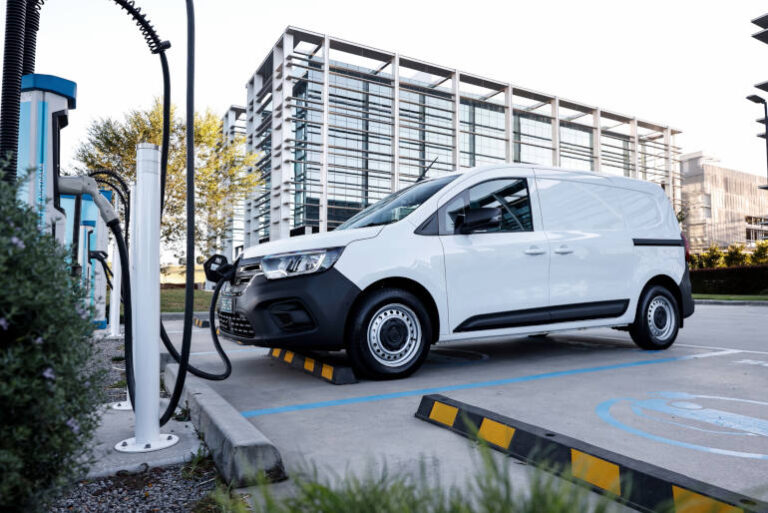
As councils begin sketching out their fleet transition plans for 2026, the conversation is shifting from whether to invest in charging infrastructure to how to get it right without blowing the budget. At the Fleet EV Expo for Local Government in November last year, three of Australia’s most experienced charging experts — Claire Painter (JET Charge), Christopher Munnings (Exploren), and Charlie Richardson (NOX Energy) — shared candid, practical advice that cuts through the jargon and hype.
Here’s what councils and Fleet Managers should consider when planning EV charging in the new year.
Fleet Charging Starts at Home — and It’s the Simplest Solution
The strongest message from the panel was that home charging is the most reliable and cost-effective path for council fleets.
Claire Painter put it plainly: “The strongest foundation to fleet charging is going to be chargers in your employees’ homes… it’s going to have zero downtime, it’s the lowest operational risk and the lowest cost.”
For tool-of-trade vehicles and pool cars travelling moderate distances each day, a home charger removes range anxiety and dramatically reduces administrative load. And with subscription-based models now available, councils don’t even need to own or maintain the hardware.
Painter said JET Charge’s model shifts the burden away from councils entirely: “We own and operate… we take the operational risk.”
For 2026 fleet planning, this means home charging should sit at the top of the priority list — not DC fast chargers.
Rethinking Charging: Access to Power, Not Endless DC
While many councils instinctively jump to high-powered chargers, Charlie Richardson urged them to step back and rethink the fundamentals.
“We need to rethink what we talk about when we talk about EV charging… and really you need to rethink the common PowerPoint, the humble PowerPoint.”
Richardson noted that half of all EV owners in Australia use a standard powerpoint twice a week, and that slow, steady charging — not rapid charging — is what most fleets actually need.
His advice for 2026 strategies: “For the vast majority of your needs, 99% can be done with a much lower-cost and much slower solution.”
In other words, AC charging (Level 1 or Level 2) is more than enough for almost every council fleet vehicle.
Depot Charging: Smart Load Management Becomes Essential
As fleets scale up, councils will quickly face a familiar infrastructure challenge — electrical capacity.
Christopher Munnings emphasised that smart load control isn’t optional once councils begin installing larger numbers of chargers at depots or offices.
“If you’ve got more than 10 EV chargers in one place, load management is probably what you want to be using.”
The goal is to avoid costly upgrades by distributing charging intelligently, prioritising empty vehicles and avoiding peak demand spikes.
Munnings said the key is selecting systems that match the operational needs of councils: “You need to think about why am I controlling the load… avoid peak prices, avoid blowing fuse boxes, minimise your capex or prioritise vehicles.”
In 2026, fleet teams will need digital tools as much as they need chargers.
Public Charging: Councils Should Be Strategic, Not Reactive
Public charging continues to be the biggest source of confusion for councils, especially as private charge-point operators expand rapidly.
Christopher Munnings explained the mismatch: “A council has a different motivation to a private charge point operator… councils will generally focus on their own lands… it’s going to be there for the community.”
That means council-owned chargers may never achieve the utilisation rates of shopping centres or highways — and that’s okay.
Painter highlighted emerging commercial models that reduce risk: “There are newer models coming out… where it allows you to pass on operational risk but also attract some of the revenue stream.”
For 2026 planning, the panel suggested councils:
- Avoid gold-plating public chargers
- Focus on equity (drivers without off-street parking)
- Explore blended models (fleet chargers available to the public after hours)
- Use expressions of interest to test private-sector appetite
The guiding principle: be an enabler, not a network operator.
Mass Adoption Is Here — But So Are New Challenges
EV ranges have increased, costs have dropped, and the charging network has expanded — but usage patterns are changing fast.
Munnings warned that fleets relying on public charging will increasingly encounter queues: “Now you turn up and… there might be someone else charging… as we go forward, you might have to start queuing.”
This makes the case for councils to build robust charging capacity at home and workplaces rather than depending on public networks.
Councils Should Focus on Planning and Facilitation, Not Heavy Infrastructure
Councils are uniquely positioned to shape EV uptake by integrating EV-ready standards into development, car parks and local planning.
As Munnings reminded the audience: “Planning permission… ensuring new housing, new shopping centres… actually have sufficient electrical capacity… to allow EV charging.”
This long-term thinking is essential for a future where EVs become the dominant vehicle type.
2026 Outlook: Practical, Scalable, Electric
For fleet managers and sustainability teams mapping out the next 12–24 months, the panel’s advice is clear:
- Start simple — home and workplace first
- Think scalable — AC charging and load management
- Don’t overbuild — avoid high-speed unless operationally needed
- Integrate data — reimbursement, access cards, and charging logs
- Enable the community — but don’t try to replace private operators
The EV transition no longer requires councils to be pioneers. The technology, the business models and the operational learnings all exist — and the smarter councils are those that lean into simplicity.
As Claire Painter summed up: “When it comes to managing the complexity of EV charging, find the right partners… talk about what your needs are, and there is a solution out there for you.”
A perfect mindset to carry into 2026.
- Geely EX2 Puts Affordable EVs Back in the Spotlight
 Geely will expand its Australian electric vehicle range with the EX2, a compact rear-wheel-drive hatchback. The new model will be offered in Complete and Inspire variants, with pricing starting from $26,490 plus on-road costs and rising to $30,990 plus on-road costs. The EX2 enters a growing market for smaller and more affordable electric vehicles, combining
 - Genesis GV60 Magma Adds Heat to the Performance EV MarketGenesis has launched the GV60 Magma in Australia, marking the brand’s first high-performance production model and a new flagship for its electric vehicle range. Priced from $130,000 before delivery and on-road costs, the GV60 Magma combines an 84kWh battery, dual-motor all-wheel drive and a claimed 0–100km/h time of 3.4 seconds. Standard output is 448kW and
- MG Turns Up the Power and Range on MGS5 EVMG Motor Australia has strengthened the MGS5 EV line-up for 2026, giving the flagship Essence 62 more power, greater driving range and improved performance without increasing its drive-away price. The update reflects strong customer demand for the higher-specification versions of the compact electric SUV. More than 80 per cent of MGS5 EV orders since launch
- BMW iX3 Scores Five Stars in Tough New ANCAP TestingThe new-generation BMW iX3 has secured a five-star ANCAP safety rating, delivering strong results for crash avoidance, occupant protection and post-crash performance under ANCAP’s latest 2026–2028 testing criteria. The rating applies to the battery-electric BMW iX3 50 xDrive and iX3 40 variants sold in Australia. The 50 xDrive is also covered in New Zealand. Australian
- XPENG G6 Charges into Australia with Four-Model line-upThe updated XPENG G6 electric SUV will arrive in Australian showrooms during July with four variants, faster charging capability and a broader choice of rear- and all-wheel-drive models. The revised G6 continues to use an 800-volt electrical architecture and adds what XPENG describes as 5C ultra-fast charging across the range. The update also brings revised