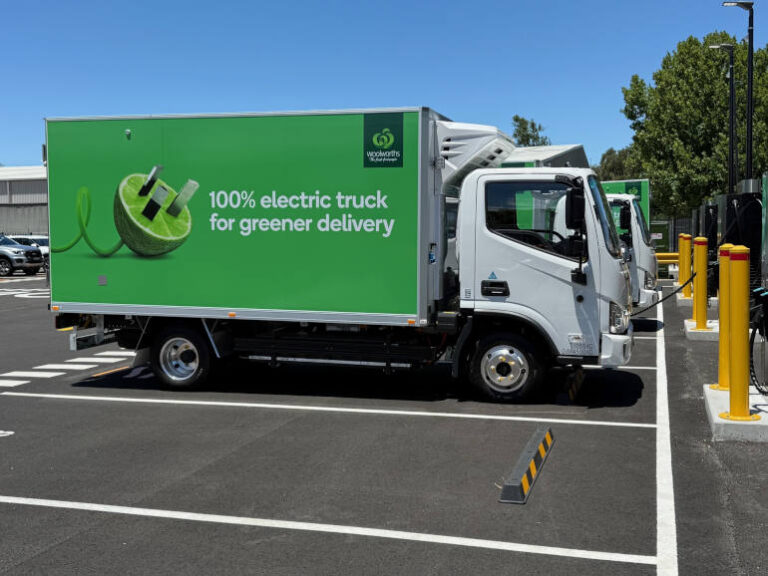
One of the most practical sections of the latest MOV3MENT Electric Truck Report focuses on two fundamental questions for fleet operators: Is an electric truck suitable for the job, and is it financially viable? The report frames electrification as a case-by-case decision driven by operational realities rather than technology alone, noting that many fleets already have diesel vehicles that could be replaced, provided their operations can adapt to new requirements.
The report provides a structured checklist to help fleets assess readiness, highlighting that suitability and viability are closely linked to utilisation, duty cycle and infrastructure planning.
Suitability starts with operational fit
The report identifies several common characteristics shared by fleets that are well suited to electric trucks. In general, the strongest candidates are operations with short-range routes, predictable schedules and consistent overnight parking locations.
According to the report, electric trucks are most suitable for fleets with:
- Short-range, predictable routes
- Consistent overnight parking
- Moderate payload requirements
- Access to depot charging
- Longer asset retention cycles
- Alignment with sustainability goals
These factors reflect the operational reality that charging infrastructure is typically site-specific and that overnight charging requires vehicles to be parked in the same location regularly. Fleets operating within approximately 200 kilometres of a home base are generally considered more suitable for electrification.
Payload and duty cycle remain critical constraints
Vehicle weight and duty cycle continue to influence the practicality of electric trucks, particularly in heavy-duty applications. Battery systems add significant mass to the vehicle, which can affect payload capacity and axle loads.
The report notes that electric trucks can increase tare weight by up to 30 per cent, especially on the front axle. If a diesel vehicle is already operating close to its weight limit, switching to electric may require changes to body configuration or an upgrade to a higher gross vehicle mass (GVM) class.
Driving patterns also play a role. Electric trucks typically perform best in urban or mixed traffic environments where regenerative braking and reduced idling improve efficiency. Highway operations, particularly on long grades, may deliver lower energy efficiency and require more careful route planning.
Organisational readiness is often overlooked
Beyond vehicle capability, the report highlights organisational readiness as a key success factor. Electrification introduces new maintenance procedures, monitoring systems and training requirements across the business.
This includes changes for drivers, workshop technicians, schedulers and depot staff, particularly where energy management and telematics systems are introduced as part of the transition. Fleets that have the capacity to manage these operational changes are considered more suitable for early adoption.
Customer expectations can also influence suitability. In some cases, sustainability targets set by customers or procurement contracts may support the business case for electrification, even if direct financial returns are marginal in the short term.
Viability depends heavily on utilisation and energy costs
While suitability focuses on operational fit, viability is primarily driven by total cost of ownership (TCO). The report includes a viability matrix designed to help fleets quickly assess whether an electric truck is likely to be cost-effective compared with diesel within the next 12 months.
A key finding is that utilisation remains one of the most important drivers of financial performance. Higher annual kilometres generally improve the economics of electric trucks by spreading fixed costs across more productive hours.
For example:
- Light-duty trucks and vans may require faster daytime charging once annual distance exceeds around 50,000 kilometres
- Some models may reach practical limits around 80,000 to 110,000 kilometres per year, depending on charging capability and duty cycle
In heavier segments, utilisation thresholds are even higher, with some models capable of operating up to approximately 130,000 kilometres annually with a combination of depot and en-route charging.
Electricity pricing can determine the outcome
Energy cost is identified as one of the most sensitive variables in the viability equation. The report shows that total cost of ownership can shift significantly depending on electricity tariffs and charging strategy.
In the example provided, an electricity price of around 15 cents per kilowatt-hour can make an electric truck cheaper to operate than a diesel equivalent. However, electricity costs closer to 60 cents per kilowatt-hour, which are typical for public charging, can make the electric option more expensive.
The report also notes that additional costs such as electrical upgrades, engineering assessments, insurance requirements and site works can affect financial outcomes and should be considered early in the planning process.
A practical framework for fleet decision-making
Rather than presenting electrification as a universal solution, the suitability and viability section provides a structured decision-making framework grounded in operational data. The message is that electric trucks are already viable in many applications, but success depends on matching the technology to the task.
For Fleet Managers planning renewal programs — particularly those with urban delivery, waste collection or predictable regional operations — the report suggests that electrification is increasingly a question of timing and planning rather than technical feasibility.
- Origin partners with EVDealer Group to accelerate fleet transition
 Origin and EVDealer Group have partnered to give Australian businesses a single, end-to-end path to electric vehicles (EVs) – from planning and charging through to vehicle delivery and driver handover – so fleet managers no longer have to coordinate it all themselves. Origin’s Group Manager Sales, E-mobility, David Helmy, said, “Businesses tell us the hardest
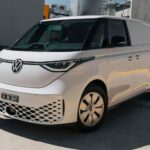
 - Volkswagen ID. Buzz Cargo wins 2026 Fleet EV of the YearThe Volkswagen ID. Buzz Cargo has been named the 2026 Fleet EV of the Year in the Fleet News Group Awards, finishing ahead of two very different electric fleet propositions after assessment by fleet industry judges using Best Value Analysis. The Volkswagen ID. Buzz Cargo BEV 550 competed against the Toyota HiLux SR BEV 4×4 Double Cab Pickup and Kia EV5 Air
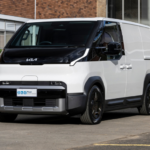
- Kia PV5 wins 2026 Fleet LCV of the YearThe Kia PV5 Cargo has been named the 2026 Fleet LCV of the Year in the Fleet News Group Awards, giving Kia an important win as electric commercial vehicles move further into mainstream fleet consideration. The Kia PV5 Cargo S 4D LR finished ahead of the Hyundai STARIA Load Hybrid and Isuzu D-MAX SX 2WD Single Cab, giving judges three very different
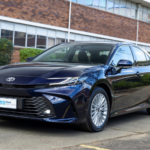
- Toyota Camry wins 2026 Fleet Car of the YearThe Toyota Camry Ascent Sport has been named the 2026 Fleet Car of the Year in the Fleet News Group Awards, reinforcing the continuing role hybrid vehicles can play in helping fleets reduce fuel use and emissions. The Camry finished ahead of the MG ZS Vibe CVT and Subaru Forester Hybrid AWD after assessment by fleet industry judges and Fleet News
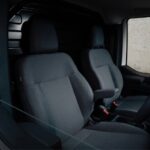
- Can an electric van really be better to drive all day? Kia thinks soFor Fleet Managers considering electric vans, range, payload and charging usually dominate the discussion. But there is another factor that can have just as much influence on whether a new vehicle succeeds in a fleet: what drivers think of it after spending an entire working day behind the wheel. That was one of Kia’s priorities