Hiringa Energy is planning a 53-site hydrogen refuelling network across Australia as it works to remove one of the biggest barriers facing hydrogen-powered heavy vehicles: reliable access to fuel at a commercially sustainable price.
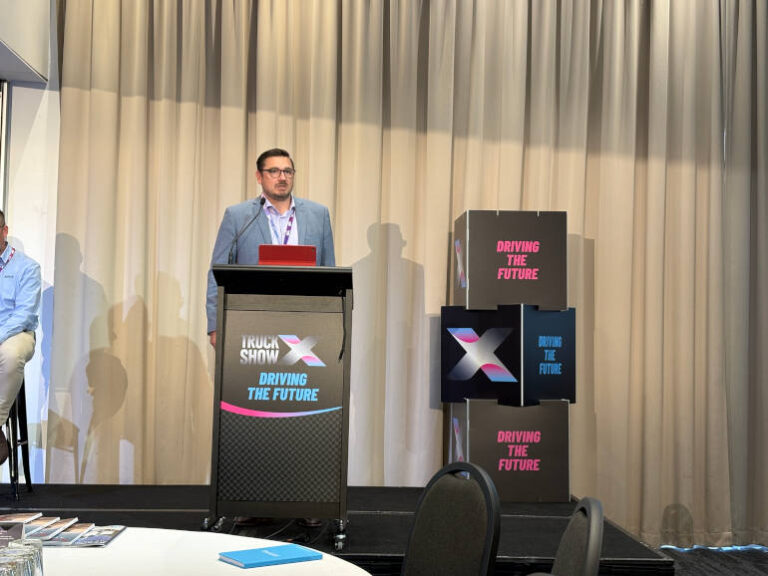
Speaking at TruckShowX, Hiringa Energy Head of New Business Ryan McDonald said the company’s Australian strategy was based on experience gained from operating a hydrogen refuelling network in New Zealand.
Hiringa currently operates four New Zealand stations supporting fuel-cell, dual-fuel and hydrogen internal combustion engine trucks. Its stations produce green hydrogen on site using electricity and water, removing the need to transport hydrogen from a separate production facility.
“We produce all of our hydrogen on site,” McDonald said. “At a fundamental level, what we’re doing is taking water and splitting that water molecule to create a hydrogen molecule and an oxygen molecule.”
The hydrogen is compressed, stored and dispensed from the same truck-stop forecourt. Hiringa certifies the renewable electricity used in production so the resulting fuel can be classified as green hydrogen.

Refuelling designed around truck operations
McDonald said one of hydrogen’s main advantages for heavy transport was its ability to replicate the familiar diesel refuelling process.
A driver connects the dispenser to the truck, authenticates the transaction using a fob and begins refuelling. The process is automated and normally takes between 15 and 20 minutes, depending on the vehicle’s remaining fuel level.
Hiringa’s New Zealand stations are uncrewed and have been integrated into existing diesel and petrol truck stops to minimise disruption for operators.
“It’s virtually the same for all of them,” McDonald said of refuelling fuel-cell, dual-fuel and hydrogen combustion vehicles.
“It’s fairly simple. Just take it off like you would a normal diesel truck, connect it to the vehicle, pull the handle, and then it’s hands off.”
The stations are already supporting trucks operating at gross combination masses above 35 tonnes, including vehicles pulling trailers on regular freight tasks.
McDonald said that capability was important because hydrogen’s strongest transport application was likely to be in demanding operations where payload, range, refuelling speed and vehicle utilisation made battery-electric alternatives more difficult.
One fuel, multiple technologies
Hiringa’s infrastructure has been designed to support several hydrogen powertrain technologies rather than relying on a single vehicle type.
The same hydrogen supply can be used by fuel-cell electric trucks, diesel-hydrogen dual-fuel vehicles and trucks powered by hydrogen internal combustion engines.
McDonald said this would allow fleets to select different vehicle technologies for different applications while continuing to use the same refuelling network.
“We’ve got one fuel that they can use for multiple technologies,” he said.
“It’s not so much one or the other. It’s really about getting that application right for your business.”
Hiringa is targeting an Australian retail hydrogen price of approximately $12 per kilogram, which McDonald said could place the operating cost of suitable hydrogen trucks close to diesel under current market conditions.
He argued that fleets should compare technologies according to the performance they require, rather than simply comparing the price of hydrogen with the price of electricity.
Hydrogen stations can deliver fuel at a rate equivalent to several megawatts of charging capacity, allowing large trucks to replenish their usable range quickly without remaining connected to a charger for an extended period.
“As things scale up, that hydrogen price starts coming down,” McDonald said.
Sydney–Brisbane corridor first
The first major stage of Hiringa’s Australian expansion is expected to connect Sydney and Brisbane through hydrogen refuelling sites along the Pacific Highway.
The project has received close to $1 million in support from the New South Wales Government for front-end engineering and design work.
The proposed Australian stations will be larger than Hiringa’s existing New Zealand sites and are being designed to service approximately 100 trucks each day. The facilities will produce 100 per cent green hydrogen and accommodate the different hydrogen truck technologies entering the market.
Hiringa is targeting the final quarter of 2028 for the initial network to become operational.
The first phase is expected to require approximately 50 trucks, with Hiringa working alongside freight platform Ofload and commercial vehicle leasing and rental company TR Group.
McDonald said the scale was essential because a commercially sustainable network could not be built around isolated demonstration vehicles.
“It’s not a pilot,” he said. “We can’t make this happen with ones and twos.”
Ofload will help aggregate freight demand from major customers and connect it with small and medium-sized transport operators, while TR Group will contribute its experience operating and supporting hydrogen trucks in New Zealand.
Hiringa is also preparing to seek expressions of interest from truck manufacturers capable of supplying fuel-cell, dual-fuel and hydrogen combustion vehicles for the project.
Building a commercial ecosystem
McDonald said Hiringa’s role was broader than constructing refuelling stations. The company must coordinate fuel production, infrastructure investment, vehicle supply, freight customers and transport operators to create a commercially workable ecosystem.
The objective is to avoid asking one participant—whether a fleet, manufacturer, freight customer or infrastructure provider—to absorb an unsustainable cost premium.
“Our role is we have to make the whole thing commercial, so there’s not someone having to take a big haircut in order to make this work,” McDonald said.
For fleets operating high-utilisation trucks between Sydney and Brisbane, the proposed network could provide an early opportunity to reduce diesel consumption without accepting lengthy charging times or major changes to daily operations.
Its success, however, will depend on coordinated commitments from freight owners, carriers, vehicle suppliers and governments.
Hiringa’s New Zealand experience demonstrates that hydrogen trucks can be refuelled quickly and incorporated into existing truck-stop environments. The next challenge is proving that the same model can be delivered at the scale and price required by Australian road freight.