

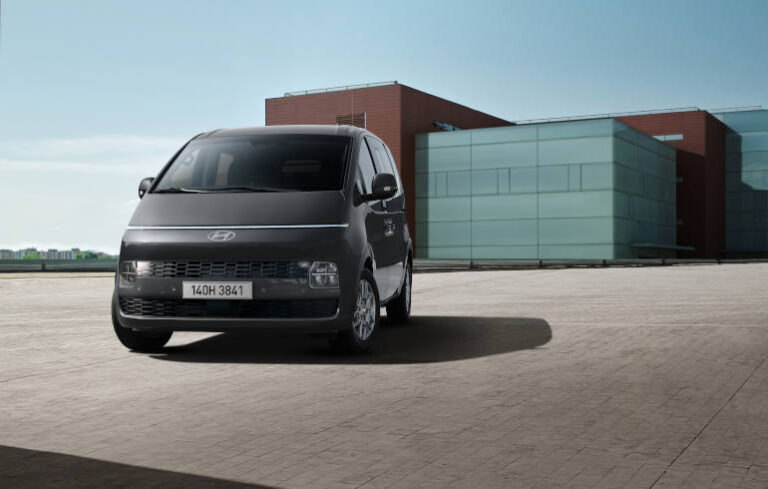
Hyundai is preparing to strengthen its electric commercial vehicle line-up with the arrival of the battery-electric STARIA Load in the second half of 2026, bringing a dedicated zero-emissions option to one of Australia’s most recognisable light commercial vans.
While Hyundai’s latest STARIA update introduces a new hybrid powertrain immediately, the fully electric variant is expected to become an important addition for fleets looking to reduce emissions without sacrificing practicality.

According to Hyundai Product Planning Assistant Manager Michael Croan, expanding the STARIA Load into battery-electric power is the most significant development for the model.
“Accompanying this, again all new to the STARIA model line, is an electric powertrain powered by the same 84-kilowatt-hour battery used on our E-GMP models,” Croan said.
“Delivering 160 kilowatts of power, STARIA’s electric powertrain will bring instantaneous power and torque paired with driving comfortability in an uncompromised package.”
“There will be more to come on this variant in future… Overall, the hybrid and EV powertrain expansion for the STARIA lineup is single-handedly the greatest change this facelift offers, giving customers a tailored choice for their vehicle to suit their needs.”
Built for fleet electrification
The STARIA Load EV will use Hyundai’s 84kWh battery pack, already proven in the company’s E-GMP passenger EVs, driving a single front-mounted electric motor producing 160kW. It will also retain the STARIA Load’s 4,935-litre cargo volume while offering up to 2,000kg braked towing capacity, positioning it as a practical option for urban and metropolitan fleet operations.
Hyundai has yet to announce pricing, driving range or payload figures, with those details expected closer to the vehicle’s launch later this year.
Chassis upgrades benefit the electric model
Although developed alongside the hybrid, the facelift includes a range of suspension and refinement upgrades that will also benefit the electric STARIA Load.
Across the range Hyundai has introduced:
- Retuned shock absorbers for improved ride quality.
- Revised front subframe bushings.
- Additional front suspension stays and strut rings to improve steering precision.
- A redesigned rear shock absorber valve delivering faster, more precise responses to smaller road imperfections.
Croan said the engineering team focused on improving comfort and drivability.
“Enhancements to the ride comfort and drivability of the vehicle have been made, with front subframe bushings and stay application, as well as the addition of front wheel strut rings.”
“Improved tuning of the shock absorbers has been applied across all models. In the rear, the van has seen an upgrade to the shock absorber valve type, enabling faster and more precise response to small road impacts.”
For electric vans, where battery weight places greater demands on suspension performance, these refinements should contribute to improved body control and ride comfort.
Sharper styling for the next generation
The battery-electric model will also adopt the facelifted exterior introduced across the 2026 STARIA range.
Rather than redesigning the futuristic silhouette, Hyundai has refined the front-end appearance with a stronger commercial presence.
“Starting with the exterior design elements, a refreshment to the front grille has been targeted, moving from a seamless integrated pattern to a horizontal mesh grille,” Croan said.
“The STARIA Load Premium front end is unified by a front LED Horizon Lamp, now seamlessly connected across the face of the exterior.”
“The rear of the vehicle preserves the STARIA DNA with towering brake lights that encase the rear tailgate, with a high-mounted spoiler.”
The refreshed design maintains the STARIA’s distinctive appearance while giving the van a cleaner, more contemporary front fascia.
Connected technology for electric fleets
The updated STARIA Load introduces Hyundai’s latest Connected Car Navigation Cockpit (ccNC), featuring dual 12.3-inch displays, Bluelink connected services, over-the-air software updates and Smart Key with push-button start. Battery-electric models add further EV-specific technology including a battery heating system, shift-by-wire transmission selector and enhanced digital instrumentation.
For fleet operators, Bluelink’s remote diagnostics, vehicle status monitoring, geofencing and over-the-air software updates could simplify fleet management while reducing workshop visits.
Hyundai expects EV to remain a niche initially
Despite growing interest in electric commercial vehicles, Hyundai is forecasting a measured introduction for the battery-electric STARIA Load.
Internal sales projections indicate the diesel will remain the dominant powertrain at around 50% of STARIA Load sales, with the new hybrid expected to account for approximately 45%. Hyundai expects the battery-electric model to represent around 5% of STARIA Load volume once it joins the range later in 2026.
That forecast reflects today’s Australian commercial vehicle market, where many fleets are beginning to electrify urban operations while continuing to rely on diesel for regional and higher-utilisation applications.
As charging infrastructure expands and more organisations pursue fleet decarbonisation targets, Hyundai’s electric STARIA Load is well positioned to provide another credible option in Australia’s growing electric van segment.
- Parramatta found a simple way to tackle EV resistance
 Range anxiety isn’t always solved with another spreadsheet. Sometimes you need to hand someone the keys. That’s one of the lessons from City of Parramatta’s fleet electrification program, where an EV drive week has become an important tool for building employee support for the transition. Speaking at Everything Electric Sydney during a panel featuring finalists
 - Ausgrid’s charging strategy goes well beyond the depotInstalling chargers at the depot might be the obvious starting point for fleet electrification. For Ausgrid, it wasn’t going to be enough. As the electricity network continues electrifying passenger vehicles, vans and trucks, it has developed a charging strategy designed around how employees actually use fleet vehicles. Speaking during the Fleet News Group Awards finalists
- For Allianz, EVs are now business as usualFor many organisations, fleet electrification still means pilots, trials and discussions about what might happen next. At Allianz, the conversation has moved on. After starting its transition with a small pilot of 12 vehicles two years ago, the insurer has reached the point where electric vehicles are becoming part of its normal fleet replacement process.
- A Charger That Powers Up Isn’t Finished: Why Commissioning Matters for Fleet EV ChargingAn EV charger can be installed, connected and apparently operating — and the charging system can still be wrong. That is one of the more important lessons from the Local Council EV Integration Project involving Wyndham, Brimbank and Moonee Valley councils. As fleet charging installations become larger, depots are adding not only chargers but load
- How to Install EV Charging Without Shutting Down the DepotBuying electric vehicles may be the visible part of fleet electrification, but much of the hard work can happen underground. Trenching, conduits, electrical upgrades, switchboards, charger foundations, communications, traffic management and electrical shutdowns all need to be completed while the depot continues doing its normal job. Experience from the Local Council EV Integration Project involving