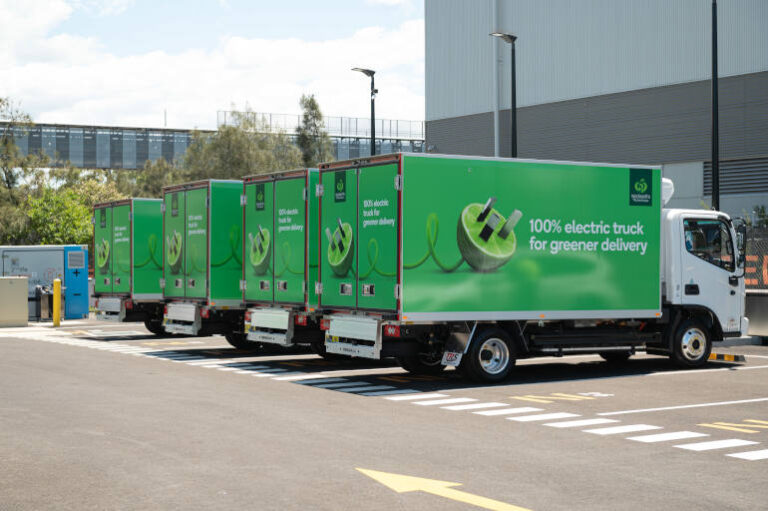
The Clean Energy Finance Corporation (CEFC) has committed up to $22 million to support Zenobē Australia’s rollout of up to 148 battery-electric trucks for Woolworths’ grocery delivery operations.
The investment will fund the acquisition and leasing of Foton T5 electric trucks, which are set to be deployed for last-mile deliveries across New South Wales and Victoria, with additional vehicles planned for Queensland, Western Australia and South Australia. The full rollout is expected to be completed during 2027.

Zenobē will retain ownership of the vehicles under a leasing model designed to reduce the barriers for fleet operators moving to electric trucks. The arrangement includes vehicle maintenance, warranties and upgrades, while Woolworths avoids taking on end-of-life and residual-value risk.
CEFC Head of Infrastructure Julia Hinwood said large-scale deployments were needed to establish the operating data and commercial benchmarks that could support a broader market for electric heavy vehicles.
“By increasing the uptake of BETs we’re helping develop the market to bring them closer to price parity with their non-electric counterparts,” Hinwood said.
“With fuel price volatility and supply risks increasingly material for freight operators, early large-scale deployments are critical to generating the real-world performance data and operating benchmarks needed to underpin a secondary market for electric heavy vehicles.”
The project is being described as Australia’s largest electric truck fleet rollout to date, signalling a move beyond small trials for battery-electric freight vehicles.
Zenobē Australia and New Zealand Country Director Gareth Ridge said the combination of predictable routes, high utilisation and depot-based operations made last-mile freight a logical starting point for electric trucks.
“This project is evidence that electrification is a commercial opportunity,” Ridge said.
“Woolworths is already rolling out hundreds of electric trucks at scale, that’s almost unheard of in Australia’s freight sector and proof that with the right business model and competitive pricing from Zenobē, electrification stacks up right now.”
The CEFC said battery-electric truck uptake remains low despite growing interest from freight operators. Electric vehicles represented just 0.9 per cent of the 12,003 trucks and heavy vans sold in Australia during 2026 to date, according to Truck Industry Council data cited by the CEFC.
The investment builds on previous CEFC support for Zenobē electric vehicle projects and forms part of a broader transport decarbonisation portfolio that includes electric buses, fleet charging infrastructure and medium- and heavy-duty electric vehicles.
For fleet operators, the Zenobē model highlights an emerging pathway to electrification: bundling the vehicle, maintenance and technology support into an operating lease, rather than requiring the customer to purchase the truck outright and carry the associated technology and resale risks.