


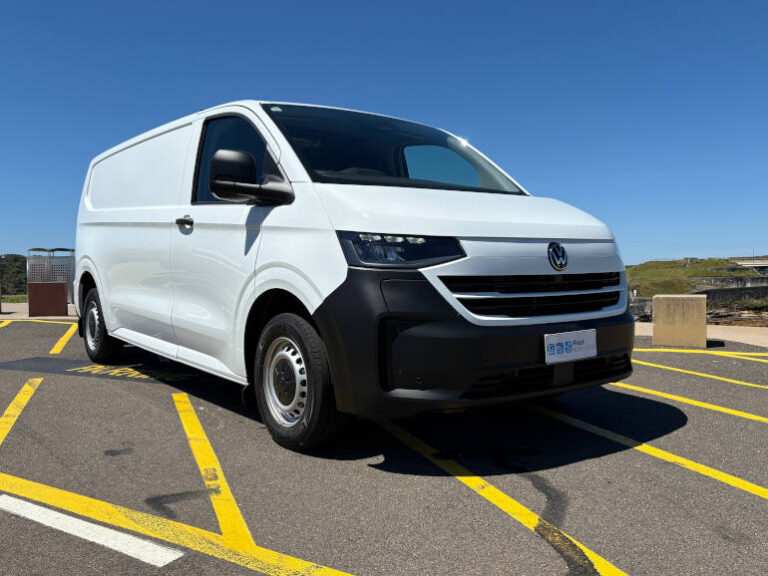
The NSW Government’s Electric Vehicle Fleets Incentive – Kick-Start funding is designed to help businesses and organisations take their first practical steps into fleet electrification, reducing upfront costs for vehicles and charging infrastructure while lowering operational emissions.
For organisations considering a pilot program or early-stage rollout, the guidelines provide a clear, structured pathway to apply for funding — but there are some important rules to understand before starting an application.
What is Kick-Start funding?
Kick-Start funding is part of the broader NSW EV Fleets Incentive and is aimed at:
- Smaller fleets, or
- Larger fleets looking to trial battery electric vehicles (BEVs) before scaling.
The funding supports the purchase or lease of up to 15 new BEVs per organisation (across all funding rounds combined), along with co-funding for smart charging infrastructure installed at depots or employees’ homes.
The program is first-come, first-served, with funding allocated through annual rounds until funds are exhausted.
Who can apply?
To be eligible, applicants must hold a valid ABN and fall into one of the following categories:
- Private businesses
- Not-for-profit organisations
- Local councils
- State-owned corporations
- Federal government agencies operating in NSW
- Car rental, rideshare, taxi and subscription companies
- Truck operators
Key eligibility requirements include:
- Operating at least three registered fleet vehicles in NSW (or at least one taxi or one truck)
- Vehicles must have been in operation for at least six months before applying
- Incentivised vehicles must be registered and used predominantly in NSW
OEMs, dealerships, trusts and budget-dependent NSW Government agencies are not eligible.
What vehicles are eligible?
Only brand-new battery electric vehicles (BEVs) are eligible. Converted vehicles, second-hand EVs and demonstrators are excluded.
Eligible vehicle categories include:
- Passenger vehicles and SUVs
- Light commercial vehicles (up to 3.5 tonnes GVM)
- Heavy commercial vehicles from 3.5 tonnes up to 23 tonnes GVM
Vehicle incentives for 2025–26 range from:
- $5,000 for passenger vehicles and SUVs
- Up to $8,000 for light commercial vehicles
- $10,000 to $50,000 for heavy vehicles, depending on GVM
Passenger vehicles and SUVs must have an RRP of at least $40,000, with a price cap aligned to the ATO fuel-efficient vehicle luxury car tax threshold. There are no price caps for light or heavy commercial vehicles.
Novated leases, hybrids, plug-in hybrids and fuel-cell vehicles are excluded.
Charging infrastructure support
Applicants who receive vehicle funding can also opt in for smart charging incentives, covering:
- AC or DC chargers
- Installation costs
- Electrical upgrades
- Charge-as-a-Service (CaaS) solutions
Funding covers up to 50 per cent of eligible costs per charging port, with caps that vary depending on charger type and vehicle class. Each incentivised vehicle can be linked to one charging port, and dual-port chargers may receive incentives for both ports if matched to two vehicles.
All chargers must meet approved technical and compliance standards and be installed by a qualified electrician within NSW.
How the application process works
The process is structured in two main stages:
Stage 1 – Application and eligibility
- Review the guidelines and register on the grants management platform
- Submit fleet details, vehicle numbers and funding request
- Receive an eligibility decision (typically within 20 business days)
- If successful, sign and return the funding deed within 30 business days
Stage 2 – Evidence and payment
- Procure and register vehicles and install chargers
- Submit evidence within 100 business days of receiving the funding deed
- Provide invoices and documentation
- Receive payment within 30 business days after invoice approval
Extensions are limited and generally only considered for vehicle supply delays or heavy-vehicle charging infrastructure projects.
Important compliance points
Businesses applying for Kick-Start funding should be aware that:
- Vehicles must not be ordered before the funding round opens
- Incentivised vehicles and chargers may be audited
- Chargers cannot be used for public or revenue-generating purposes
- Participants must complete a post-deployment survey within 12 months
Failure to comply may result in funding being withdrawn or future applications being declined.
Why this matters for fleets
Kick-Start funding is not designed to electrify entire fleets overnight. Instead, it helps organisations:
- Reduce the financial risk of early EV adoption
- Build internal confidence using real operational data
- Prepare infrastructure and policies for future scale
For many businesses, this funding round represents a low-risk entry point into fleet electrification — particularly now that heavy vehicles up to 23 tonnes are eligible.