


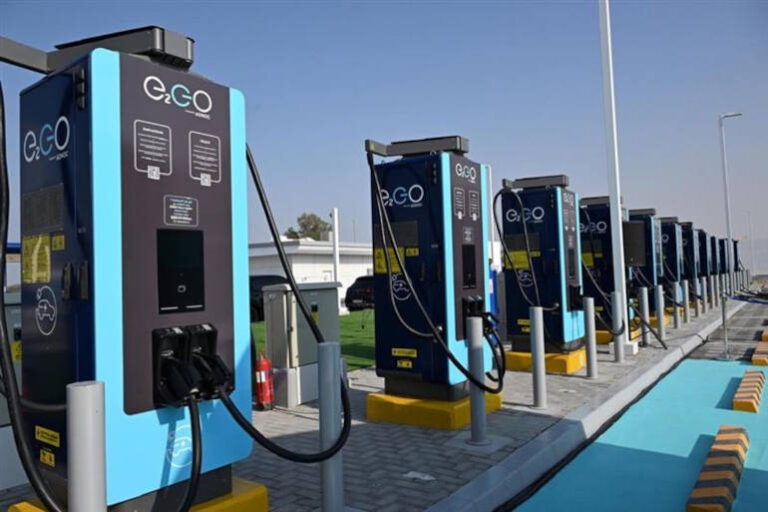
ADNOC Distribution has launched one of the world’s largest superfast electric vehicle (EV) charging hubs and outlined a clear roadmap to electrify the UAE’s national highway network—an announcement that carries important lessons for Fleet Managers planning large-scale EV adoption.
Located at Saih Shuaib on the E11 highway between Abu Dhabi and Dubai, the new EV Megahub features 60 high-speed charging points capable of charging most EVs from 0 to 80 per cent in around 20 minutes. The site is the largest superfast charging hub across the Middle East, Africa and Turkey, and the sixth largest globally.
For organisations operating inter-city fleets, the scale of this infrastructure is significant. It demonstrates how high-throughput charging hubs can support long-distance travel and high vehicle utilisation—two of the most common concerns raised by Fleet Managers and Sustainability Managers when assessing EV suitability beyond metro operations.
A structured rollout, not ad-hoc charging
More importantly than the single site, ADNOC Distribution has confirmed a structured highway electrification plan. By the end of 2027, the company expects to operate 20 EV charging hubs across the UAE’s core national highways, with 15 scheduled to be operational by the end of 2026.
This approach mirrors best-practice fleet planning: start with a clear network strategy, prioritise high-utilisation routes, and scale infrastructure in line with demand. For Finance Managers, this kind of roadmap provides confidence that public infrastructure can progressively reduce the need for costly, oversized depot charging solutions.
The rollout also aligns with the UAE’s National Electric Vehicles Policy, which targets 50 per cent battery-electric vehicles on the road by 2050. ADNOC Distribution’s E2GO network already includes more than 400 charging points nationwide, with a target of up to 750 by 2028.
Designing for fleet and commuter needs
The E11 Megahub also marks the opening of the first commuter-focused “The Hub by ADNOC” location. Unlike traditional service stations, the site integrates fuel, EV charging, food, retail and even coworking facilities into a single destination, with a footprint three times larger than a standard station.
For fleet operators, this signals a broader shift in how roadside infrastructure is being designed around driver productivity and experience—not just refuelling. As EV charging dwell times are longer than liquid fuel stops, facilities that allow drivers to work, rest or recharge themselves become operationally valuable.
Lessons for fleet electrification planning
While the UAE market differs from Australia and New Zealand, the principles are directly relevant. Large-scale fleet electrification relies on coordinated infrastructure planning, clear government policy signals and investment aligned to real-world operating routes—not just vehicle purchases.
For organisations still early in their fleet management maturity, the ADNOC Distribution roadmap highlights the importance of long-term planning over short-term pilots. As public and private charging networks mature, fleets that have already mapped routes, dwell times and utilisation patterns will be better positioned to scale EV adoption quickly and cost-effectively.
The Megahub launch reinforces a simple message for Fleet Managers: successful EV transition is not just about vehicles—it is about building confidence through visible, reliable and scalable infrastructure.