


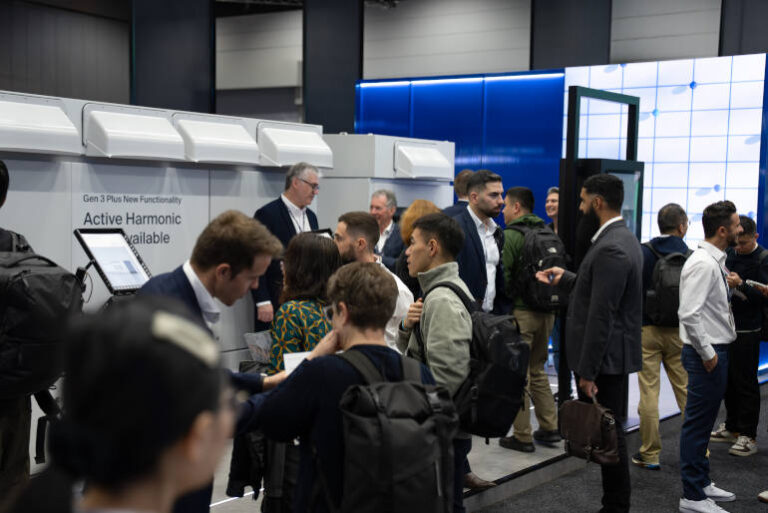
At All Energy Australia 2025 in Melbourne, Power Electronics highlighted its expanding role in Australia’s renewable energy transition with a full suite of solar, energy storage, and electric mobility solutions. The multinational, already a leader in energy storage inverter technology, used the event to demonstrate how its systems are helping accelerate the nation’s progress toward an 82% renewable grid by 2030.
David O’Donoghue, Managing Director of Power Electronics Australia, said the company’s long-term local presence was key to supporting the shift to renewables.
“Australia is a vital market for the global energy transition, and our long-standing local presence is key. With over 30 years of experience here, our dedicated Australian team, backed by our global expertise, is uniquely positioned to deliver the high-tech, reliable solutions needed to secure an 82% renewable grid by 2030.”
That experience is backed by results—more than 8 GW of solar and BESS projects deployed, including 5 GW commissioned in the last 12 months, with Power Electronics involved in several 500 MW+ battery energy storage projects.
Grid-Forming Technology: Building a Smarter, More Stable Grid
A major talking point for fleet and energy leaders at the show was the company’s Grid Forming inverter technology. As traditional fossil-fuel generators retire, Australia’s grid stability challenge grows. Grid Forming inverters from Power Electronics can mimic the inertia and voltage control of traditional synchronous machines, helping renewable plants provide frequency support, system strength, and even black start capabilities.
Ander García, Grid Connection Manager at Power Electronics, said:
“Australia is not just adopting new solutions; it’s actively shaping the future of the grid. The level of maturity and the sheer scale of the projects here make it a vital market for us to be in.”
At the centre of this technology is the PCSM battery inverter, rated up to 5.15 MVA and capable of managing up to four independent BESS units across multiple voltage levels. With its advanced control logic and overload capacity, it’s designed for the toughest grid applications.
The Reverse DC Coupling architecture—connecting the DC/DC converter directly to the inverter—further enhances hybrid flexibility by allowing seamless integration between solar and battery systems. These solutions are already being implemented in large-scale Australian projects that require both performance and resilience.
EV Charging Expansion: From Light Cars to Heavy Fleets
Power Electronics also unveiled its latest eMobility portfolio, including the NB Station, Standalone NB 400 ultra-fast charger, and the Megawatt Charging System (MCS) for heavy-duty fleets. This positions the company not only as an energy infrastructure leader but as a strategic enabler of electric transport decarbonisation.
To support rollout, the company plans to grow its Australian business development team, focusing on high-performance charging solutions for commercial, fleet, and logistics applications.
For Fleet Managers and Sustainability Officers, these developments mark an important intersection between energy stability and transport electrification—showing that technologies supporting the renewable grid can also underpin the charging infrastructure needed for fleet decarbonisation.