


One of the first questions fleet managers ask when planning electric vehicle charging is: how much electrical capacity will we need?
It sounds straightforward. If a depot installs ten 22kW chargers, it could appear that the site needs more than 200kW of additional capacity.
The experience of three Melbourne councils suggests that this can be the wrong place to start.
One of the clearest lessons from the project is that fleet charging needs to be designed around how much energy vehicles require and how long they are parked, rather than simply adding together the maximum output of every charger.

264kW of chargers on a 34kW supply
Moonee Valley provides a useful example.
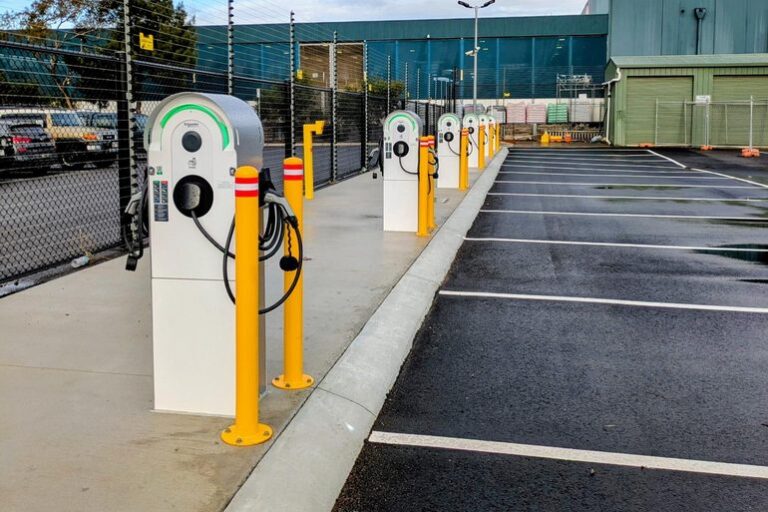
The council installed 12 22kW chargers at the Nursery at its Operations Centre, giving the site a theoretical combined charging capacity of 264kW.
However, the site has only 34kW of continuous electrical capacity available.
Rather than immediately upgrading the electricity supply to match the theoretical maximum charger demand, the project considered how the vehicles actually operate.
Most council EVs are parked overnight for approximately 15 hours. During that period, the existing supply can provide approximately 520kWh of energy, which the project calculates is sufficient to near-fully charge around 10 vehicles.
All vehicles can still be plugged in simultaneously. A smart load management system dynamically allocates the available electricity between the chargers without allowing demand to exceed the site’s supply limit.
It is an important distinction for fleet managers.
The question is not necessarily: How quickly can every vehicle charge at the same time?
A better question may be: How much energy does the fleet need before the vehicles leave again?

Start with the fleet duty cycle
This changes the information required when developing a charging strategy.
Before selecting charger capacity, fleets need to understand vehicle utilisation, daily kilometres, energy consumption, parking locations and dwell times.
The WAGA project used a staged planning process starting with a Fleet Transition Plan, followed by an EV Charging Strategy and then detailed engineering design.
The charging strategy considered existing site electrical demand and supply, charging requirements for a future electric fleet, parking locations, dwell times, staging, load management and potential infrastructure upgrades.
This helps prevent chargers from being specified independently of fleet operations.
A vehicle returning at 4pm and remaining parked until 7am may have very different charging requirements to a vehicle completing multiple shifts or operating around the clock.
The fastest charger is not automatically the best charger.
Load management can defer infrastructure upgrades
The potential value of load management also becomes much clearer when charging is considered as a fleet system rather than a collection of individual charging points.
Load management allows available electrical capacity to be shared between vehicles according to the limits of the site.
The WAGA project found it was important even for relatively small installations.
At Brimbank’s Operations Centre, initial assessments suggested a load management system would not be required because only three new chargers were being installed. During delivery, however, load management became necessary to integrate those chargers with two existing units without overloading the distribution board.
The system also provides capacity to accommodate changing operational requirements and additional vehicles without immediately upgrading the electrical supply.
For fleets with long overnight dwell times, this could materially change the infrastructure business case.
Don’t plan only for an average day
There is another side to the calculation. Designing around average kilometres alone can create its own risk.
The project reports recommend considering a reasonable worst-case operating scenario, particularly for council and operational fleets that may be required during emergencies.
Examples include vehicles working extended hours following storms or floods. At the same time, buildings at the depot could also experience higher electricity demand, reducing the power available for vehicle charging.
The charging strategy therefore needs to consider both normal utilisation and unusual periods when vehicles have shorter dwell times or require significantly more energy.
It does not necessarily mean designing the depot for the absolute worst conceivable event. It means understanding operational requirements well enough to know where the genuine risks are.
Charging starts with fleet data
For fleet managers, the lesson from the WAGA project is relatively simple: don’t start the depot charging project by counting chargers.
Start with the vehicles.
Understand when they return, when they need to leave, how far they travel and how much energy needs to be restored during the available parking window.
Then assess the site’s electrical capacity and determine how load management can allocate that capacity.
The result may still identify a requirement for a significant network or switchboard upgrade.
But, as Moonee Valley’s experience demonstrates, the nameplate capacity of the chargers alone does not tell you how much electricity supply the depot actually needs.