


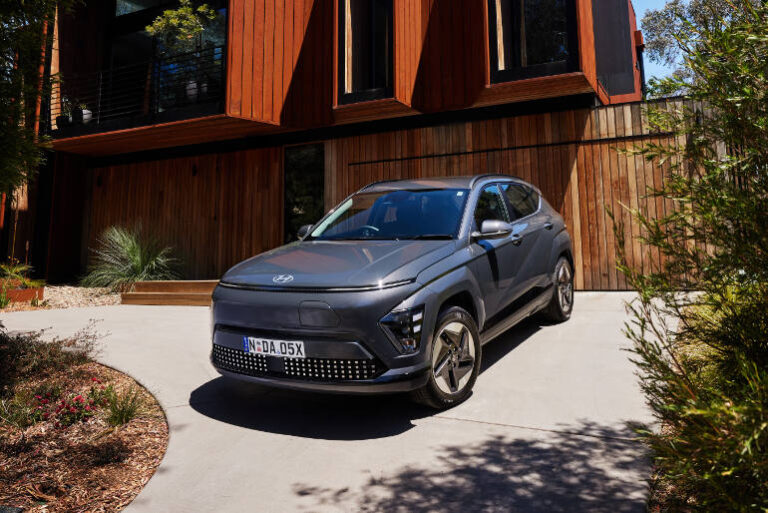
As competition in Australia’s electric vehicle market intensifies, Fleet Managers have more choice than ever — and an increasingly wide spread of purchase prices.
For Hyundai Australia, the challenge is convincing fleet buyers that vehicle selection should not stop at the upfront price.
Akshat Ahuja, Senior Manager, Fleet at Hyundai Australia, says whole-of-life cost, servicing, reliability and aftersales support remain important considerations when comparing electric vehicles.
“It’s not always about the sticker price,” Ahuja said.
“It’s correct, that that’s what most people look at, and that’s how you see the results as well, or see what’s happening in the market. It’s the cheapest price. But where our brand stands apart is when you look at the overall package.”

Whole-of-life costs remain critical
For fleet buyers, the purchase price is only one part of the equation.
Ahuja said Hyundai has fleet pricing structures across its EV range for national, government, premium and rental customers, while lower maintenance requirements can also influence the cost calculation.
“It all starts with the purchase price, right?” he said.
“So we have very competitive fleet pricing structures, not just for Kona EV, but for all our EVs, for our national government premium and rental customers, and with our EVs, they have very low running costs.”
He said fewer moving parts and an eight-year battery warranty can give fleet operators greater certainty over vehicle operating costs.
“All of these factors, they actually contribute to a more predictable cost profile.”
The Kona Electric has become one of Hyundai’s better-established EV options in fleet, with Ahuja confirming it is one of the brand’s best-selling electric vehicles.
A spare wheel can still matter
One relatively simple feature has also emerged as important during Hyundai’s conversations with fleet customers — a space-saver spare wheel.
While many EVs omit a spare to save weight, Ahuja said its inclusion in the Kona Electric can be particularly relevant for fleet applications.
“I have realised the importance of the space saver wheel and EVs as well during my conversations with the fleet customers, and it definitely helps the Kona EV as well,” he said.
“In the fleet space, it definitely helps having that space saver wheel in the vehicle.”
For fleets operating in regional areas, or where vehicle downtime creates an operational problem, that type of practical consideration can influence procurement decisions just as much as equipment specifications.
Dealer coverage part of the fleet equation
Hyundai is also positioning its established dealer network as part of the ownership proposition.
Ahuja said the company has 168 dealers across Australia, supported by regional fleet personnel who can assist customers when issues arise.
“We have a strong dealership network dealers, and you have that peace of mind that you can actually get the service done at the nearest dealer,” he said.
For Fleet Managers assessing newer EV brands against established manufacturers, the availability of servicing, parts and local support can form an important part of risk assessment.
Hyundai also offers service packs designed to provide greater certainty over servicing costs.
Local testing adds another consideration
Ahuja said Hyundai also tests and tunes vehicles for Australian conditions, something the company believes helps differentiate its products as more electric brands enter the market.
“Our products, they get tested locally,” he said.
The increasing number of lower-priced EVs will continue to place pressure on established manufacturers. Hyundai acknowledges that price remains important and Ahuja said the company is watching the market closely.
But for Fleet Managers comparing vehicles over several years rather than at the point of purchase alone, the decision still needs to account for servicing, maintenance, downtime, operational suitability and support.
That makes the cheapest purchase price only one part of the fleet procurement calculation.