


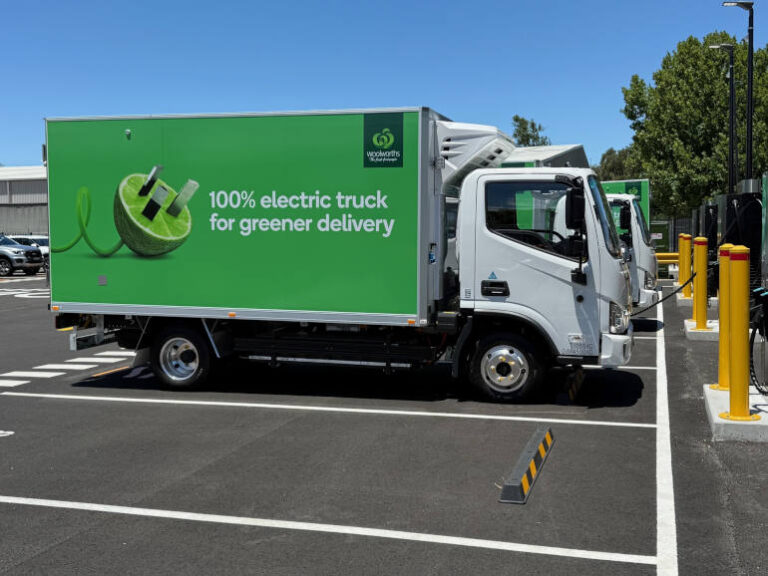
A new shared charging model for electric trucks has launched in Sydney, offering fleets access to high-capacity infrastructure without the need to build their own depot facilities.
The collaboration between Foton Mobility Distribution (FMD) and Zenobē has delivered Australia’s first off-site electric truck charging hub in Mascot, designed to support the growing number of light-duty electric trucks operating in urban freight and service fleets.
A new charging model for commercial fleets
The Mascot facility is powered entirely by renewable energy and provides dedicated infrastructure for light commercial electric trucks. The hub includes 22 DC fast chargers and parking for up to 44 vehicles, creating a scalable solution for organisations that want to electrify vehicles without investing in depot upgrades or securing additional land.
This model addresses one of the most common barriers identified by Fleet Managers—how to deploy electric trucks when site constraints, grid capacity or capital budgets limit infrastructure development.
Shared charging hubs offer a practical pathway for organisations at an early stage of fleet electrification, particularly those operating in metropolitan areas where depot space is limited.
Neil Wang, Founder and CEO at Foton Mobility Distribution, said the project demonstrates how partnerships can accelerate the transition to low-emission transport.
“We’re thrilled that Zenobē have chosen the Foton T5 EV as the backbone of this pioneering initiative. Together, we’re accelerating the shift to sustainable logistics and proving what’s possible when the right technology and partnerships come together.”
Supporting the growth of electric truck fleets
The Mascot hub has been delivered alongside the rollout of additional Foton electric trucks into the Australian market. FMD has supplied 20 of its 4.5-tonne T5 electric trucks to the facility, supporting last-mile delivery and refrigerated transport operations.
More than 250 units of the T5 model are already operating across Australia, with customers including major retailers and utilities.
The company is also preparing to introduce an 8.5-tonne electric truck variant, targeting a segment widely used for construction, freight and delivery applications. The new model is scheduled for release in April 2026, reflecting growing demand for higher-capacity electric vehicles in commercial fleets.
A scalable approach to infrastructure investment
For many organisations, the shift to electric trucks is less about vehicle availability and more about infrastructure planning. The Mascot hub demonstrates an alternative approach—outsourcing charging infrastructure while retaining operational control of the fleet.
Gareth Ridge, Country Director for Australia and New Zealand at Zenobē, said the project represents a practical blueprint for future deployments.
“The Mascot hub is not only the first of its kind in the country, but also a model for how fleets can access clean, shared charging infrastructure without needing to invest in their own sites.”
What this means for Fleet Managers
For organisations developing fleet decarbonisation plans, the key implications are operational rather than technical.
1. Charging infrastructure models are expanding
Fleets are no longer limited to depot-based charging. Shared facilities can provide a transitional solution while long-term infrastructure strategies are developed.
2. Capital barriers can be reduced
Access to third-party charging hubs allows organisations to trial electric trucks without committing to major upfront infrastructure investment.
3. Fleet planning needs to consider utilisation and access
As charging networks evolve, decisions about vehicle deployment, routes and duty cycles will become more closely linked to infrastructure availability.
As fleet management maturity increases, organisations will be better positioned to evaluate options such as shared charging hubs within a structured fleet asset management and emissions reduction strategy—rather than treating infrastructure as a standalone project.




