


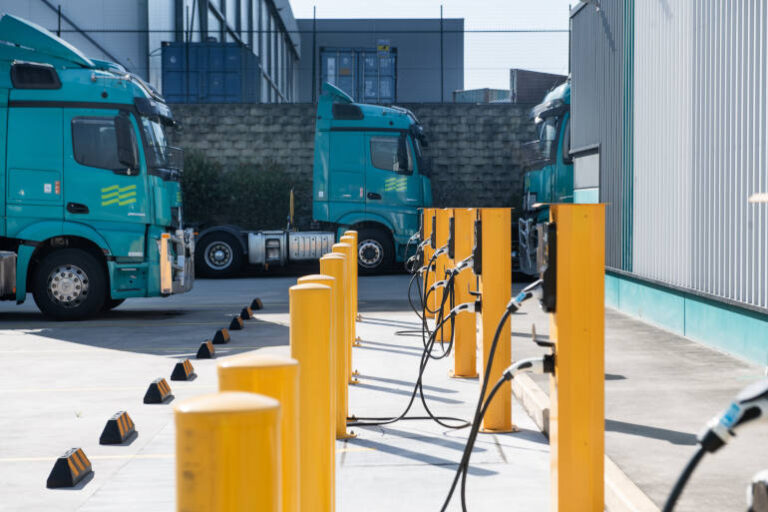
Charging strategy is emerging as one of the most important operational decisions for fleets transitioning to electric trucks. The latest MOV3MENT Electric Truck Report highlights that charging is not simply about installing equipment — it requires careful alignment between vehicle duty cycles, infrastructure capacity and long-term operational planning.
According to the report, charging strategies must strike a balance between cost and flexibility, as faster charging typically comes at a higher infrastructure and energy cost, while slower charging can be more economical if vehicles have sufficient dwell time.
The report also notes that charging considerations become more critical as fleets move beyond a single vehicle trial and begin planning larger deployments, where infrastructure upgrades and electrical capacity constraints can have a significant impact on project timelines and budgets.
Three common charging locations for truck operations
The report identifies three primary charging environments for electric trucks: depot or home charging, destination charging and public en-route charging. Each plays a different role depending on the type of freight task and vehicle utilisation.
Depot or home charging is generally used to fully recharge vehicles overnight and is considered suitable for most trucks that remain parked for extended periods between shifts. These systems typically rely on AC or lower-power DC chargers and are often the most cost-effective solution for urban and regional fleets.
Destination charging, such as at customer sites or shared logistics facilities, is typically used to top up batteries during loading or unloading. This approach can extend daily operating range without requiring significant changes to vehicle scheduling.
Public or en-route charging is generally required for long-distance or highly utilised operations, particularly where vehicles must recharge within regulated driver breaks or maintain continuous operation across longer routes.
The report also highlights that while some smaller electric trucks have used passenger vehicle charging infrastructure, this is not considered a reliable long-term solution due to the need for higher-capacity equipment and drive-through access for heavy vehicles.
Charging speed and infrastructure costs
Charging speed is closely linked to infrastructure cost and electrical capacity requirements. The report outlines three general charging speed categories:
- Slow charging (11–50 kW) — typically used overnight and taking two to eight hours
- Fast charging (50–150 kW) — commonly used for daytime top-ups
- Ultra-fast charging (150–500 kW or more) — designed for rapid turnaround in high-utilisation operations
Faster charging speeds can reduce vehicle downtime, but they also increase infrastructure costs and may require upgrades to site electrical capacity. As more chargers are added to a single site, these costs can rise further due to the need for network upgrades and additional equipment.
The report emphasises that faster charging is only necessary in situations with limited dwell time or large battery requirements, such as linehaul operations or high-frequency distribution tasks.
Infrastructure planning depends on the task
Charging requirements vary significantly depending on the type of operation. The report outlines typical patterns across three common duty cycles:
- Urban operations — light-duty vehicles are usually charged at private depots, with occasional daytime top-ups
- Regional operations — medium-duty vehicles may require shared destination charging to maintain range
- Linehaul or specialised operations — heavy-duty vehicles may depend on public charging infrastructure to sustain long-distance routes
These differences highlight the importance of understanding duty cycles before selecting charging equipment or infrastructure locations.
Infrastructure availability continues to evolve
The report also points to ongoing development of dedicated truck charging infrastructure across Australia, although network coverage remains inconsistent compared with international markets.
Examples of recent or proposed installations include high-capacity charging sites in Geelong, Eastern Creek and Laverton, as well as multi-user charging hubs designed to support shared fleet operations.
This evolving infrastructure landscape means that fleet charging decisions are increasingly influenced by local network availability, site constraints and future expansion plans.
Planning ahead is essential
A consistent message throughout the report is the need for early planning. Charging infrastructure decisions can affect vehicle selection, operating schedules and long-term fleet economics, particularly as fleets scale up electrification programs.
The report concludes that effective charging strategies depend on aligning infrastructure investment with real operational requirements rather than simply installing the fastest available technology.