

For many organisations, fleet electrification still means pilots, trials and discussions about what might happen next.
At Allianz, the conversation has moved on. After starting its transition with a small pilot of 12 vehicles two years ago, the insurer has reached the point where electric vehicles are becoming part of its normal fleet replacement process.
Speaking during a Fleet News Group Awards finalists panel at Everything Electric Sydney, Allianz’s Matthew Harvey explained that the organisation is now two years into a transition plan that runs through to 2030.
“We are well and truly into that plan,” Harvey said. “There is no ICE vehicles that are going back into our fleet.”
Allianz is a finalist in the Fleet News Group Awards program, and its approach highlights an important distinction between simply purchasing electric vehicles and embedding electrification into long-term fleet strategy.

From pilot to replacement cycle
Allianz initially used a small cohort of vehicles to understand how EVs would perform within the business and how employees would respond.
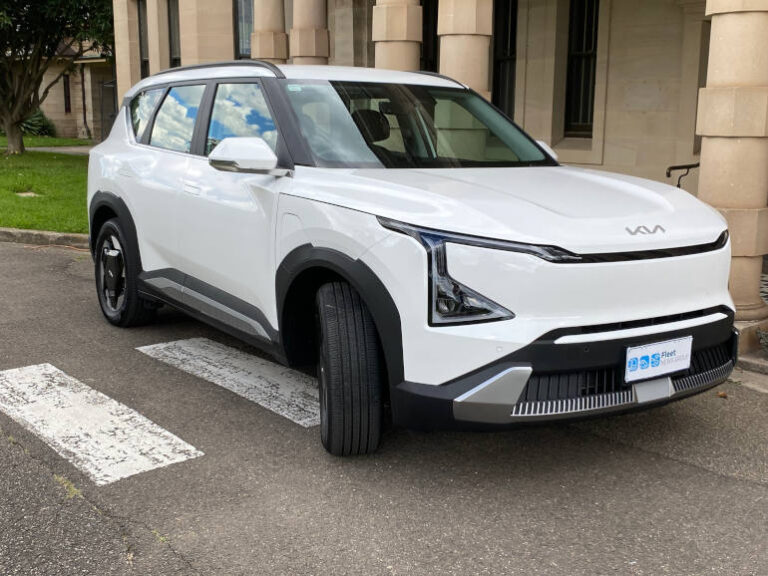
The Kia EV5 has subsequently become an important part of the transition.
“As soon as the lease comes up, we are replacing with an EV5 at the moment,” Harvey said.
However, that doesn’t mean every existing vehicle automatically gets replaced by an electric equivalent.
Allianz operates a leased fleet, so the team first considers whether the vehicle will continue to be required throughout the next four-year lease period.
That means considering the future requirements of the business as well as today’s fleet utilisation.
Electrification doesn’t replace fleet management
Before each replacement cohort, Allianz reviews the organisation’s requirements and overlays them with vehicle-level utilisation data.
That can include considering future mergers and acquisitions, changing fleet numbers and whether employees continue to require a company vehicle.
“We really want to make sure that we have an understanding of any mergers and acquisitions that are coming up, understanding the fleet size, understanding the business requirement,” Harvey said.
It’s an important point for Fleet Managers planning an EV transition. Changing the powertrain doesn’t remove the need for traditional fleet-management disciplines.
Vehicle utilisation, replacement cycles, operational requirements and whole-of-life costs remain fundamental.
Executive support creates momentum
Another factor behind the Allianz transition has been support from senior management. Harvey said the organisation has created executive-level accountability around the program.
“We actually have, from our exec level, a KPI that personally impacts their bonus,” he said.
For Harvey, that top-down commitment helps create the momentum needed to implement change across the organisation.
“My tip is actually a top-down approach,” he said. “You really need that top-down approach to try and get the buy-in into business around the change.”
When the trial ends
One of the challenges facing Fleet Managers is deciding when enough testing has been done.
Pilots remain valuable for understanding range, charging, employee acceptance and operational suitability, but eventually organisations need to decide whether electrification can become part of normal fleet operations.
For Allianz, that point has arrived. The vehicles still need to satisfy the commercial and operational requirements of the organisation. The difference is that electric is no longer being treated as the experiment.