

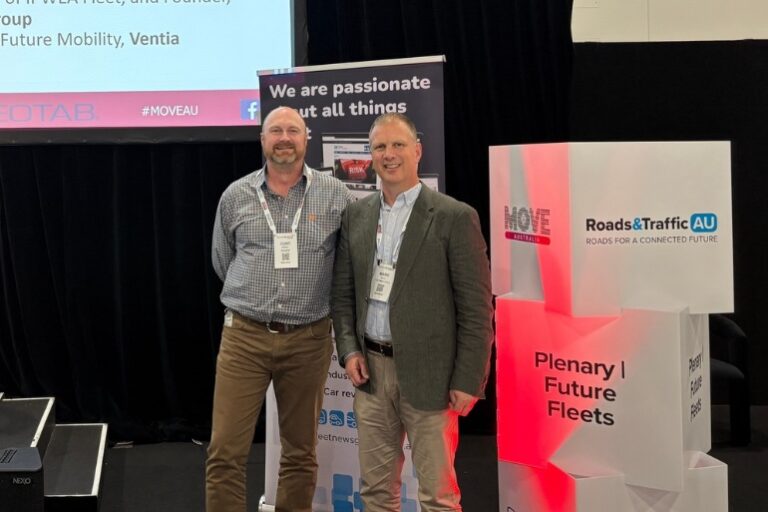
If you thought an electricity distributor would have an easy time installing EV charging, Ausgrid fleet manager Clint Musgrove has a story for you.
Speaking with Marc Sibbald, Director – Fleet at IPWEA, at MOVE Australia, Musgrove revealed that even a business responsible for electricity infrastructure faces power supply constraints at its own depots.
At one Sydney location, having a substation on site had not solved the challenge of securing sufficient capacity for the DC charging he wanted to install.
“We’re still just a normal business with the normal challenges,” Musgrove said.
It was one of several practical insights shared during a fireside chat covering Ausgrid’s electrification strategy, electric truck trials, growing van fleet and lessons from installing charging infrastructure.
For fleet professionals who missed the session, the central message was clear: successful electrification starts with sound fleet management, a roadmap and a willingness to learn.

A clear strategy provides direction
Ausgrid maintains the electricity distribution network across Sydney, the Central Coast and the Hunter region. Supporting that work requires a diverse fleet, from passenger vehicles and vans to trucks, elevated work platforms and specialised equipment operating in underground cable tunnels.
Musgrove said strong support from senior leadership had given the fleet team clear direction on purchasing, asset life cycles and replacement decisions.
Electrification sits within that strategy, with a target of 900 electric assets by 2030.
The transition began with pool vehicles, where Ausgrid could build experience while managing operational risk. If an early deployment encountered difficulties, alternatives were available and the impact on the business could be contained.
That approach has helped the team develop its understanding of vehicles and charging before moving into more demanding applications.
Electric trucks are already doing the job
Musgrove reported positive results from electric trucks in the 4.5-tonne category, including tippers and flat-top vehicles.
“They’re all working perfectly, absolutely perfectly,” he said.
The approach has been to select applications that suit the available technology and provide flexibility within the business. A broadly useful tipper, for example, offers a manageable starting point for electrification.
Larger trucks present further challenges. Ausgrid had trialled an electric prime mover on a distribution task between its Somersby warehouse and Muswellbrook, but the range was not sufficient for the intended operation under the trial conditions.
That did not make the exercise a wasted opportunity.
The team had defined the route, loads, charging arrangements and contingency options, with a clear start and finish. It could compare the vehicle against diesel operation and document what it learned.
“It was successful, in that it gave us data, it gave us understanding on where the market was currently,” Musgrove said.
For other fleet managers, the lesson is to give a trial a clear purpose. Establish what needs to be tested, measure the results and use them to inform the next decision.
Charging demand changes as the fleet grows
Installing chargers was only the beginning of Ausgrid’s infrastructure journey.
Musgrove estimated the business had more than 100 chargers across its depots at the time of the discussion. As vehicle numbers grew, the team discovered that charging demand depended on much more than the number of vehicles based at each location.
A depot with only a few pool cars could also be a popular meeting destination, bringing visiting EVs from across the business.
At one location, an initial installation of two or three chargers expanded to around 20 as those travel patterns became clearer.
Charger placement also brought practical considerations: parking direction, cable access, traffic flow and depot emergency arrangements.
These details affect whether charging fits naturally into daily operations. They also explain why fleet, property, facilities and operational teams need to work together throughout the transition.
“We’re constantly learning,” Musgrove said.
“At the end of the day, we’re still trying to provide vehicles for the business to do business.”
Electric vans are changing drivers’ minds
One of the strongest examples of progress came from Ausgrid’s electric van deployments.
Musgrove estimated the business was operating around 40 to 50 electric vans at the time of the session. Initial hesitation from some drivers had shifted as they experienced the vehicles.
Comfort, climate control, smartphone connectivity and driver assistance features were helping build acceptance.
Actual daily distances were also challenging assumptions about range. Musgrove described users who believed they needed substantial range but were travelling only 20 or 30 kilometres a day.
For those applications, the electric vans had ample capacity for the work.
Onboard power outlets added another benefit, allowing tools and equipment to be powered from the vehicle and reducing the need for a separate generator on suitable jobs.
Perhaps the clearest indication of changing attitudes was the response from employees.
“We now have people actively reaching out constantly,” Musgrove said, describing drivers asking to move from diesel vehicles into electric alternatives.
Start with a roadmap
Asked what advice he would give a fleet manager beginning the transition, Musgrove returned to the fundamentals.
“Have a roadmap. Know where you are going. Don’t just go out and buy all the shiny things.”
That means understanding operational requirements, where vehicles travel, where they stop and how they will charge. Vehicle selection and infrastructure planning need to progress together.
Ausgrid’s experience also demonstrates that a clear strategy can accommodate learning. Charging arrangements can evolve, trials can reveal limitations and driver feedback can help shape future deployments.
Make time to connect with the fleet community
For those who missed MOVE Australia, the discussion offered a useful look behind the scenes of a working fleet transition.
The value came from hearing the details: a depot with constrained electricity supply, chargers that needed to move as usage patterns emerged, a truck trial that identified a capability gap and van drivers becoming advocates for EVs.
These are the conversations that make fleet events worth attending.
Presentations and panel discussions provide access to practical experience, while breaks and exhibition visits create opportunities to ask questions, compare approaches and meet people facing similar challenges.
For fleet managers planning their next step, time spent connecting with the fleet community can bring fresh knowledge, useful contacts and greater confidence in the decisions ahead.