

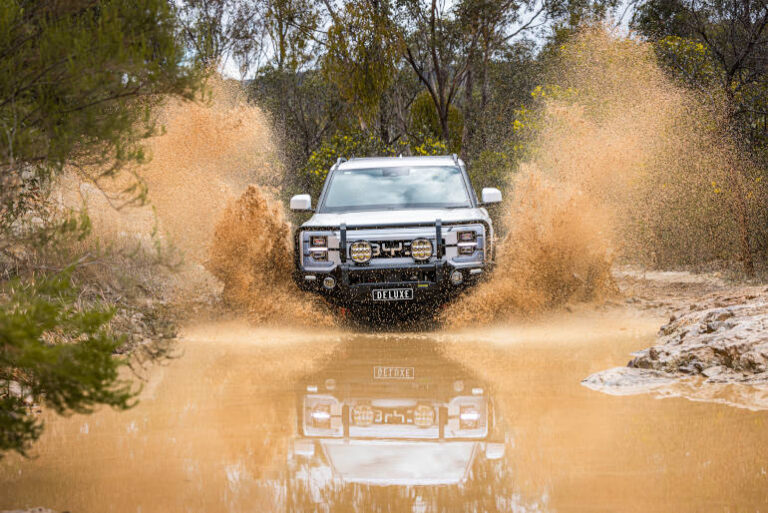
Ironman 4×4 has opened its entire range of accessories and suspension solutions for the BYD SHARK 6 to all Australian customers.
Previously only available through BYD dealerships, the complete Ironman 4×4 line-up can now be purchased and fitted directly through the company’s nationwide store and fitment network. The move represents a major shift for the maturing electric ute segment, giving owners flexibility and confidence in aftermarket support long expected from established internal combustion models.
For fleet operators and business owners assessing the SHARK 6 as a plug-in hybrid (PHEV) workhorse, this development addresses one of the biggest barriers to adoption — access to proven accessories engineered for Australian conditions.
Dual Path to Ownership
BYD SHARK 6 buyers now have two ways to equip their vehicle with Ironman 4×4 products:
- At pre-delivery, through BYD’s dealer network; or
- Post-purchase, via Ironman 4×4’s nationwide retail and fitment centres.
This dual-access model provides flexibility for fleets that prefer to stagger vehicle fit-outs or manage accessory procurement through established supplier contracts.
Kristian Ristell, General Manager – Global Product at Ironman 4×4, described the expanded distribution as a major milestone for both brands.
“By making our full range available both through BYD and directly via our own network, we’re ensuring every owner can access high-quality, PHEV-ready accessories designed to enhance capability, safety, and lifestyle,” said Ristell.
Aluminium Innovation for the PHEV Era
Ironman 4×4’s engineering team placed significant emphasis on lightweight aluminium construction to complement the SHARK 6’s PHEV powertrain. The goal is to maintain off-road performance and payload capacity while preserving efficiency and electric range.
The new SHARK 6 accessory line-up includes several first-to-market products, such as:
- Aluminium Sports Bar
- Aluminium Rear Step Tow Bar
- Aluminium Nudge Bar
- Slip-Resistant Side Steps
- Comprehensive Underbody Protection
Key accessories expected to attract fleet attention include:
- Electronic Slide-Away Roller Shutter – for secure load management and ease of access.
- Aluminium Raid Canopy – offering lightweight protection and modular fit-out potential.
- Aluminium Raid Bull Bar – combining safety with aerodynamic efficiency.
- Aluminium Roof Rack and Drawer Kits – enabling flexible storage for tools and equipment.
- IM2.5 Monotube Suspension Lift Kit with GVM Upgrade Option – ensuring compliance for heavier work applications.
Most products are available immediately, with a small number of new releases scheduled for early 2026.
Supporting a Growing EV Ute Ecosystem
The BYD SHARK 6 has generated significant interest since its launch, combining dual-motor power with plug-in hybrid efficiency. However, for many fleets, adoption depends on the surrounding ecosystem — the ability to service, upfit, and adapt vehicles for purpose-built roles.
By partnering with Ironman 4×4, BYD now benefits from the credibility and technical expertise of a brand well-established in Australia’s off-road and light commercial markets.
Fleet Managers assessing the total cost of ownership (TCO) and operational suitability of PHEV utes can now factor in local fitment, parts availability, and GVM upgrade options. The alignment between BYD and Ironman 4×4 signals that the SHARK 6 is moving from a niche electric offering to a viable fleet platform capable of meeting real-world work demands.
Looking Ahead
As the EV ute market continues to evolve, Ironman 4×4’s early commitment to lightweight engineering and nationwide support sets a new benchmark for how aftermarket manufacturers can enable the transition to lower-emission work vehicles.
For fleets considering a plug-in hybrid utility, the Ironman 4×4 partnership offers assurance that the SHARK 6 can be built for both efficiency and endurance — ready for Australia’s worksites, highways, and outback tracks.
- Parramatta found a simple way to tackle EV resistance
 Range anxiety isn’t always solved with another spreadsheet. Sometimes you need to hand someone the keys. That’s one of the lessons from City of Parramatta’s fleet electrification program, where an EV drive week has become an important tool for building employee support for the transition. Speaking at Everything Electric Sydney during a panel featuring finalists
 - Ausgrid’s charging strategy goes well beyond the depotInstalling chargers at the depot might be the obvious starting point for fleet electrification. For Ausgrid, it wasn’t going to be enough. As the electricity network continues electrifying passenger vehicles, vans and trucks, it has developed a charging strategy designed around how employees actually use fleet vehicles. Speaking during the Fleet News Group Awards finalists
- For Allianz, EVs are now business as usualFor many organisations, fleet electrification still means pilots, trials and discussions about what might happen next. At Allianz, the conversation has moved on. After starting its transition with a small pilot of 12 vehicles two years ago, the insurer has reached the point where electric vehicles are becoming part of its normal fleet replacement process.
- A Charger That Powers Up Isn’t Finished: Why Commissioning Matters for Fleet EV ChargingAn EV charger can be installed, connected and apparently operating — and the charging system can still be wrong. That is one of the more important lessons from the Local Council EV Integration Project involving Wyndham, Brimbank and Moonee Valley councils. As fleet charging installations become larger, depots are adding not only chargers but load
- How to Install EV Charging Without Shutting Down the DepotBuying electric vehicles may be the visible part of fleet electrification, but much of the hard work can happen underground. Trenching, conduits, electrical upgrades, switchboards, charger foundations, communications, traffic management and electrical shutdowns all need to be completed while the depot continues doing its normal job. Experience from the Local Council EV Integration Project involving