


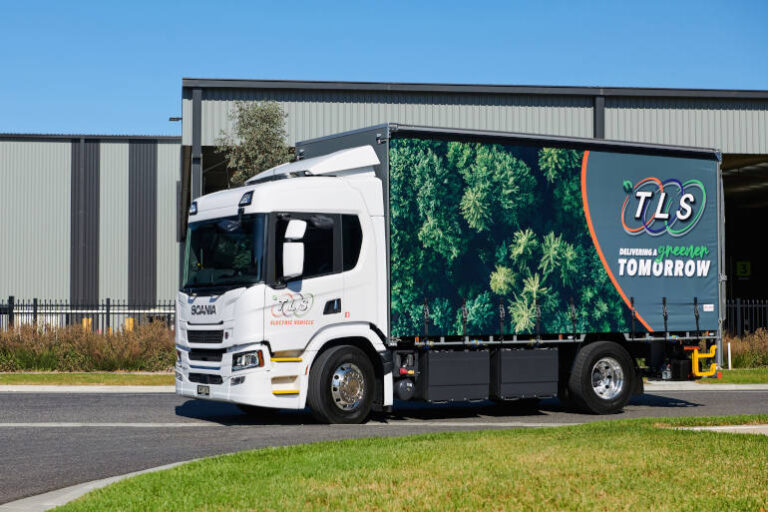
Australia’s road freight sector is entering a critical decade of transformation as new modelling from AECOM, commissioned by ARENA, identifies a clear pathway to electrify road transport — starting with the urban freight task.
The Electrifying Road Freight report outlines how Australia can transition to battery electric vehicles (BEVs) across urban, intrastate and interstate freight applications by 2040, with urban operations already viable today.
For fleet and charging infrastructure operators, the message is clear: urban freight is ready to electrify, and targeted planning will be key to managing the grid and rollout at scale.
Urban freight is the first mover
Light commercial vehicles — including vans and utilities — make up the largest share of the freight fleet in urban areas, with an estimated 3.3 million vehicles operating within cities and towns. These vehicles typically run short daily distances, return to base overnight, and align perfectly with depot-based or at-home charging.
Urban freight operators are already using BEVs successfully, and AECOM’s analysis confirms this is the “most feasible use case to electrify first”.
Crucially, the report highlights that urban depot charging doesn’t require megawatt-scale power. With smart design and load management, fleets can start switching to BEVs now without waiting for grid upgrades.
Intrastate and interstate freight need staged investment
While urban freight can lead, the report confirms that electrifying regional and long-haul operations will require significant planning and coordination.
Key recommendations include:
- Charging hubs along major freight corridors, spaced no more than 600km apart to match BEV articulated truck range.
- Megawatt charging infrastructure to support rapid turnaround for heavy vehicles.
- Shared facilities in regional towns to support small operators without depot access.
AECOM mapped a national freight charging network with 165 proposed hub locations, including urban distribution centres, rest stops, and intermodal terminals.
Power supply is not the main constraint
Contrary to popular concerns, AECOM found that Australia’s future energy generation capacity is sufficient to support the electrification of freight — even in a high uptake scenario.
However, the bottleneck will be transmission and distribution infrastructure, particularly in rural and remote areas.
Urban locations benefit from proximity to existing substations, but regional and isolated hubs may require battery storage systems (BESS), renewable microgrids, or staged grid extensions.
A fleet transition plan for the real world
Australia’s road freight sector is dominated by small-to-medium enterprises. Around 98% of freight businesses are SMEs, and 70% have just one truck. Many vehicles stay in service for 14 years or more, meaning a poorly timed transition could disrupt the second-hand market and erode operator confidence.
The AECOM report recommends aligning electrification timelines with existing fleet replacement cycles and supporting shared charging infrastructure to avoid stranding operators without access to refuelling options.
It also calls for governments to ease regulatory barriers such as vehicle weight limits, licensing inconsistencies, and design rules that disadvantage BEV adoption.
21 recommended actions to electrify freight
The report outlines five strategic pillars with 21 clear actions:
1. Demonstration Projects
- Launch urban shared charging pilots in Western Sydney, North Melbourne, and Western Brisbane.
- Develop regional highway charging projects on routes like Sydney–Newcastle and Brisbane–Gold Coast.
2. Strategy & Policy
- Create a National Freight Electrification Strategy with clear targets by use case.
- Align licensing, design, and access rules to enable BEV uptake.
3. Market Support
- Establish a national skills and knowledge hub.
- Support freight customers and depot owners to provide charging facilities.
- Engage directly with owner-operators and drivers on the business case for transition.
4. Funding
- Continue to fund local vehicle manufacturing and trials.
- Provide support for small operators to access BEVs and depot upgrades.
5. Infrastructure Delivery
- Prioritise early wins in urban areas.
- Protect corridors and enable fast deployment of highway charging hubs.
- Deliver renewable charging solutions in remote and isolated areas.
What this means for fleet and charging providers
For the fleet EV sector, this report represents a roadmap grounded in operational realities. It validates what many operators already see: urban fleet electrification is commercially and technically viable today.
But the opportunity doesn’t end there.
Charging providers, energy planners and logistics companies have a decade to build out the backbone of a national network that supports regional and long-haul freight electrification.
With over 3 million freight vehicles on the road, and freight demand set to increase 77% by 2050, this transition is essential — and the groundwork starts now.
Read the full report: Electrifying Road Freight – Pathways to Transition, AECOM for ARENA
Want to learn more about fleet-ready BEV trucks and charging infrastructure?
Subscribe to Fleet EV News for the latest market updates, vehicle launches and policy insights tailored for transport operators, local councils, and fleet managers.