
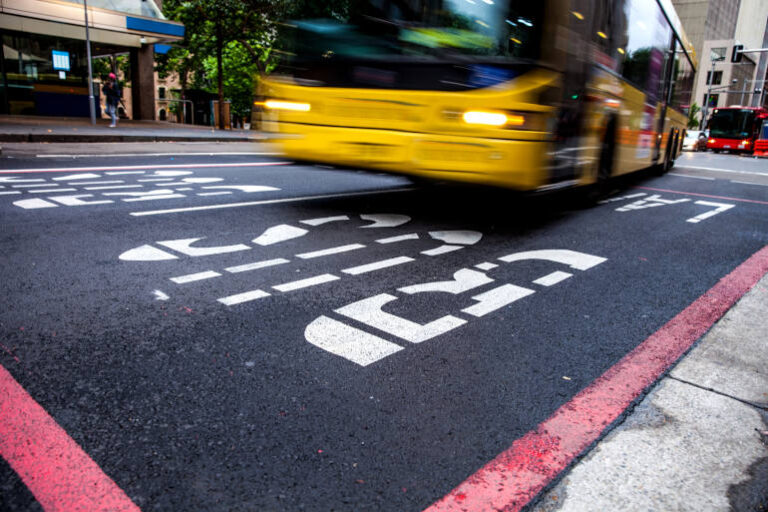
Western Australia is accelerating the rollout of electric buses across Perth, with a coordinated program that brings together vehicle supply, depot electrification and local manufacturing to support the long-term phase-out of diesel buses from the public transport network.
Led by the Public Transport Authority of Western Australia and supported by the WA Government, the program has moved well beyond trial deployments and into large-scale operational use. The recent delivery of the state’s 100th electric bus reflects how electric buses are becoming embedded in day-to-day Transperth operations rather than treated as a future concept.
A key focus is now on depot readiness. The Jandakot Transperth bus depot is the next site to be upgraded, with a $9.6 million contract awarded to JET Charge to install EV charging infrastructure capable of supporting up to 90 electric buses. Works are expected to begin early next year, with electric buses scheduled to enter service from the depot in late 2026.
Jandakot will be the fifth Transperth site equipped with EV charging infrastructure, following Elizabeth Quay Station and the Malaga and Karrinyup depots. Electric buses are already operating from Joondalup, Elizabeth Quay and Malaga, while Karrinyup is expected to commence electric bus operations in early 2026. Construction is also underway on a new EV bus depot in Bayswater, with plans in place to upgrade Claisebrook as part of the next stage.
The WA approach has been deliberately structured around long-term fleet planning. Depot upgrades are being staged over the next two decades, aligning infrastructure investment with vehicle replacement cycles to enable a full transition away from diesel without compromising network reliability or service levels.
Transport Minister Rita Saffioti said converting depots is central to the transition.
“Converting bus depots across Perth’s suburbs is essential as we phase out diesel buses from our public transport network over the coming two decades,” she said.
“This is all part of our government’s commitment to reshaping public transport in WA by fully transitioning to a locally-made electric bus fleet.”
The vehicle program is being delivered through a long-term supply partnership with Volvo Bus Australia, with electric buses built on Volvo’s electric chassis platform and bodied locally by Volgren at its Malaga facility. The rollout has prioritised operational suitability, including route selection, charging strategy and safety systems, rather than rapid volume deployment.
Each electric bus is capable of travelling up to 300 kilometres on a single charge and is expected to reduce carbon dioxide emissions by around 40 tonnes per vehicle per year compared with a diesel bus. The $250 million electric bus program, jointly funded by the WA and Commonwealth Governments, will see an initial 130 diesel and CNG buses replaced by mid-2026.
The transition also marks a clear shift in procurement policy. The final diesel bus built for the Transperth fleet rolled off the production line in May 2025, signalling the end of diesel bus manufacturing for the network and setting the direction for a fully electric future.
- Electric truck charging needs to move beyond the depot
 The transition to electric trucks is gathering momentum in Australia, but not every transport operator has the money, property or electrical infrastructure needed to install charging facilities at their depot. Speaking at MOVE Australia 2026, Adam Ritzinger, Chief Technical Officer at Heavy Vehicle Industry Australia (HVIA), highlighted the growing importance of shared charging infrastructure in
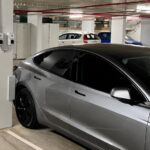
- Who needs a driveway? Apartments go EV-readyApartment living has been one of the challenges facing electric vehicle adoption in Australia, but a Brisbane residential complex is showing how existing buildings can be prepared for EV charging without every resident needing to install their own infrastructure from scratch. Urban Edge at Kelvin Grove has become the site of Origin’s largest residential EV
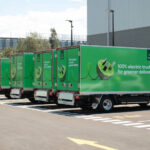
- Can shared charging hubs help more fleets go electric?When Woolworths began using Zenobē’s electric truck charging hub in Mascot, Sydney, drivers had a new stop at both ends of their shift. They collect their trucks from the hub and return them there to charge for the next delivery run. For fleets with limited space or power at their own depots, it’s a model
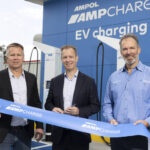
- Ampol finds a shortcut to more EV chargersAmpol has unveiled a new approach to public EV charging at its M1 Wyong service stations, using technology that allows charging capacity to respond to electricity network demand without requiring traditional grid upgrades. Developed in collaboration with Ausgrid and charging technology provider Kwetta, the project represents an Australian first for Ampol’s AmpCharge network and could
- Apartment living meets electric drivingA Canberra apartment building is tackling one of the practical barriers to electric vehicle adoption, with charging infrastructure giving owners across its 254 apartments the option to connect in their designated parking space. NOX Energy and ACT Chief Minister Andrew Barr have launched the installation at The Griffin in Parkes, described by NOX Energy as