


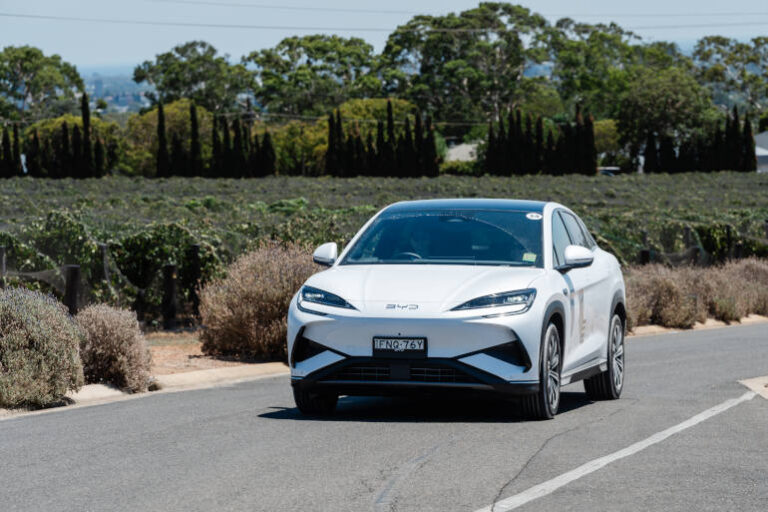
The Fringe Benefits Tax (FBT) exemption for eligible electric vehicles has had a measurable impact on Australia’s EV market — but not evenly across all segments.
According to Kristian Handberg, General Manager – Future Business and Origination at JET Charge, the strongest uplift has occurred in the medium SUV category, where salary packaging dynamics and buyer demographics align most effectively with the policy settings.
“It’s been interesting that it’s very uneven in terms of its impact,” Handberg said. “What has happened is the impact is concentrated in the medium SUV segment.”
The Numbers Behind the Shift
While smaller EV segments have seen incremental growth, the medium SUV category has experienced a significant increase in market share.
“Year on year, the small SUV segment didn’t actually grow in terms of market share of electric vehicles,” Handberg explained. “But the medium SUV segment, the EV share grew from 16 to 27 per cent across 2024 and 2025.”
For Fleet Managers and Finance Managers, this data reinforces that policy settings don’t influence every vehicle class equally. Instead, the FBT exemption has interacted with buyer behaviour in very specific ways.
Why Medium SUVs?
Handberg says the answer lies in who benefits most from novated leasing and how those benefits intersect with vehicle type.
“Most crucially, the FBT exemption tends to apply in that segment because it lines up with the demographics of the buyers,” he said.
To access the exemption, an employee must have access to a novated lease arrangement and sit within a salary band that makes the tax benefit meaningful. That profile tends to align with buyers selecting family-oriented vehicles rather than entry-level or secondary cars.
“You’ve got to have somebody who has access to a novated leasing model through their employer,” Handberg said. “You get more benefit from FBT the higher your salary is in terms of the tax benefit.”
Medium SUVs sit comfortably within that band — both in pricing and practicality.
“Those things tend to line up with people who are more likely to want to buy a family-type vehicle, a medium SUV, than a small SUV,” he said.
By contrast, smaller SUVs are often purchased by more price-sensitive buyers, singles, or as second vehicles — demographics less likely to fully leverage the FBT structure.
“A small SUV is more your second car or an entry-level car,” Handberg said. “It tends to be more singles or price-sensitive people, and that means it doesn’t really align specifically with the FBT impact.”
Policy Meets Pricing
The surge in medium SUV EV uptake isn’t solely driven by tax settings. Handberg also points to improving pricing dynamics under the New Vehicle Efficiency Standard (NVES) and competitive pressure from new market entrants.
“It looks like it’s a combination of the NVES pricing strategy, so the gap in terms of pricing of those vehicles is lower than it is in other segments,” he said.
The narrowing purchase price differential, combined with the FBT exemption, has created a window where the total cost of ownership case is easier to justify — particularly for salary-packaged employees.
What It Means for Fleets
For organisations planning to electrify their fleet, the lesson is clear: segment selection matters.
The FBT exemption is not a universal accelerator across all categories. Its strongest impact is occurring where salary packaging eligibility, vehicle pricing, and buyer intent intersect.
For Fleet Managers with a high proportion of novated lease or employee choice vehicles, the medium SUV segment may represent the most financially viable starting point for EV transition.
At the same time, this uneven impact highlights the broader need for stronger fleet management maturity. Decisions should be grounded in whole-of-life cost modelling, not simply upfront purchase price comparisons.
The data suggests that when policy, demographics, and TCO align, EV uptake accelerates rapidly.
The question for 2026 is whether those conditions remain stable — particularly as the Electric Car Discount and FBT exemption undergo review.
As Handberg observed, the market response has been clear where the incentives align. The next phase of growth will depend on whether that alignment continues.