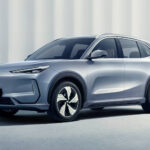


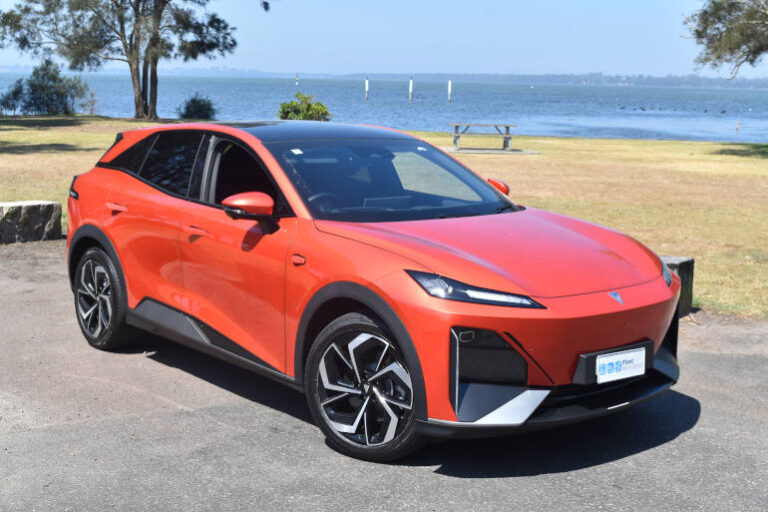
The electric SUV market is crowded. For Fleet Managers and novated lease buyers, that’s both a blessing and a headache. So where does the Deepal S07 sit?
After spending time behind the wheel, the short answer is this: it’s comfortable, well-equipped, priced competitively — and very much fit for purpose in a fleet environment.
The fundamentals: range, performance and drivetrain
The S07 is a rear-wheel-drive battery EV powered by a 79.9kWh battery. Outputs are 160kW and 320Nm, with a 0–100km/h time of 7.9 seconds. That’s not sports-car territory — and it’s not trying to be.
Claimed range is 475km. In practical fleet terms, that’s more than adequate for urban and most regional applications, especially for back-to-base operations where overnight charging is available.
Charging performance is solid rather than class-leading. On a DC charger (up to 92kW), Deepal claims 30–80 per cent in around 35 minutes. On an 11kW wallbox, expect roughly eight hours for a full charge. Plug it into a standard 240V outlet and you’re looking at closer to 10–11 hours — ideal for overnight replenishment.
For fleets with depot charging, this is a workable and predictable setup.
What Fleet Managers will really look at
Warranty and servicing are where the S07 becomes particularly interesting.
- 7-year / 160,000km vehicle warranty
- 8-year / 240,000km battery warranty
- 7-year capped price servicing
- Total servicing cost over seven years: $2,963
For fleet buyers building a Whole-of-Life Cost (WOLC) model, that transparency matters. You know what you’re paying in advance. There are no surprises hiding in year four or five.
In a market where predictability drives procurement decisions, that’s a strong tick.
Interior: premium without the premium badge
Step inside and the S07 feels more upmarket than its price suggests.
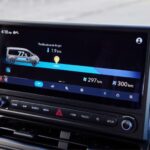
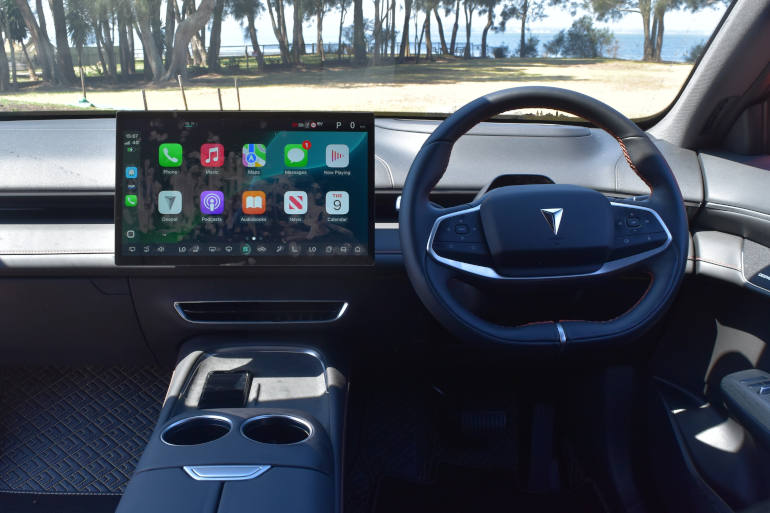
There’s a large central infotainment screen that tilts towards the driver, a minimalist dashboard layout, and a clear head-up display that handles speed and key information. There’s no traditional instrument cluster — everything is either on the main screen or projected onto the windscreen.
Heated and ventilated seats front and rear are standard. The cabin is quiet, refined and genuinely comfortable for daily commuting.
For novated lease buyers, this is where the S07 becomes compelling. At $53,900 plus on-road costs, it undercuts many rivals while delivering high-end features typically associated with more expensive brands.
Practicality for fleet operations
Under the bonnet, there’s no engine — just a 125-litre frunk. It’s ideal for storing charging cables or small equipment.
Boot capacity is 445 litres, expanding to 1,385 litres with the rear seats folded. For a medium SUV, that’s competitive and practical.
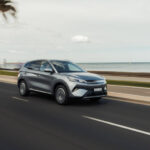
In real-world driving, the S07 cruises comfortably on freeways and handles urban environments with ease. It’s not designed to excite — it’s designed to do the job. For many fleets, that’s exactly what’s required.
Safety: non-negotiable in fleet
The S07 achieved a five-star ANCAP safety rating in 2024. It comes equipped with:
- Autonomous emergency braking
- Forward collision warning
- Lane departure warning and lane keep assist
- Blind spot detection
- Rear cross traffic alert
- Traffic sign recognition
- TPMS
For organisations with strict vehicle selection policies, that five-star rating keeps it eligible.
The fleet verdict
The electric SUV segment now offers a broad spectrum of options. The Deepal S07 doesn’t attempt to be the fastest or the most technologically radical.
Instead, it focuses on delivering:
- Solid real-world range
- Transparent servicing costs
- Competitive purchase price
- Strong safety credentials
- A premium-feeling cabin
For Fleet Managers transitioning to EVs, particularly in back-to-base applications, the S07 presents a logical, financially defendable option.
For novated lease customers, it’s even more interesting. With the right salary packaging structure, the after-tax cost can make it competitive with many petrol SUVs — while delivering the benefits of zero tailpipe emissions and lower servicing complexity.
In a crowded EV market, sometimes the best fleet vehicle isn’t the most exciting one. It’s the one that quietly gets the job done — every day.
- Fleet is now the missing piece in Australia’s EV transition
 Australia’s electric vehicle market has reached a new milestone, but Chau Le believes the next stage of growth will depend on one segment stepping up faster than the rest: fleet. Le, who is General Manager, E-mobility at Origin Energy and Chair of the Electric Vehicle Council, said the broader EV market is moving quickly, but
 - MG backs powertrain choice as Australian EV market growsMG Motor Australia says the rapid growth in electric vehicle sales doesn’t mean every Australian buyer — or every fleet — is ready to make the same transition at the same time. Speaking at Everything Electric in Sydney, MG Motor Australia Marketing Director Dimitri Andreatidis outlined a multi-powertrain strategy that will see the company continue
- Ford Targets Smarter Fleet ElectrificationFord Australia is building its commercial vehicle electrification strategy around a straightforward principle for fleets: match the powertrain to the job rather than assume every application needs the same technology. That approach was evident at Ford Uncovered, where the new Transit City joined the E-Transit, E-Transit Custom and Transit Custom plug-in hybrid in Ford’s commercial
- Beyond Range: What BYD ATTO 3 EVO Brings to FleetsThe BYD ATTO 3 EVO offers fleet buyers a choice of two electric SUVs with differences in carrying capacity, towing capability and charging performance that could influence vehicle selection. Available in Dynamic and Premium variants, the five-seat compact SUV offers up to 510 kilometres of claimed WLTP range. However, for organisations assessing vehicles for site
- EV sales hit 24% of Australian market as data transparency becomes a bigger issueAustralia’s electric vehicle market continued its rapid expansion in September, with battery electric vehicles accounting for almost one in four new vehicles sold. According to the Federal Chamber of Automotive Industries (FCAI), 102,924 new vehicles were sold in September 2026, up 0.9 per cent on the same month last year. More significantly for the EV