


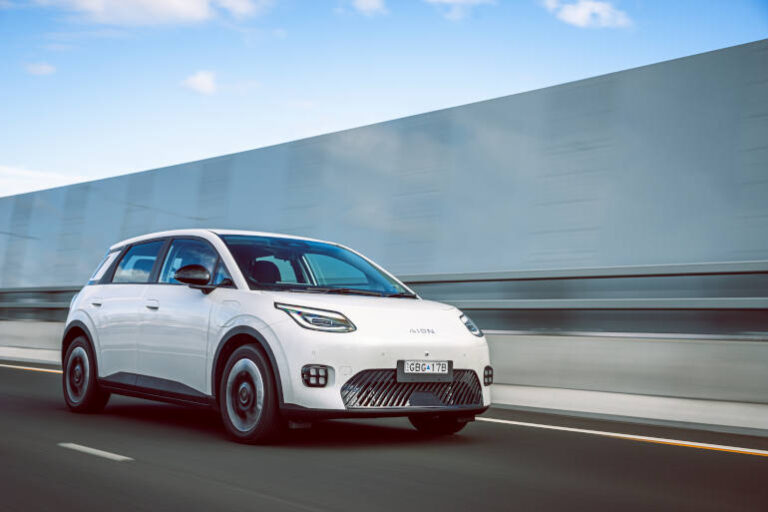
GAC will expand its Australian electric vehicle range with a new short-range version of the AION UT, targeting buyers looking for a more affordable entry point into EV ownership.
Due to arrive in Australia in late 2026, the new AION UT variant will use a smaller 44kWh Magazine Battery 2.0 battery pack and offer an estimated 320km WLTP driving range. Final Australian specifications and pricing will be announced closer to launch.
The announcement signals another potential move downwards in Australian EV pricing as manufacturers increasingly look beyond longer-range models to attract urban drivers, first-time EV buyers and customers who may not need a large battery for everyday driving.
GAC says the new variant has been developed with urban mobility and financial accessibility in mind. The 44kWh battery is smaller than the pack offered in the existing AION UT, while still providing a claimed range likely to cover several days of typical metropolitan driving for many motorists.
The existing AION UT currently starts from $31,990 driveaway, providing an indication of where GAC may position the shorter-range model. GAC has not confirmed whether the new version will sit below that figure, but a smaller battery potentially gives the company room to compete more aggressively at the entry level of the Australian EV market.
For fleet and novated lease buyers, the arrival of more EVs around the $30,000 price point will also broaden the number of applications where an electric vehicle can be considered on whole-of-life cost rather than simply environmental performance.
A 320km WLTP range may be more than adequate for pool cars, metropolitan operational fleets and employees predominantly using their vehicle for commuting and suburban travel. Smaller batteries can also reduce the amount of energy required for charging and potentially reduce the purchase cost compared with longer-range alternatives.
GAC Australia CEO Kevin Shu said demand for more accessible EVs was an important factor behind the decision to introduce the model locally.
“GAC is committed to delivering products that are tailored to the needs of Australian consumers, and in this instance, the call for more accessible entry-level EVs was particularly strong,” Shu said.
He said the combination of the AION UT’s electric powertrain, design and interior packaging should make the new version attractive to people considering their first electric vehicle as well as younger buyers purchasing their first car.
The new variant also uses GAC’s Magazine Battery 2.0 technology, which the manufacturer promotes for its battery safety characteristics.
While range has been one of the major selling points in the early years of Australia’s EV transition, the arrival of lower-priced, shorter-range models represents another stage in the development of the market.
Rather than paying for 500km or more of range that may rarely be required, some buyers may increasingly choose a smaller battery if the purchase price, charging capability and everyday range better match their actual vehicle usage.
That could be particularly relevant for fleets, where daily kilometres and vehicle utilisation can normally be measured before a replacement vehicle is selected.