


An EV charger can be installed, connected and apparently operating — and the charging system can still be wrong.
As fleet charging installations become larger, depots are adding not only chargers but load management systems, meters, communications and fleet charging software.
The result is effectively a connected energy management system.
For fleet managers, that means commissioning needs to test more than whether electricity reaches the vehicle.
Two EVs exposed a major configuration problem
Wyndham’s experience provides a good example.
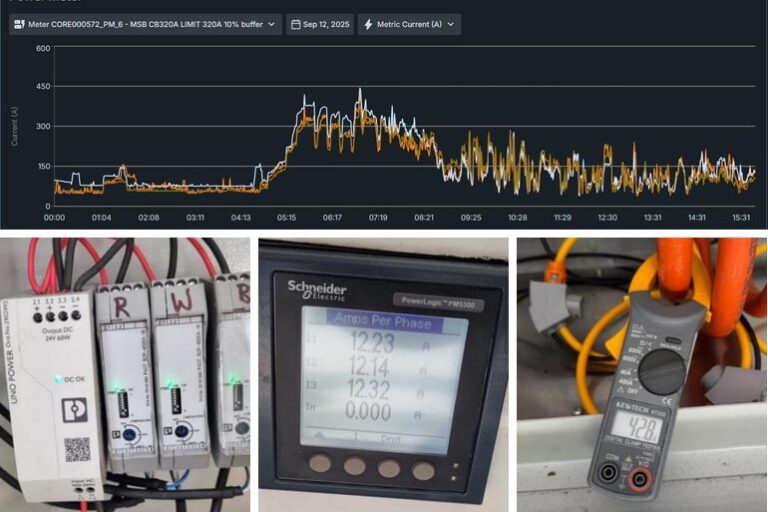
During testing at its depot, the Load Management System (LMS) began stopping charging sessions even though only two vehicles were connected.
The LMS was reporting electrical demand above the site’s 320A capacity.
But the figures did not make sense. The report notes that normal demand at the site does not exceed 90A and the two connected chargers could not have created the load being reported.
Further investigation identified incorrect meter settings and ratios at the main switchboard and downstream EV charging distribution boards.
Incorrect data was therefore being sent to the LMS.
The system itself was responding as intended: believing the depot was overloaded, it reduced charging demand to protect the site.
Once the meter configuration was corrected, the LMS could operate using accurate site readings.
Had the problem remained undetected, the report says it would have continued interrupting charging and materially reduced available charging capacity.
Load management adds another layer of complexity
The councils already had experience with EVs and chargers before the project, but the larger deployment introduced additional complexity through upgraded electrical infrastructure, multiple chargers, fleet charging software and load management.
The project’s third Lessons Learnt Report records issues including faulty or incorrectly configured meters and incomplete phase rotation intended to balance electrical load.
Some software functionality was also still developing. Electricity tariffs required for accurate charging cost analysis, for example, were not initially available and had to be activated by request.
None of this means fleets should avoid smart charging.
Load management can allow substantially more charging infrastructure to operate within an existing site supply and can be critical to managing depot demand.
It does mean fleets need to recognise that the system has to be configured, tested and understood.
Independent inspection before practical completion
The WAGA reports recommend independent engineering verification before practical completion.
At Moonee Valley and Wyndham, the electrical engineering consultant responsible for the detailed design returned after installation to inspect the system and confirm that it complied with the design and performed as intended.
Items identified during inspection were then referred back to the contractor for rectification before handover.
That provides an important control for fleet organisations.
If the same supplier designs, installs and confirms its own system, configuration or installation errors may be harder to identify.
The independent check gives the asset owner another opportunity to confirm that charger operation, metering and load management reflect the original engineering requirements before the project is closed.
The handover manual matters
Commissioning also needs to produce information that will remain useful after the project team and contractors leave.
The WAGA project identified a comprehensive handover package including electrical safety certificates, LMS commissioning test records, installation photographs, final as-built drawings, hardware and software data sheets, an asset register, asset mapping, operating manuals, maintenance procedures and service records.
One lesson from the project was that some test records were not consistently supplied.
The recommendation is therefore to define handover documentation requirements at the beginning of the contract and link delivery of that information to project completion.
For fleet and asset managers, this becomes particularly important several years later when a fault occurs and the people involved in the original project are no longer available.
Check compatibility before selecting hardware
Commissioning problems can also begin much earlier during procurement.
The infrastructure report found that some chargers and load management systems were not fully compatible.
Some LMS products work only with chargers from the same supplier, while other combinations may theoretically be compatible but have not been configured or validated.
The councils therefore considered charger design, compatibility with the selected software, warranties, local support and manufacturer reputation when selecting hardware.
This has implications for future expansion.
A fleet may buy a charger today expecting to add another brand in several years, only to discover that its load management or software platform restricts its options.
The report specifically identifies avoiding unnecessary vendor or brand lock-in as a consideration when designing the system.
Think about the charger as a fleet asset
Wyndham also elected to extend charger warranties beyond standard periods, based partly on its previous experience with warranty claims and failures occurring outside the original warranty period.
The project suggests maintenance costs after the defects period and charging software subscriptions should also be considered during procurement so fleets have visibility of ongoing costs.
This shifts the conversation from charger purchase price to lifecycle management.
Train the people who will inherit the system
Finally, the reports highlight the importance of getting operational fleet staff involved before handover.
At Brimbank and Wyndham, sustainability staff spent considerable time learning and troubleshooting charging systems during implementation.
The Lessons Learnt Report identifies limited operational-team involvement as a missed training opportunity because those employees may eventually be responsible for ongoing operation and maintenance.
Moonee Valley took a different approach, appointing a dedicated Fleet Transition Project Manager to oversee the vehicles and charging infrastructure, with operational staff developing charging management and user-support skills.
For fleet managers, that may be the final commissioning test.
The system should not only charge the cars when the installer is onsite.
It needs to be understood, monitored and maintained by the people who will be responsible for getting those vehicles out of the depot every morning.