


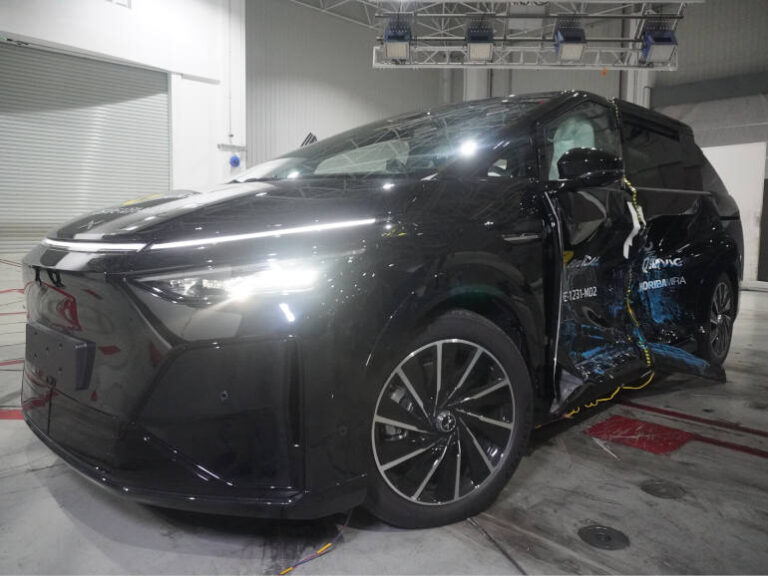
The GAC AION UT hatch and XPENG X9 people mover have demonstrated strong occupant and battery protection under ANCAP’s latest safety assessment criteria, but their reliance on touchscreens highlights a concern for fleet buyers: how easily drivers can operate everyday controls.
Both electric vehicles feature safety systems encouraged under ANCAP’s 2026–2028 criteria, including technology that detects incorrect seatbelt use and potentially unsafe seating positions. Child presence detection systems can also alert drivers if a child has been left inside.
For fleets, these features broaden the safety conversation beyond crash protection to how vehicles identify and respond to risks inside the cabin.
Both models recorded high scores for occupant protection in frontal, side impact and run-off-road crashes. ANCAP also highlighted their protection of small, medium-sized and larger occupants.
This expanded assessment uses virtual simulations and sled test data to examine injury risk across a broader range of occupant sizes, speeds and crash severities. For organisations where vehicles are shared by multiple drivers, that wider assessment offers useful context when evaluating suitability.
Battery safety under scrutiny
The AION UT and X9 also achieved high scores for the safety performance of their high-voltage batteries following a crash.
ANCAP’s latest criteria include a battery cell “pierce test”, which examines whether physical damage can trigger a chain reaction leading to fire. All battery-electric vehicles assessed against the 2026–2028 criteria undergo this test.
Both manufacturers have also installed the hardware needed to enable emergency calling, or eCall, functionality to become operational by October 2027. The presence of that hardware should not be confused with the service already being operational.
Everyday controls need attention
Despite their safety strengths, ANCAP identified room for improvement in both vehicles’ in-cabin controls.
Key functions rely too heavily on touchscreen interaction, including controls for headlights, windscreen wipers, demisters, side mirrors and hazard lights, alongside audio, telephone and climate functions.
ANCAP is advocating for readily accessible physical buttons to help minimise driver distraction.
“Our 2026 safety rating requirements are comprehensive and ambitious, encouraging manufacturers to deliver a broader range of safety features and higher levels of protection,” said ANCAP Chief Executive Carla Hoorweg.
“We want to see carmakers bring back buttons for the functions drivers use every day. Adjusting your windscreen wipers, switching on your headlights or clearing a fogged-up windscreen should be simple, intuitive and achievable without taking your attention off the road.”
For fleet managers, the findings reinforce the value of testing everyday usability during vehicle evaluations.
A practical driver assessment should include locating and operating essential controls, particularly those needed when weather or visibility changes. In a shared fleet, where drivers may regularly move between different models, intuitive controls deserve attention alongside crash protection and driver assistance technology.