

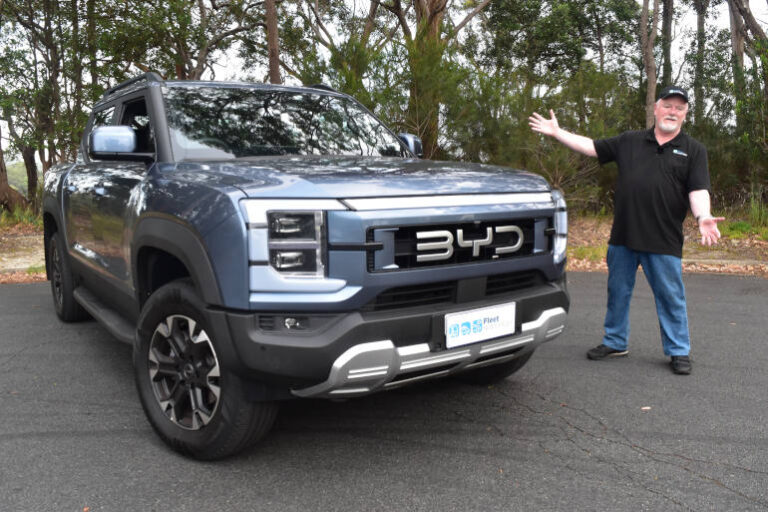
Spend a few kilometres behind the wheel of the BYD Shark 6 and it becomes obvious this ute hasn’t been tuned with the usual priorities. Instead of feeling like a tool first and a passenger vehicle second, the Shark 6 leans heavily toward comfort, refinement and effortless performance — and that makes it feel very different from most dual-cabs on the road.
On-Road Performance: Smooth, Silent and Surprisingly Quick
The Shark 6’s plug-in hybrid drivetrain transforms the driving experience. Around town and in low-speed driving, it operates quietly and smoothly, often pulling away under electric power alone. The instant torque from the electric motors means there’s no hesitation off the line, no hunting for gears, and no need to work the throttle to get moving.
Acceleration is a highlight. With a combined 321kW and 650Nm on tap, the Shark 6 feels genuinely quick for a ute, and overtaking on highways is effortless. There’s a seamless transition between electric and petrol power, and in Sport mode the response is immediate and confidence-inspiring without feeling aggressive or unruly.
Ride Comfort and Handling
Where the Shark 6 really separates itself is ride comfort. The suspension is tuned more like a large SUV than a traditional work ute, soaking up bumps and rough surfaces with ease. On broken urban roads, speed humps and patchy bitumen, it feels composed and settled, with far less rear-end hop than you’d expect from a dual-cab.
Steering is light and easy in town, making parking and tight manoeuvres stress-free, while remaining stable at highway speeds. It’s not a sports ute, but body control is well managed and the all-wheel-drive system gives the Shark 6 a planted, reassuring feel in wet conditions.
A Cabin Built for Comfort
Inside, the Shark 6 reinforces its comfort-first approach. The seats are well cushioned and supportive, with heating and ventilation adding to long-distance comfort. Road and wind noise are well suppressed, and the cabin feels calm even at freeway speeds.
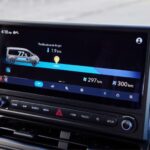
The large rotating touchscreen, head-up display and digital instruments are easy to live with, while features like adaptive cruise control and lane assistance take the strain out of longer drives. It feels less like a commercial vehicle and more like a premium family SUV with a tray on the back.
Living With It Day to Day
For drivers who spend hours behind the wheel — whether commuting, travelling between sites or clocking up highway kilometres — the Shark 6 stands out for how easy it is to drive. Add in the ability to run short trips in EV mode and the convenience of vehicle-to-load power, and it becomes a genuinely versatile daily vehicle.
Verdict
The BYD Shark 6 may look like a traditional dual-cab ute, but from the driver’s seat it tells a very different story. It prioritises comfort, smoothness and refinement in a way few utes do. For buyers who value how a vehicle drives just as much as what it can carry, the Shark 6 is a refreshing change of pace.
- Fleet is now the missing piece in Australia’s EV transition
 Australia’s electric vehicle market has reached a new milestone, but Chau Le believes the next stage of growth will depend on one segment stepping up faster than the rest: fleet. Le, who is General Manager, E-mobility at Origin Energy and Chair of the Electric Vehicle Council, said the broader EV market is moving quickly, but
 - MG backs powertrain choice as Australian EV market growsMG Motor Australia says the rapid growth in electric vehicle sales doesn’t mean every Australian buyer — or every fleet — is ready to make the same transition at the same time. Speaking at Everything Electric in Sydney, MG Motor Australia Marketing Director Dimitri Andreatidis outlined a multi-powertrain strategy that will see the company continue
- Ford Targets Smarter Fleet ElectrificationFord Australia is building its commercial vehicle electrification strategy around a straightforward principle for fleets: match the powertrain to the job rather than assume every application needs the same technology. That approach was evident at Ford Uncovered, where the new Transit City joined the E-Transit, E-Transit Custom and Transit Custom plug-in hybrid in Ford’s commercial
- Beyond Range: What BYD ATTO 3 EVO Brings to FleetsThe BYD ATTO 3 EVO offers fleet buyers a choice of two electric SUVs with differences in carrying capacity, towing capability and charging performance that could influence vehicle selection. Available in Dynamic and Premium variants, the five-seat compact SUV offers up to 510 kilometres of claimed WLTP range. However, for organisations assessing vehicles for site
- EV sales hit 24% of Australian market as data transparency becomes a bigger issueAustralia’s electric vehicle market continued its rapid expansion in September, with battery electric vehicles accounting for almost one in four new vehicles sold. According to the Federal Chamber of Automotive Industries (FCAI), 102,924 new vehicles were sold in September 2026, up 0.9 per cent on the same month last year. More significantly for the EV