


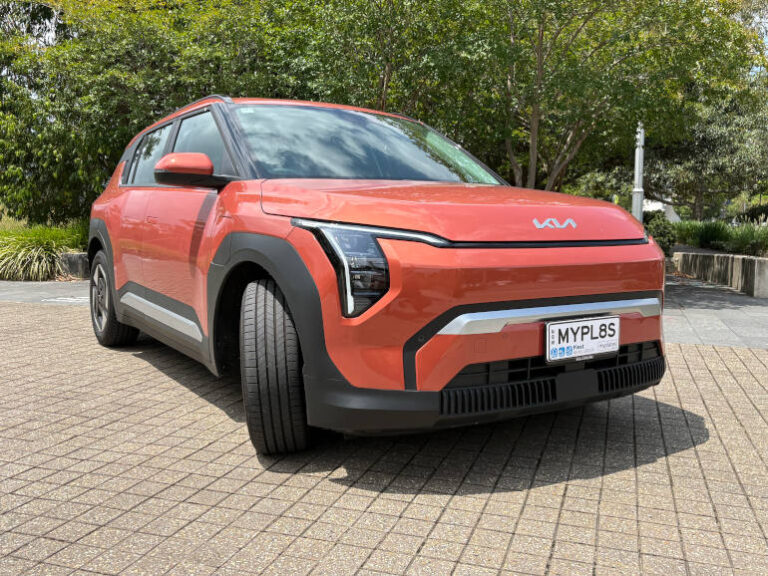
The Kia EV3 is an important car for Australia’s electric vehicle transition — not because it’s radical, but because it’s normal. This is a compact SUV that fits neatly into existing fleet and novated leasing use cases, while delivering the efficiency, range and charging capability needed to make EVs genuinely practical for everyday work and personal driving.
For first time EV buyers, the EV3 is less about luxury indulgence and more about proving that EVs can now replace ICE vehicles in one of the most popular fleet segments with very few compromises.
EV fundamentals done properly
Across the range, the EV3 uses a front-mounted permanent magnet synchronous motor producing 150kW and 283Nm, driving the front wheels through a single-speed reduction gear. That output delivers smooth, predictable performance rather than outright pace — exactly what most fleets want.
The real story, however, is battery choice and efficiency.
Battery, range and efficiency
According to the official Kia EV3 brochure:
- Standard Range battery: 58.3kWh
- Long Range battery: 81.4kWh
Energy consumption and WLTP range figures are strong by segment standards:
- Air Standard Range: 149Wh/km, up to 436km WLTP
- Air Long Range: 149Wh/km, up to 604km WLTP
- Earth Long Range: 162Wh/km, up to 563km WLTP
- GT-Line Long Range: 162Wh/km, up to 563km WLTP
For fleets transitioning from petrol or diesel, those numbers matter. A real-world 450–550km operating window comfortably covers most urban, peri-urban and regional light-duty fleet tasks without daily charging anxiety.
Charging capability: fleet-ready, not future-promised
Charging performance is refreshingly straightforward:
- AC charging: up to 10.5kW (three-phase), with a 10–100% charge in around 5–7 hours, depending on battery size
- DC fast charging:
- 10–80% in ~29–31 minutes on a 350kW charger
- Practical compatibility with 50kW public chargers, still delivering sub-80-minute sessions
Add Vehicle-to-Load (V2L) as standard across all variants, and the EV3 starts to look genuinely useful for mobile work, tools, events and site-based operations.
Interior and day-to-day usability
The EV3 cabin follows Kia’s recent EV design logic: clean, calm and tech-forward without being intimidating. All variants share the same panoramic display layout, combining:
- 12.3-inch digital driver cluster
- 12.3-inch infotainment screen
- Dedicated climate display
From a fleet EV perspective, what stands out is consistency. Driver assistance systems, regenerative braking via paddles, i-Pedal one-pedal driving, smart cruise control and full connectivity are standard across the range. There’s no sense that base-grade buyers are missing critical EV functionality.
Where the higher grades differentiate is comfort, presentation and materials — not core EV capability.
Exterior design and fleet acceptance
Design will always divide opinion, but the EV3’s boxy, upright stance aligns with Kia’s broader EV family and should age well in the used market. Importantly for fleets, it’s distinctive without being polarising — a key factor for salary-packaged and grey-fleet vehicles that still need broad driver acceptance.
Practical touches include:
- 460 litres of rear cargo space
- 25-litre front boot (frunk) for charging cables
- Compact dimensions that work well in urban environments
EV3 variants: which one suits which buyer?
Here’s how the EV3 line-up stacks up from an EV and fleet perspective:
- Air Standard Range (2WD SR)
The entry point into EV ownership. Lowest energy use, lowest upfront cost and a realistic urban fleet solution. - Air Long Range (2WD LR)
The efficiency sweet spot. Same low consumption as SR, but with over 600km WLTP range, making it ideal for mixed metro-regional use. - Earth Long Range (2WD LR)
Adds comfort and presentation upgrades while retaining strong range. Well suited to senior roles and novated lease drivers wanting a step up. - GT-Line Long Range (2WD LR)
Premium interior, styling upgrades, larger wheels and added tech. Minimal operational EV benefit, but maximum personal appeal — especially under a novated lease.
The verdict
The Kia EV3 doesn’t try to sell EVs with gimmicks. It does it with range, efficiency, charging speed and usability — the fundamentals that fleets care about.
For organisations looking to move beyond EV pilots and into scaled adoption, the EV3 shows how far the market has come. And for novated lease buyers, it proves that choosing electric no longer means compromising on comfort, design or everyday practicality.
In short, the EV3 isn’t just a new model — it’s a marker of where EVs now sit in the Australian fleet landscape: ready, credible and increasingly hard to ignore.