


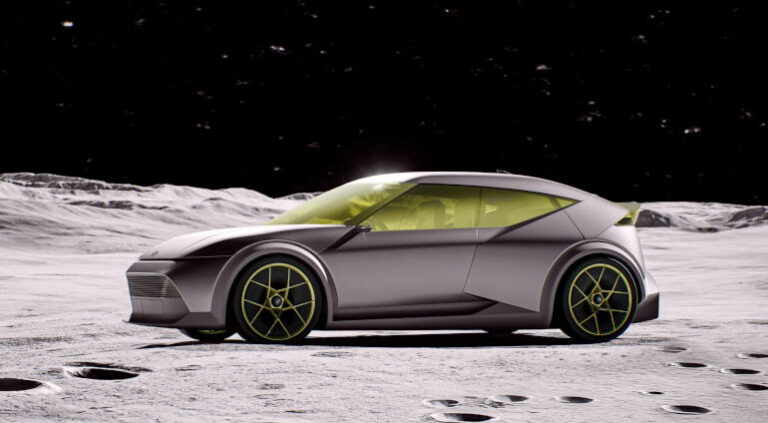
Hyundai Motor has used the unveiling of its Concept THREE at IAA Mobility 2025 in Munich to highlight its electrification roadmap for Europe, where compact, sustainable vehicles are at the centre of future growth. For Fleet Managers, the message is clear: Hyundai is committing heavily to a European-led EV transition, with lessons and product rollouts that will influence markets globally, including Australia.
Europe as the Testing Ground for Hyundai’s EV Future
Hyundai describes Europe as a hub of innovation in the EV era, shaped by advanced environmental policies, diverse cultures, and dense urban centres that demand new forms of mobility.
Compact EVs are a critical part of this strategy. As cities introduce stricter emissions rules and push for space-efficient transport, vehicles like Concept THREE represent Hyundai’s intention to meet urban mobility needs without compromising design or experience.
Nearly 80% of Hyundai vehicles sold in Europe are locally manufactured, reinforcing the company’s deep integration into the region and its ability to tailor products to local conditions.
The Roadmap: From 2025 to 2030
Hyundai has laid out ambitious targets that position it as a leader in Europe’s transition to clean energy:
- Every model electrified in Europe by 2027 – ensuring customers, including fleets, can choose an electrified option regardless of segment.
- 21 global EV models by 2030 – signalling sustained investment in product diversity.
- Hydrogen innovations – Hyundai is not limiting its strategy to battery EVs. It continues to develop fuel cell technologies for heavy transport and long-range mobility.
- Sustainable manufacturing – European production facilities are transitioning to renewable energy, while future vehicles will increasingly incorporate recycled and sustainable materials.
This combination of electrification, hydrogen, and sustainability initiatives sets Hyundai apart as a multi-technology player, rather than a brand banking solely on one drivetrain solution.
Fleet Implications
For Fleet Managers in Europe—and those watching from Australia—Hyundai’s roadmap offers several insights:
- Choice Across Segments: With electrified versions of every model promised by 2027, Hyundai is ensuring that fleets won’t be restricted to premium or niche EVs. Pool cars, delivery vans, and passenger vehicles will all be in scope.
- Compact EVs for Urban Fleets: The Concept THREE illustrates how compact EVs can meet urban needs where parking space, emissions rules, and congestion are daily challenges.
- Sustainability Beyond the Vehicle: By incorporating recycled materials such as ocean waste textiles and aluminium foam into vehicle design, Hyundai is aligning product choices with the ESG goals many organisations are now tasked with achieving.
- Hydrogen as a Future Option: While compact EVs are the focus today, Hyundai’s commitment to hydrogen suggests heavy fleets will see fuel cell solutions as part of the broader mix in the next decade.
Positioning for Competitive Advantage
Hyundai’s approach acknowledges that the EV transition is not only about technology but also about accessibility and emotional appeal. Xavier Martinet, President and CEO of Hyundai Motor Europe, emphasised the milestone nature of the brand’s return to IAA Mobility:
“Concept THREE represents the next step in Hyundai Motor’s electrification journey. With its compact dimensions and Art of Steel design language, it embodies our vision of delivering mobility that is practical, accessible and emotionally resonant”.
By linking design language, sustainable materials, and tailored European production, Hyundai aims to build a competitive edge in markets where environmental policies are among the most demanding in the world.
Lessons for Australian Fleets
Although Hyundai’s strategy is being rolled out in Europe first, Australian fleets should take note. Government regulations around emissions are tightening locally, and compact EVs are gaining attention as fit-for-purpose solutions for urban councils, utilities, and corporate carparks.
Hyundai’s investment in electrification at scale suggests that more practical, cost-effective EV models will eventually filter through to Australia. For Fleet Managers, this means planning Whole-of-Life Cost models with an expectation that Hyundai’s EV offering will grow significantly in the next few years.
Hyundai’s European strategy demonstrates a clear and staged plan: electrify every model by 2027, launch 21 EVs globally by 2030, integrate hydrogen into long-term mobility, and embed sustainability into both product and production.
For Fleet Managers, the message is straightforward: Hyundai is not treating Europe as just another sales region—it is treating it as the proving ground for its global EV ambitions. What works in Europe will likely shape Hyundai’s product mix and fleet offerings in Australia and other markets in the years ahead.




