

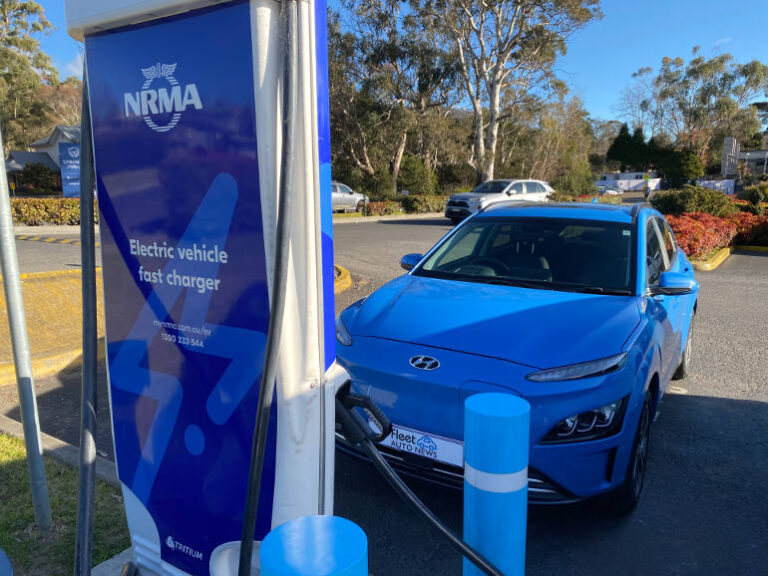
Public charging is no longer just a backup option for early EV adopters. As charging networks mature, it is becoming an important part of the planning model for organisations preparing to add electric vehicles to their fleets.
Speaking with Fleet EV News at the Autel EV Innovation Seminar 2026, Peter Burke, EV Infrastructure Delivery at the NRMA, said the organisation is now using data from more than 150 active charging sites across Australia to better understand how drivers use the network.
“We’ve now got over 150 active sites around Australia,” Burke said. “Some of them are in high-density metro areas, and we do a lot to do with monitoring peak use and trying to convey that information back to the user.”

For Fleet Managers, this is an important shift. Public charging may not replace depot or home charging, but it needs to be considered as part of the charging mix. Depending on the fleet operation, public charging may support regional travel, overflow demand, exception trips, field-based workers or vehicles that cannot reliably return to a depot.
Burke said the NRMA’s national footprint is giving it insight into both metro and regional charging behaviour.
“We’ve got sites in places of Australia that other operators do not, and we can see peaks over holiday periods,” he said.
This matters because public charging demand is not consistent. Regional sites can experience strong peaks during holiday periods, while metro sites may be shaped by commuting patterns, local EV adoption and the availability of home charging.
For organisations planning an EV transition, the lesson is to understand how vehicles are used before deciding how much reliance should be placed on public charging. Daily kilometres, route patterns, driver locations and dwell time all need to be reviewed.
Public charging can reduce the need for upfront capital investment in depot infrastructure, but it can also create productivity risk if drivers need to travel out of their way, wait for chargers, or charge during peak periods.
The best fleet charging model will usually be a combination of depot, home and public charging. The percentage split will depend on the operational needs of the fleet, not a generic industry benchmark.
As the public charging network matures, Fleet Managers will have more options. But they will also need stronger policies, better data and a clearer understanding of where public charging fits in the total cost of operating an electric fleet.
- FREELANDER Takes on the Luxury SUV Market
 FREELANDER will launch in Australia and New Zealand in 2027, bringing a new premium SUV brand developed by Chery and Jaguar Land Rover (JLR) into the local market. The FREELANDER 8 will lead the Australian launch, combining JLR-led British design with Chery’s electrified vehicle technology. Australian specifications, pricing and the detailed launch schedule will be
 - First e VITARA Delivery Launches Suzuki’s Electric EraSuzuki Australia has delivered its first battery electric vehicle to an Australian customer, marking the start of local customer deliveries for the e VITARA and adding another option for fleets considering electric SUVs. The first vehicle, an e VITARA Motion, was collected by existing Vitara owner Nel Mary Davis from Pennant Hills Suzuki in early
- Tesla Model Y wins 2026 Novated Lease Car of the YearThe Tesla Model Y has been named the 2026 Fleet News Group Novated Lease Car of the Year, after recording the highest number of novated leases among NALSPA members. Unlike the other vehicle categories in the Fleet News Group Awards program, the Novated Lease Car of the Year was not decided by a judging panel or
- Volkswagen ID. Buzz Cargo wins 2026 Fleet EV of the YearThe Volkswagen ID. Buzz Cargo has been named the 2026 Fleet EV of the Year in the Fleet News Group Awards, finishing ahead of two very different electric fleet propositions after assessment by fleet industry judges using Best Value Analysis. The Volkswagen ID. Buzz Cargo BEV 550 competed against the Toyota HiLux SR BEV 4×4 Double Cab Pickup and Kia EV5 Air
- Toyota Plugs More Choice into RAV4 RangeToyota will expand its RAV4 plug-in hybrid range with a new GXL two-wheel-drive variant in the first quarter of 2027, giving fleet buyers another option for combining electric daily driving with petrol-powered longer journeys. The new mid-range model will offer a claimed electric-only range of 121km on the WLTP test cycle and support both AC