


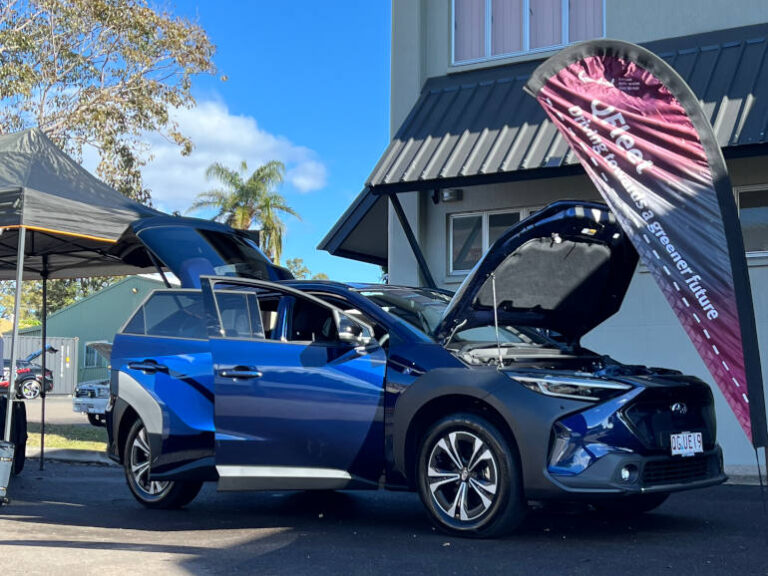
As the Queensland Government shifts from a mandated electric vehicle rollout to a broader emissions reduction approach, QFleet General Manager Vince White says the new strategy is about flexibility, practicality and impact. In an exclusive interview with Fleet News Group, he reflects on the success of the previous Electric Vehicle Transition Strategy, the infrastructure and behavioural challenges that emerged, and why the new plan puts agencies in a better position to deliver sustainable results. “The real question for every fleet is: which ‘E’ are you targeting—Electric or Emissions?” White says. “We’re focused on the one that delivers the greatest long-term benefit.”
Looking back on the QFleet Electric Vehicle Transition Strategy 2023–2026, how successful was the program in accelerating the adoption of EVs across the Queensland Government fleet?
The QFleet Electric Vehicle Transition Strategy 2023-2026 (EV Strategy) set an ambitious goal to replace all eligible passenger vehicles and SUVs in the Queensland Government fleet with zero tailpipe emission vehicles by the end of December 2026. That’s approximately 3,600 vehicles–a bold step towards a cleaner, greener future for Queensland.
And we’re proud to say, we’ve made incredible progress. By March 2025, we had transitioned approximately 65 per cent of the eligible fleet with more than 2,000 EVs now active on the road.
However, as with any transformative initiative, there were hurdles on the way. One of the biggest challenges was ensuring the availability of charging infrastructure, particularly in regional and remote areas. We also had to address building fire safety concerns related to EV infrastructure, which required careful planning and collaboration. Additionally, some of our government customer agencies were hesitant to adopt EVs expressing concerns regarding whether the vehicles could meet their specific operational needs which in some cases slowed or even paused EV orders.
Despite these challenges, the strategy has laid a strong foundation for the continued adoption of electric vehicles within the Queensland Government fleet.
We are setting the stage for a more sustainable future, inspiring others to follow suit, and proving that large-scale change is possible when we work together.
We’re excited to build on this momentum and continue driving Queensland towards a low-emissions future.
More than 2,000 EVs are now in the QFleet fleet — what lessons were learned from deploying those first waves of EVs, particularly in relation to charging infrastructure and operational suitability?
One key lesson is the importance of having a well-developed EV charging infrastructure in place or nearing completion when the transition commenced. I recommend companies prioritise this to ensure a smoother rollout and minimise potential challenges.
Developing a comprehensive procurement roadmap for EV charging infrastructure is essential. This includes defining project scope, identifying suitable locations, securing necessary permits, and selecting qualified vendors through a competitive bidding process for acquiring and deploying charging stations The roadmap should also address funding, installing , operating, maintening , and decommissioning of the stations.
We’ve also learnt transitioning agencies away from internal combustion engine (ICE) vehicles to EVs involved more than operational changes—it requires behavioural change. Shifting from ICEs to EVs mean adapting new habits, such as charging at commercial charging stations, using tools such as the PlugShare app to locate nearby charging stations and integrating charging routines into the workday.
This journey highlighted the importance of engaging people throughout the transition process.
The new strategy pivots away from an EV mandate to a broader emissions reduction target. From your perspective, why was this change needed, and what feedback from agencies influenced this decision?
The new strategy is more flexible, as it focuses on reducing the total emissions from QFleet’s leased vehicles, including light commercial vehicles rather than solely mandating the transition of approximately 1/3 of the fleet transitioning to EVs.
Under the previous mandate to purchase zero emission vehicles, some agencies expressed frustration, feeling their service delivery needs were, not being supported. Consequently, these agencies were seeking exemptions, switching to light commercial vehicles (which are out of scope of the previous strategy) or retaining their vehicles beyond their recommended service period.
The revised strategy shifts from a mandated electric vehicle (EV) transition to an emissions reduction approach offers several key benefits:
– QFleet now aims to reduce the tailpipe emissions of the entire fleet by 10 per cent by 30 June 2030.
– QFleet can broaden the range of zero and low emission vehicle types available to customers, offering a balanced choice of vehicles including hybrids and plug-in hybrids, to meet the diverse operational requirements of agencies across the state.
– Agencies have more time to implement the required charging infrastructure to support existing EV commitments and continue to support Queensland’s progress toward net zero emissions in a sustainable and practical manner.
How will QFleet ensure that this broader strategy continues to drive meaningful decarbonisation — without agencies simply defaulting back to internal combustion engine vehicles where convenient?
To maintain momentum, the strategy requires that all current vehicle lease agreements and new vehicle orders are to be honoured as per QFleet terms and conditions. This prevents early returns or cancellations, avoiding adverse financial impacts from the implementation of the QFleet Vehicle Purchase Strategy 2025-2030.
Agencies will be encouraged and supported to maintain their current level of EVs within their fleets to both manage their overall emissions and maximise the significant investment they have already undertaken in their charging infrastructure.
How does QFleet plan to support agencies in achieving the new 10% fleet emissions reduction target, particularly those operating in regional and remote areas with infrastructure constraints?
The Queensland Government’s broader approach to reduce vehicle emissions across its entire fleet is designed to have a greater impact on total CO2 emissions and give public servants more freedom to purchase the type of QFleet vehicles to meet their requirements. QFleet now offers a diverse range of vehicles, including electric, hybrid, and plug-in hybrid options, to lower emissions while maintaining service delivery.
Agencies are encouraged to maintain and expand their EV fleets to achieve the 10 per cent reduction emissions target by 2030 and to make the best use of the significant investment in EV charging infrastructure being delivered by the Queensland Government Accommodation Office within our department, the Department of Housing and Public Works.
This infrastructure investment ensures that agencies, even in regional and remote areas, have the resources needed to integrate EVs into their operations effectively.
Given the overlap with the Federal New Vehicle Efficiency Standard (NVES), how will QFleet align its procurement processes to ensure agencies have access to the most efficient vehicles available?
The Federal Government’s New Vehicle Efficiency Standard (NVES), effective from 31 May 2024, aims to significantly cut emissions from new passenger and light commercial vehicles with regulatory compliance beginning in July 2025. The NVES will contribute to more environmentally friendly vehicle options and QFleet will adapt its procurement criteria to ensure it can lease vehicles that are safe, efficient, and provide value for money.
To support emissions reduction goals and comply with NVES, QFleet will regularly review and update its procurement criteria. This ensures only fit for purpose, safe, fuel efficient and value-for-money vehicles are procured and available to lease.
Looking ahead to 2030 and beyond, do you still see EVs playing a growing role in the QFleet portfolio, even without a mandated quota — and how will QFleet balance emissiosntargets with operational flexibility for agencies?
The EV market is showing a trend of cost reduction due to increased competition at the same time as a wider range of vehicle choices are made available to the Australian Market.
Agencies that continue to invest in EVs and associated charging infrastructure will likely reap the dual benefits of reduced whole-of-life vehicles costs and emissions reduction ensuring that EVs continue to play an important role now and beyond 2030.
Agencies will be encouraged to maintain their current level of EVs in their fleet to not only manage their overall emissions but also to maximise the value of their investment in charging infrastructure.
By changing the focus of the strategy to measure total fleet emissions annually rather than the number of vehicles transitioned it will provide agencies with greater flexibility whilst still requiring them to achieve meaningful emissions reductions. This can be achieved through initiatives such as fleet optimisation, consolidation and making more informed vehicle choices.
Where fleet growth is necessary, QFleet will offer agencies greater access to a wider range of zero and low emission across a range of vehicle segments. This allows agencies to determine the best mix whilst effectively managing their overall emissions.