

The top 10 electric vehicles purchased in Australia in 2025 paint a clear picture of where demand is settling—and where it may head next. Novated leasing settings, the ongoing FBT exemption, and a steady influx of competitive Chinese models continue to shape buying decisions, particularly among employees and salary-packaged drivers.
A familiar winner at the top
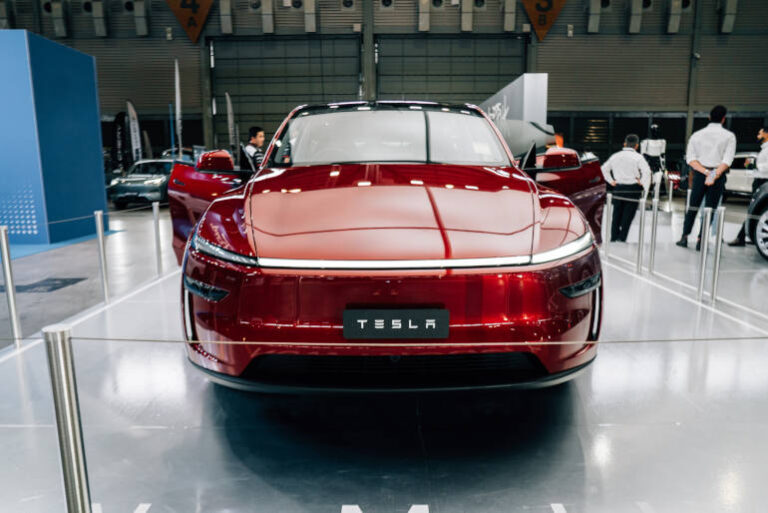
That the Tesla Model Y finished 2025 in first place will surprise few. With 22,239 sales, it remains the benchmark EV for Australian buyers. Its dominance has been built over several years and, despite ongoing negative publicity linked to founder Elon Musk, the Model Y continues to be seen as a “safe and proven” option.
From a fleet and novated leasing perspective, the Model Y is widely regarded as a “great package”: strong range, competitive pricing after tax benefits, established charging compatibility, and a body style that suits family and work use. Those fundamentals continue to outweigh the noise.
BYD Sealion 7: the quiet achiever
The standout result in 2025 is clearly the BYD Sealion 7, finishing second with 13,410 sales. This result demonstrates that “good product sells,” even without constant hype.
Much of BYD’s attention early in the year was on the Shark 6 PHEV dual-cab ute, which delivered strong brand momentum. However, it has been the Sealion 7—positioned as a family-sized SUV—that has quietly won favour with novated lease buyers. Its steady climb suggests BYD’s strength is no longer limited to early adopters or headline-grabbing launches.
Model 3 fades, but still holds third
The Tesla Model 3 has increasingly lived in the shadow of its larger sibling. While it no longer commands the attention it once did, it still secured third place with 6,617 sales. That result reinforces Tesla’s depth in the market, even as competition intensifies and buyer preferences shift toward SUVs.
Mainstream brands begin to reassert themselves
The Kia EV5, finishing fourth with 4,787 sales, is the highest-placed EV from a mainstream manufacturer. It has been steadily “building a following,” particularly among organisations testing or expanding their EV programs. As fleet confidence grows and EV adoption accelerates in 2026, models like the EV5 are well positioned to benefit.
Kia also placed the EV3 in tenth position, reinforcing the brand’s growing EV footprint across multiple segments.
Chinese brands consolidate their presence
BYD’s broader performance is difficult to ignore. With four models in the top 10—Sealion 7, Atto 3, Seal, and Dolphin—the brand accounted for almost half the list. That level of representation suggests 2026 will “continue to be strong” for BYD, particularly if pricing and supply remain stable.
Among newer Chinese entrants, Geely’s EX5 finishing fifth with 3,944 sales marks the brand as “one to watch.” Breaking into the top five in a crowded EV market is no small achievement and points to growing buyer confidence beyond the early Chinese pioneers.
MG4: potential still untapped?
The MG MG4, with 2,986 sales, made the list but arguably underperformed relative to its promise. As a rare rear-wheel-drive EV in the small hatchback segment, it impressed many with its “price point, driving dynamics and interior space.” Yet its sales suggest it has not fully reached its potential—possibly a reflection of shifting buyer preferences toward SUVs rather than shortcomings in the product itself.
Top 10 EVs Purchased in Australia – 2025
| Rank | EV Model | Sales in 2025 |
|---|---|---|
| 1 | Tesla Model Y | 22,239 |
| 2 | BYD Sealion 7 | 13,410 |
| 3 | Tesla Model 3 | 6,617 |
| 4 | Kia EV5 | 4,787 |
| 5 | Geely EX5 | 3,944 |
| 6 | BYD Atto 3 | 3,861 |
| 7 | BYD Seal | 3,784 |
| 8 | BYD Dolphin | 3,248 |
| 9 | MG MG4 | 2,986 |
| 10 | Kia EV3 | 2,597 |
Looking ahead to 2026
The 2025 rankings reinforce several clear themes: novated leasing remains a powerful driver of EV demand, SUVs dominate buyer preference, and Chinese manufacturers are no longer fringe players. As fleets mature their EV strategies and more organisations move beyond pilot programs, the mix may shift again—but the top 10 shows the market is already settling around products that balance price, practicality and policy incentives.