Western Australia is accelerating the rollout of electric buses across Perth, with a coordinated program that brings together vehicle supply, depot electrification and local manufacturing to support the long-term phase-out of diesel buses from the public transport network.
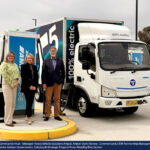
Led by the Public Transport Authority of Western Australia and supported by the WA Government, the program has moved well beyond trial deployments and into large-scale operational use. The recent delivery of the state’s 100th electric bus reflects how electric buses are becoming embedded in day-to-day Transperth operations rather than treated as a future concept.
A key focus is now on depot readiness. The Jandakot Transperth bus depot is the next site to be upgraded, with a $9.6 million contract awarded to JET Charge to install EV charging infrastructure capable of supporting up to 90 electric buses. Works are expected to begin early next year, with electric buses scheduled to enter service from the depot in late 2026.
Jandakot will be the fifth Transperth site equipped with EV charging infrastructure, following Elizabeth Quay Station and the Malaga and Karrinyup depots. Electric buses are already operating from Joondalup, Elizabeth Quay and Malaga, while Karrinyup is expected to commence electric bus operations in early 2026. Construction is also underway on a new EV bus depot in Bayswater, with plans in place to upgrade Claisebrook as part of the next stage.
The WA approach has been deliberately structured around long-term fleet planning. Depot upgrades are being staged over the next two decades, aligning infrastructure investment with vehicle replacement cycles to enable a full transition away from diesel without compromising network reliability or service levels.
Transport Minister Rita Saffioti said converting depots is central to the transition.
“Converting bus depots across Perth’s suburbs is essential as we phase out diesel buses from our public transport network over the coming two decades,” she said.
“This is all part of our government’s commitment to reshaping public transport in WA by fully transitioning to a locally-made electric bus fleet.”
The vehicle program is being delivered through a long-term supply partnership with Volvo Bus Australia, with electric buses built on Volvo’s electric chassis platform and bodied locally by Volgren at its Malaga facility. The rollout has prioritised operational suitability, including route selection, charging strategy and safety systems, rather than rapid volume deployment.
Each electric bus is capable of travelling up to 300 kilometres on a single charge and is expected to reduce carbon dioxide emissions by around 40 tonnes per vehicle per year compared with a diesel bus. The $250 million electric bus program, jointly funded by the WA and Commonwealth Governments, will see an initial 130 diesel and CNG buses replaced by mid-2026.
The transition also marks a clear shift in procurement policy. The final diesel bus built for the Transperth fleet rolled off the production line in May 2025, signalling the end of diesel bus manufacturing for the network and setting the direction for a fully electric future.
- Foton and Ampol Target Electric Truck Charging
 Foton Mobility Distribution (FMD) and Ampol have signed a Memorandum of Understanding to explore charging solutions for electric truck fleets, with a focus on helping operators charge at depots, commercial hubs and public charging sites. The collaboration will investigate charging options across Ampol’s AmpCharge public network and private facilities for FMD’s fleet, logistics and business
 - Ausgrid’s charging strategy goes well beyond the depotInstalling chargers at the depot might be the obvious starting point for fleet electrification. For Ausgrid, it wasn’t going to be enough. As the electricity network continues electrifying passenger vehicles, vans and trucks, it has developed a charging strategy designed around how employees actually use fleet vehicles. Speaking during the Fleet News Group Awards finalists
- Home Charging Enters a New Growth PhaseEvnex has passed 20,000 connected charger installations across Australia and New Zealand, with rapid growth reflecting the shift of home EV charging from an early-adopter product to mainstream infrastructure. The Christchurch-based manufacturer shipped its first charger in 2017. While reaching the first 10,000 installations took eight years, the next 10,000 were added in just nine
- Ampol’s $225 million Evie deal puts a new value on public EV chargingAmpol’s proposed $225 million acquisition of Evie Networks could prove to be a significant milestone for Australia’s EV charging sector, putting a substantial transaction value on a public charging network that was built well before electric vehicles became a mainstream consideration for Australian fleets. Ampol Energy has entered into an agreement to acquire 100% of
- A Charger That Powers Up Isn’t Finished: Why Commissioning Matters for Fleet EV ChargingAn EV charger can be installed, connected and apparently operating — and the charging system can still be wrong. That is one of the more important lessons from the Local Council EV Integration Project involving Wyndham, Brimbank and Moonee Valley councils. As fleet charging installations become larger, depots are adding not only chargers but load